
On The Vine: While we were away


I’m trying very hard not to think about today’s date. It’s January 6. It’s a new year, but it’s also again January 6 — a day that shocked and frightened so many in the brazen assault on government and the symbol of democracy. It frightened me too, but shock? Not so much.
Jan. 6 was a mere reminder of my country and its relationship to me.
But I’m trying not to think about that.
It’s a new year; new me. Well, same me. New mantra? New us; new focus.
We’re declaring it now: 2022 is the year you, me, we hold on to our joy. Joy of self and even of losing oneself — in books, TV, film, food, friends, family. Whatever it is, find it, hold on to it.
Last year taught me a valuable lesson: a new year changes nothing. We’re still in a pandemic, we’re still calling and rooting out racism, fascism, sexism and far too many phobias to count. We’re still fighting for equality and equity and the right for everyone to simply live comfortably.
It’s all still happening, it’s all still important. But so is joy, living and your approach to life.
Around the block
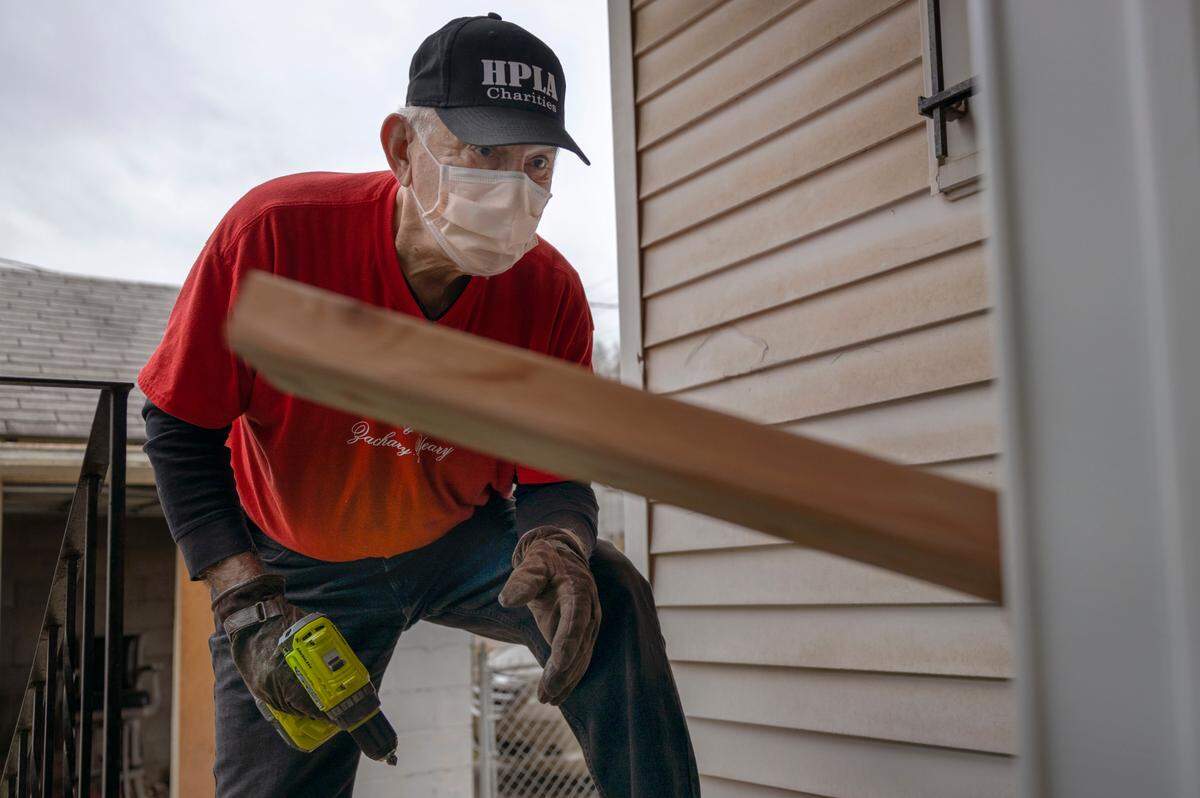
When Wyandotte County residents need home repairs, this man takes action — for free
Over the holidays, The Star’s Aarón Torres wrote this story about Robert Flores, who drives around Kansas City, Kansas, in his 2006 gold Honda Odyssey — nicknamed Blondie — stocked with tools and does repairs and installations for people with homes in Wyandotte County who can’t afford otherwise to have the home repairs done.
Flores does them for free.
Flores has installed porch railings, fixed hot water heaters and refaced a garage. He’s done 100 jobs since 2016, when, amid a rise of anti-immigration rhetoric and policy in the U.S., he started a nonprofit to help Hispanic and Latino residents in the area.
The charity, Habitaciones Para Latinos Association (HPLA) — which translates to Housing for Latinos — helps low-income families and homeowners throughout Wyandotte County with basic, but needed repairs.
Though HPLA’s mission was targeted toward helping Hispanic and Latinos, Flores — who is Mexican American — said he does not discriminate when it comes to the families he serves and the people he helps. To him it’s all important, making sure families who can not afford home repairs — burst pipes, broken fences, new doors — can live comfortably.
“What he does is he balances the scale with love,” said Edgar Galicia, the executive director of the Central Avenue Betterment Association, where Flores would volunteer from time to time. “If there is anyone suffering, like if someone went through surgery and cannot step down or go down a staircase, Bob comes in and builds a ramp for this person to be able to walk in and out.”
And in case you missed it...
Kansas City church seeks volunteers as doors open to homeless community members
On eve of Capitol riot anniversary, Kansas City Proud Boys’ cases face another delay
Kevin Strickland has been out of prison for a month. Here’s how he’s rebuilding his life
Images by Star photographers capture a momentous year in Kansas City
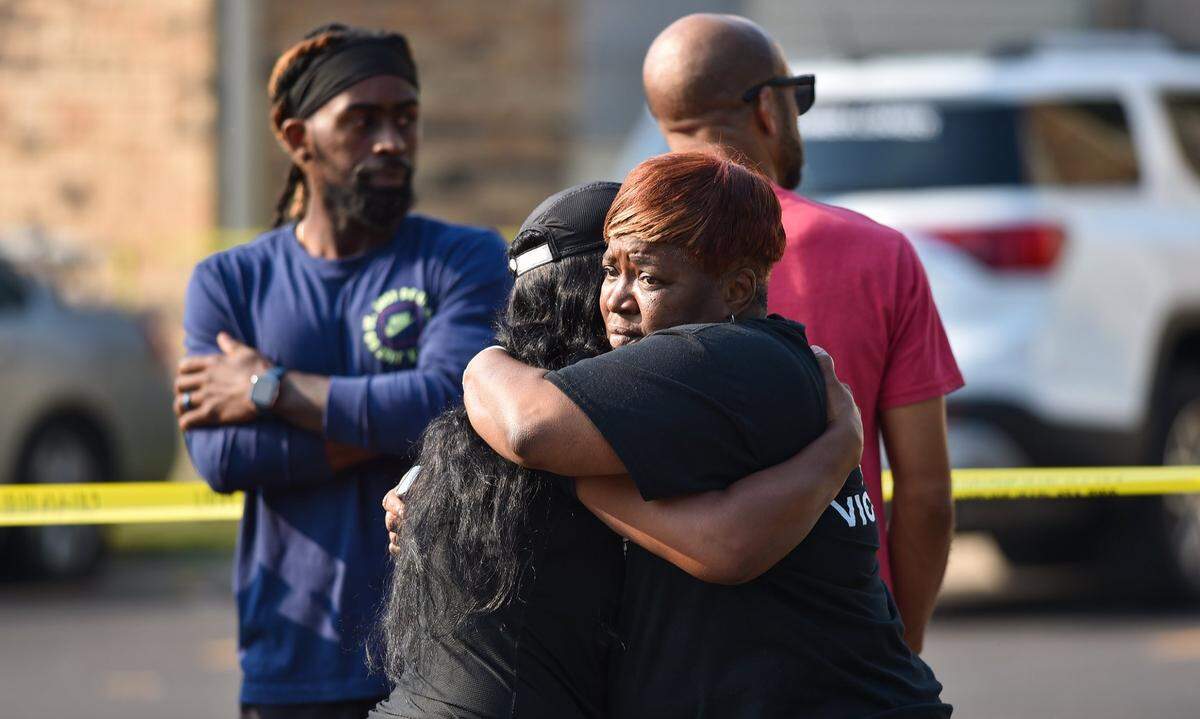
‘The solutions are not rocket science’: Kansas City sees 2nd worst year for homicides
Kansas City in 2021 failed again to curb the high rate of homicides across the metro. City leaders and officials know solutions that work and are worth trying, but have been unsuccessful in implementing any material solutions.
The city ended 2021 with 157 homicides, the second highest on record after recording 182 in 2020.
Kaitlin Washburn and Hurubie Meko as part of The Star’s Report For America project on gun violence write:
“To me, it ain’t good enough to just say, ‘Well, because we had such a grotesque number last year, it looks all right now.’ Because it’s not right. And if not for 2020, then we’d all be staring at each other right now,” Kansas City Mayor Quinton Lucas said. “The bigger question we need to ask is why year, after year, after year, after year this is such a part of almost a predictable conversation in Kansas City. That’s what I want to see us change.”
When the city broke its homicide record in 2020, leaders expressed concern. But little was done this year.
The root causes of gun violence in the city and across Missouri are linked to inadequate housing and food security, among other factors, as well as an increased availability of guns, systemic inequality, a lack of trust in police and domestic violence, according to researchers.
Solutions should go beyond increases in policing to get at root causes. Stakeholders — city leadership, community leaders, prosecutors and police — need to work together, they said.
But when it comes to how to respond and where to invest funding, leaders in Kansas City remain fragmented.
Beyond the block
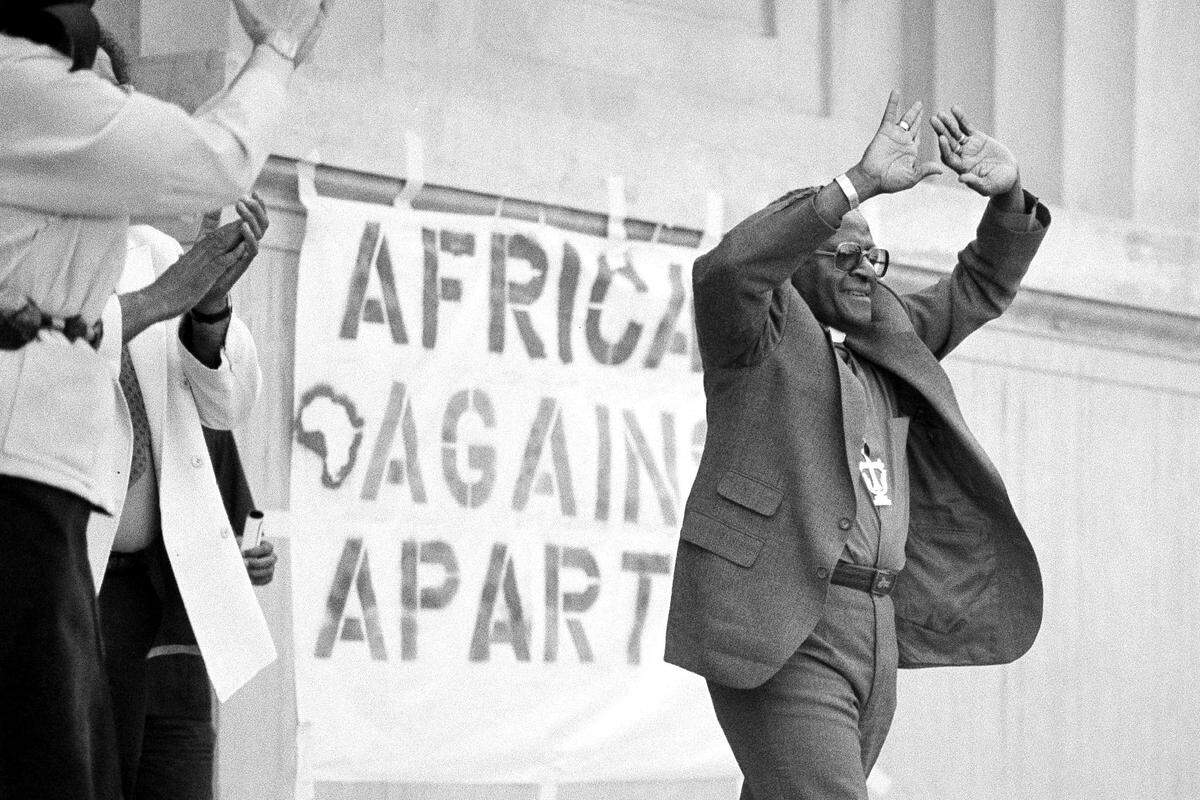
Desmond Tutu, Whose Voice Helped Slay Apartheid, Dies at 90
I forgot that Archbishop Desmond Tutu was a man. I was born in 1991 and he always seemed bigger, heavier — more an idea, a principle, a guiding light.
Marilyn Berger writes for The New York Times:
As leader of the South African Council of Churches and later as Anglican archbishop of Cape Town, Archbishop Tutu led the church to the forefront of Black South Africans’ decades-long struggle for freedom. His voice was a powerful force for nonviolence in the anti-apartheid movement, earning him a Nobel Peace Prize in 1984.
When that movement triumphed in the early 1990s, he prodded the country toward a new relationship between its white and Black citizens, and, as chairman of the Truth and Reconciliation Commission, he gathered testimony documenting the viciousness of apartheid.
“You are overwhelmed by the extent of evil,” he said. But, he added, it was necessary to open the wound to cleanse it. In return for an honest accounting of past crimes, the committee offered amnesty, establishing what Archbishop Tutu called the principle of restorative — rather than retributive — justice....
For much of his life, Archbishop Tutu was a spellbinding preacher, his voice by turns sonorous and high-pitched. He often descended from the pulpit to embrace his parishioners. Occasionally he would break into a pixielike dance in the aisles, punctuating his message with the wit and the chuckling that became his hallmark, inviting his audience into a jubilant bond of fellowship. While assuring his parishioners of God’s love, he exhorted them to follow the path of nonviolence in their struggle.
Hey, read this too...
Despite Uproar Over Floyd’s Death, the Number of Fatal Encounters With Police Hasn’t Changed
Meet the Black Men Who Changed Lincoln’s Mind About Equal Rights
In the face of hostility at Chicago gay bars, two Black lesbians create their own
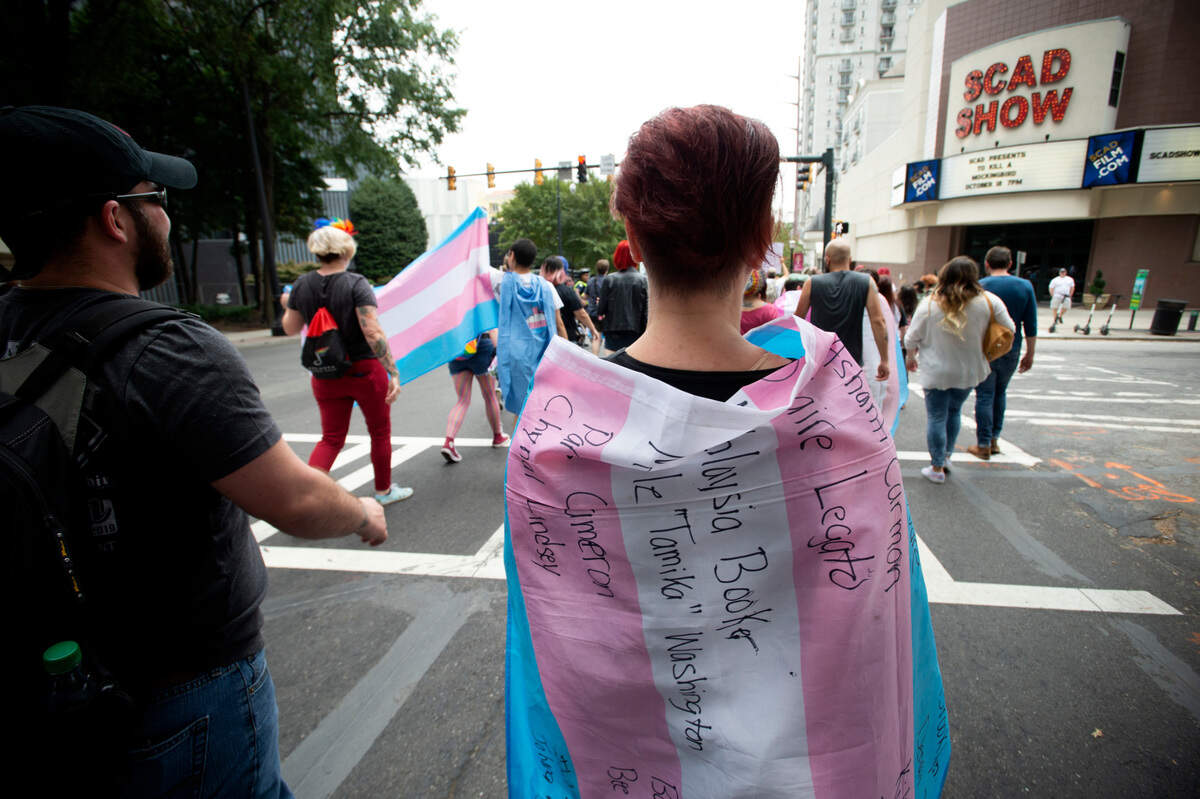
Anti-Trans Violence and Rhetoric Reached Record Highs Across America in 2021
According to a report done by the Human Rights Campaign, an LGBTQ advocacy organization, 2021 saw the highest number of deaths for transgender and gender non-conforming people in U.S. since the organization began keeping the data in 2013.
At least 50 people were killed this year, HRC said.
Madeleine Carlisle reports for Time Magazine:
The report makes clear that the full number of fatalities is likely much higher still; the deaths of trans and gender non-conforming people are often underreported, and the victims themselves are often misgendered. (At least 24 of those listed in HRC’s report were initially misgendered by the media or police.)
There could be several factors contributing to the rise in violence, Cooper says. Systemic racism and transphobia exacerbates poverty and directly impacts the lives of many trans individuals, she explains. There has also been a rise in anti-trans disinformation in the media and from conservative lawmakers. This year, at least 130 bills were introduced into state legislatures that targeted trans people, including the ability of trans kids to use the bathroom, play sports or receive medical care. A record-breaking 25 anti-LGBTQ bills were ultimately enacted into law, including 13 anti-trans laws in at least eight states, per HRC’s count.
“Words matter,” Coopers says, when asked about potential factors contributing to the violence. “Words become thoughts and thoughts become action.”
Hold on to joy
Did someone forward this newsletter to you? You can sign-up here. If you’d prefer to unsubscribe from this newsletter, you can do so at any time using the “Unsubscribe” link at the bottom of this message.