
Robert Stewart: Arkansas poet and editor Miller Williams left a lasting legacy in KC and beyond
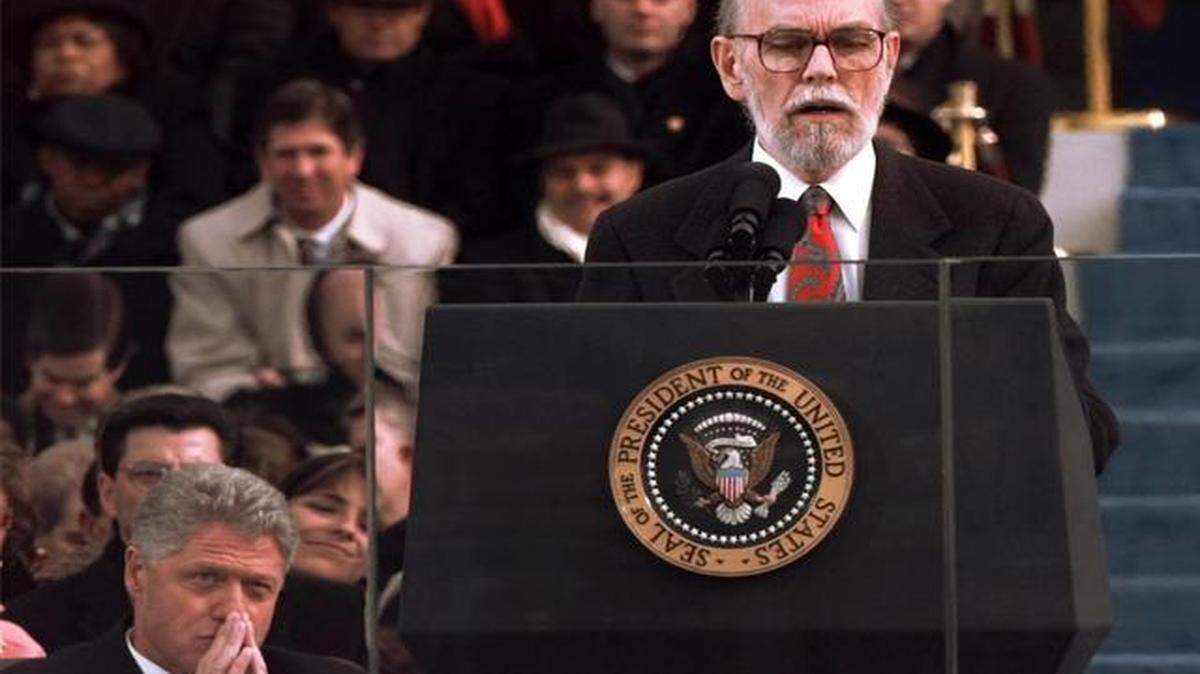
Poet, teacher and editor Miller Williams died in Fayetteville, Ark., on Jan. 1, at 84, from complications due to Alzheimer’s. Born in Hoxie, Ark., and retired from the University of Arkansas in 2003, he also looms large in the literary life of Kansas City.
During 20 years from 1980, when Williams helped found the University of Arkansas Press, he published books by several Kansas City area writers, such as Conger Beasley Jr. and William Trowbridge; he spoke often about the subtle and powerful craft of poetry at University of Missouri-Kansas City conferences, or in a lecture for the Cockefair Chair in Continuing Education here, in the 1990s; and he taught us all, it seems, through such books as “Patterns of Poetry: An Encyclopedia of Forms.”
In 1985, the day after he had appeared at Rockhurst University’s Midwest Poets Series, I drove him to the airport on his way out of town. During the drive, heading north, he handed me two gifts: what was left of a fifth of Jack Daniel’s (about half) and a hardback copy of the sonnets of Giuseppe Belli, an act typically intimate and gentlemanly.
Despite that, I am hardly the most qualified to offer this small tribute to such an influential literary personage. Williams was friend to many area writers, including Dan Jaffe, James McKinley and Jo McDougall, and also to such diverse folks around the country as Hank Williams Sr., John Ciardi, Flannery O’Connor, Jimmy and Rosalynn Carter and the Clintons. (Miller Williams served as President Bill Clinton’s second inaugural poet in 1997. He also is the father of Grammy Award winner Lucinda Williams.)
The literary example he provided with his own dozen books of poems, and the prestigious Poets’ Prize, in 1991, stood for poetry that could be at once gritty, human and gorgeously lyrical. As the Poetry Foundation has noted, “Equally comfortable in formal and free verse, Williams wrote poems grounded in the material of the American life, frequently using dialogue and dramatic monologue to capture the pitch and tone of American voices.”
At his 1985 reading in Kansas City, Williams announced that he would read a poem he had not read before in public, which turned out to be “A Poem for Emily,” about being at the birth of his granddaughter; the poem has become one of his best known and remains one of my favorites ever. In a discussion of the poem in 1996 with public TV’s Elizabeth Farnsworth, Williams offered aspiring poets a mini-lesson in craft:
“One of the textbooks in which [this poem] appears has an appended note saying the poet wrote this at the crib of his granddaughter on the day of her birth. I wish I could write that fast. I got the idea then. I finished it six yellow legal pads and six months later. But it’s written as if it were there, as if I were still standing there, and I want it to be read that way.”
The poem includes these lines: “When I by blood and luck am eighty-six/ and you are someplace else and thirty-three/ believing in sex and god and politics/ with children who look not at all like me,/ sometime I know you will have read them this/ so they will know I love them and say so/ and love their mother.”
He didn’t quite make 86, but we have the poem, the work of a great poet, and that will last awhile.
Robert Stewart is editor of New Letters, the literary magazine published at the University of Missouri-Kansas City, and director of the Midwest Poets Series at Rockhurst University.
This story was originally published January 6, 2015 at 11:37 AM.