
Kansas’ anti-trans ID law is the opposite of government based on freedom | Opinion
I am a close observer of human rights issues wherever they arise, especially when vulnerable groups are singled out by government policy. Though I live hundreds of miles away, the situation unfolding in Kansas — where transgender residents face legal uncertainty over something as basic as identification — reflects a broader national struggle over dignity, identity and equal protection under the law. It is precisely the kind of issue that demands attention beyond state lines.
President Donald Trump’s executive order declaring that there are only two sexes — male and female — disregards the lived reality of transgender people. This is not just a policy error. It is a fundamental misunderstanding of what it means to be human.
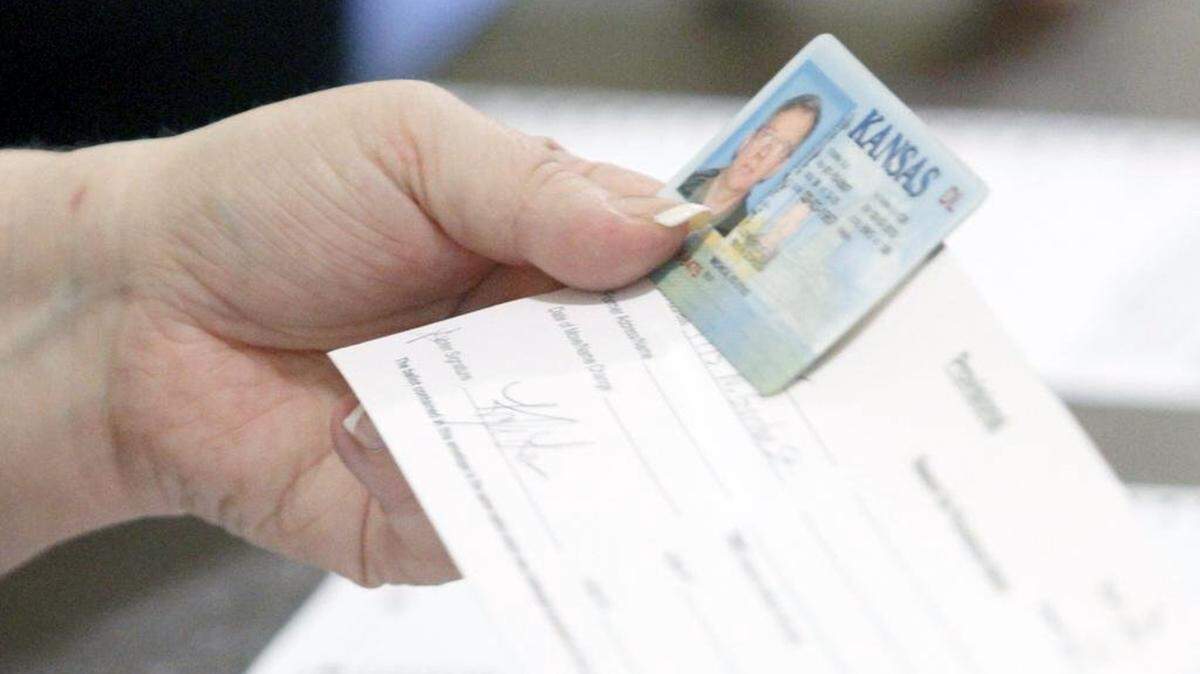
Kansas offers a clear example of how this misunderstanding plays out in practice. Under House Substitute for Senate Bill 244, the state redefined “sex” and “gender” strictly as binary biological sex at birth, and has begun invalidating some transgender residents’ driver’s licenses if their gender markers do not conform.
As recent reporting shows, the policy is unevenly enforced, leaving some Kansans with invalid identification and others in legal limbo. This is not clarity — it is confusion imposed by law.
In his book “In the Name of Identity,” Amin Maalouf shows that every person carries a composite identity: We are shaped by many affiliations — culture, language, religion, nationality, gender and more — and our sense of self depends on being allowed to live all of them, not just the one others assign to us.
The Universal Declaration of Human Rights, adopted by the United Nations in 1948, declares that all human beings are born free and equal in dignity and rights, without distinction of any kind. Transgender people are not asking for special privileges. They are asking for the same basic rights that the declaration promises to everyone: freedom from discrimination, protection of privacy, bodily autonomy and the right to live openly without degradation. Denying someone’s gender identity is a direct violation of these rights.
Moreover, an article in the American Medical Association’s Journal of Ethics states: “Access to gender-affirming care is associated with increased quality of life and decreased rates of self-harm, including 44% and 73% lower odds of suicidality in transgender adults and youth, respectively.”
Author and philosopher Joseph Campbell’s words — “The privilege of a lifetime is being who you are” — capture what is at stake. For many people, the ability to live openly as their true gender is not a political preference. It is the difference between a life of authenticity and a life of forced concealment and shame. When the state refuses to recognize a person’s gender, it is blocking the very possibility of that privilege.
A government that claims to defend freedom should not be defining who people are allowed to be. Instead, it should protect the space in which people can discover, declare and live their identities without fear.
We must reject policies that reduce human beings to a single category. Real freedom means allowing every person to be who they are, in all their complexity.
Terry Hansen is an opinion writer who focuses on human rights and U.S. foreign policy. He lives in Grafton, Wisconsin.