
Archbishop McKnight: Pope Leo warns AI must not replace our human dignity | Opinion
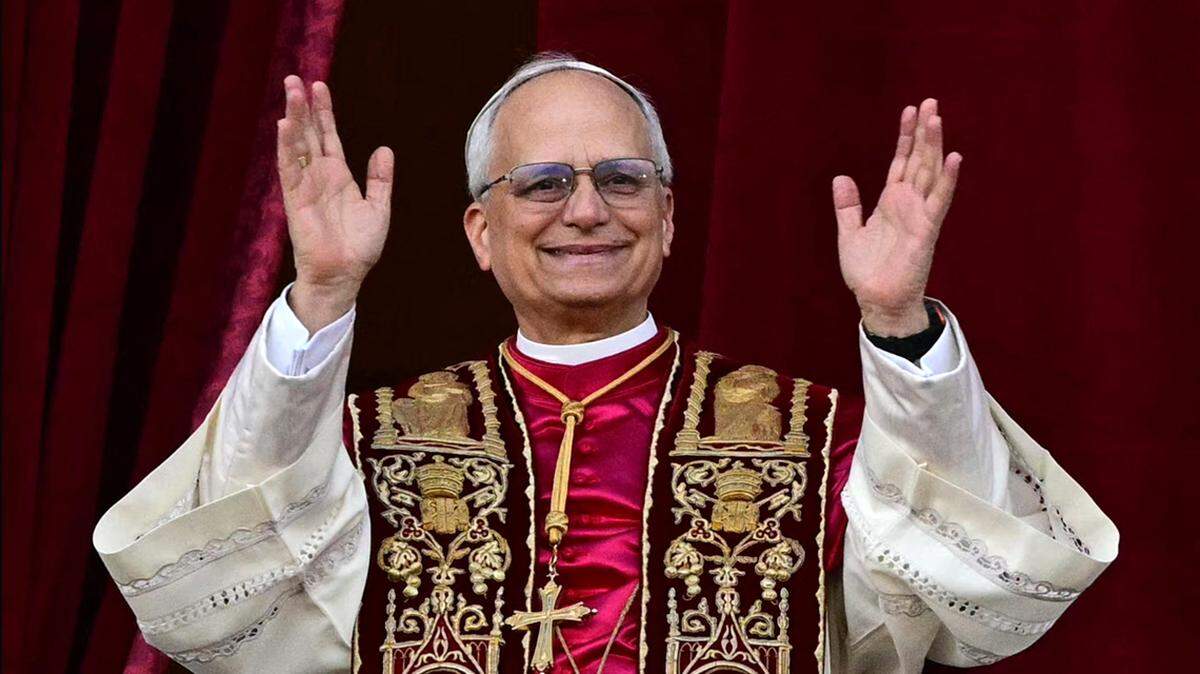
This Memorial Day, Pope Leo XIV released his first Encyclical Letter, Magnifica Humanitas (Magnificent Humanity) on the dignity of the human person in the age of artificial intelligence. I encourage everyone to read it to spark new conversations that have yet to take place within our own communities about the need to protect our very humanity in this age of new technologies. The document is available in multiple languages here.
Whenever epochal shifts occur in human society, the Catholic Church seeks to clarify the perennial values we hold as Christians. For example, to address the social crisis brought on by the industrial revolution in the 19th century, Pope Leo XIII gave us Rerum Novarum (Of New Things) on the dignity of human labor. In the aftermath of two world wars, the development of nuclear weapons, and the Cuban missile crisis, Pope St. John XXIII wrote Pacem in Terris (Peace on Earth), asserting the irrationality of nuclear war and the need for international efforts to curtail the growing threats of modern warfare. Recent new technologies, especially AI, while providing new opportunities to improve human society, are also fraught with perils for the dignity of the human person. Pope Leo XIV’s Magnifica Humanitas applies the same Christian principles found in previous social encyclicals, all based on the Gospel of Jesus Christ, but to the new issues of our time.
Catholics recognize papal encyclicals as authentic teachings of the pope and having the authority of his ordinary magisterium. Further, Catholics are bound to recognize their serious theological and moral weight as a correct expression of our Catholic faith. Understanding the role of a papal encyclical also helps us recognize why the Holy Father’s reflection on these issues carries particular importance at this moment in history. Pope Leo XIV desires his first encyclical letter to not only serve as a resource for the members of his flock, but also to engage all people in a dialogue about a critical issue affecting the common good in our day. As a sign of that desire, individuals from many disciplines, including the technology industry, regardless of their faith perspective, were consulted in the encyclical’s drafting.
Risk losing identities in data, dehumanization
Pope Leo’s guidance comes at an important crossroads in our society and in history, one that calls us to pursue a vision of progress rooted not just in technological development but much more so in the very meaning of how technological advancement and humanity coexist. In his encyclical letter, he states: “The magnificent humanity created by God stands today before a decisive choice: to erect a new Tower of Babel or to build the holy city, where God and humanity dwell together.” This comparison to the Tower of Babel illustrates how society’s attempt to reach heaven through human endeavors alone, without a moral framework from a higher authority, can endanger humanity itself. Conversely, we can choose a different path as exemplified by the rebuilding of the walls of Jerusalem in the Book of Nehemiah, where shared responsibility is the result of having God at the center of social life.
At this important moment of rapid technological advancement, we must decide as a society how these developments will shape not only our future but also our understanding of the human person and the common good. If the enormous power of AI is used only to profit some people or governments, we risk losing our unique identities as made in the image and likeness of God by adopting a universal language of data and dehumanization. Conversely, if we work together to build a holy city, we become a society recognizing that the adaptation and usage of technology and AI must be guided by clear moral principles, and that upholding the dignity of the human person must remain front and center.
As rapid advances in technology and AI continue to reshape how we communicate, learn and relate to one another, there can be no replacement for the requirement of human relationships for the well-being of society and especially in the personal witness of faith. The fearful possibility presented by AI is that authentic human encounters will become progressively replaced with sharing of data to benefit only a few. For us Catholics, personal relationships formed in a community are foundational for the witness of faith and our encounters with the living God in our celebrations of the sacraments, in preaching the Gospel, and in manifesting the mercy of God in our works of charity. Furthermore, this value gives us a moral framework in understanding the dignity of human work, and the treasure of our many cultures, artistic creativity, scientific exploration, intellectual expression and civic participation.
New power, unprecedented responsibility
As we celebrated Pentecost this past Sunday, we were reminded that the Holy Spirit calls people of every nation, language and culture into communion without diminishing the unique dignity and diversity of gifts given by God. If we truly seek to live as disciples of Jesus Christ and follow his teaching, the path forward becomes clear. We must choose to build a holy city and keep our humanity at the center of how such advancements are understood, evaluated and applied.
New technologies have benefited society in many ways, including accelerated data processing that improves research in science and medicine, greater workplace efficiency, increased access to information and education, and more accessible support for people with disabilities. In fact, technology is recognized as an integral part of our development. It is a result of human creativity, the product of human imagination made tangible. But with this power comes new and unprecedented responsibility.
The res novae, or new things of today, mark a profound time of major historical advancements around digitization, AI and robotics. As Pope Leo observes in his encyclical, “never before has humanity had so much power over itself,” highlighting the urgency of directing that power towards the common good. Further, he points out that AI can threaten our truth, work and freedom without proper regulation.
AI is not capable of human understanding, emotion, or morality and the misuse of AI in generating works of thought and art comes from an impersonal, inauthentic and artificial association of objective algorithms. What is even more fearful is the notion that acts of war can now be carried out without a human decision to kill or not to kill.
Dignity of humanity found in work
A fundamental expression of the dignity of the human person is also found in work. From the beginning of creation, God revealed both the goodness and necessity of work, inviting those made in his image and likeness to participate in his creative action. As society continues to develop new technologies, we must ensure that the human person remains at the center of these advancements. Used wisely and ethically, technology can serve the common good without diminishing the value of human labor or threatening the stability and well-being of workers and families. We must also guard against allowing technology to shape our society in ways that diminish human freedom, moral responsibility and our capacity to seek truth with wisdom and conscience.
To help guide us, we can look to the sound social teachings of the Gospel to accompany the profound changes taking place in our society, pointing to the common good, solidarity and subsidiarity as essential principles. At the same time, the pope asks us to turn away from becoming a culture of war and power, and instead be a people of love, rooted in justice, dialogue and shared responsibility for one another and the common good.
At its core, the Holy Father tells us in Magnifica Humanitas that the choice is not whether we reject or accept technology. Rather, we have a moral obligation to leverage it to help further creativity and advancement, while safeguarding what it means to be human. He invites us into the “construction site” of a holy city of communion, where the face of Jesus, through our human dignity, is seen and prioritized. The fullness of the human person cannot be achieved by technological power, but through relationships grounded in freedom, love, grace and communion with God and one another.
I am grateful that Pope Leo XIV has given us this important blueprint to follow in discerning together how the dignity of the human person can be upheld and the flourishing of human society can be achieved with proper regulation and use of AI and technological advancements.
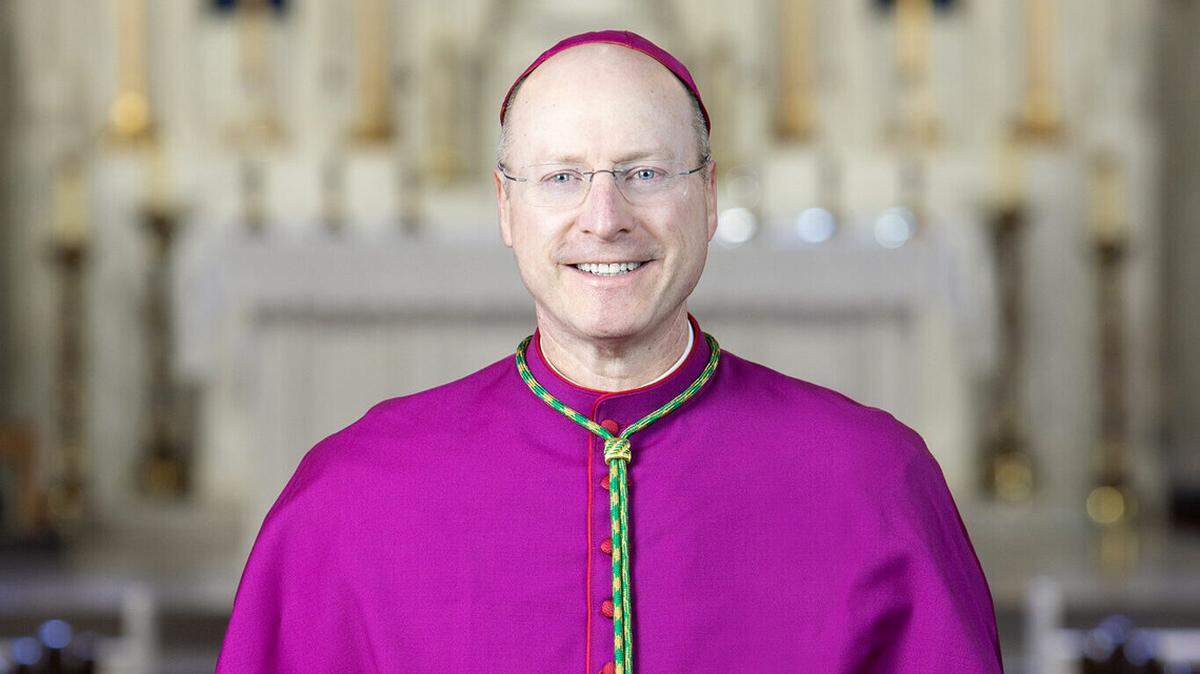
The Most Reverend Shawn McKnight is archbishop of Kansas City in Kansas.
This story was originally published May 26, 2026 at 8:01 AM.