
Does Kansas City need to apologize for the US to World Cup visitors? | Opinion
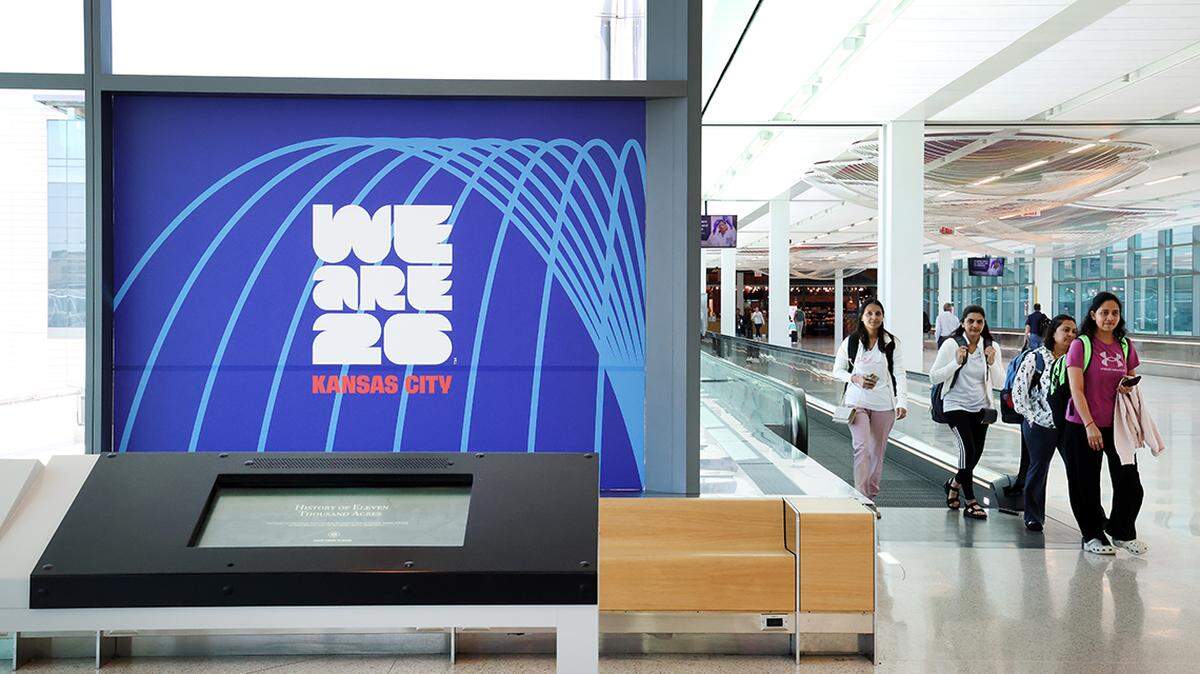
As a Kansas City area resident and one of many helping prepare to welcome the world for the 2026 FIFA World Cup, I have been thinking more deeply about what it means to host, to welcome and to represent something larger than ourselves. That reflection has only deepened during my recent Fulbright assignment in Germany, where conversations with faculty, researchers and students often turned, gently and thoughtfully, toward the United States itself.
Although I was based at the University of Regensburg, the individuals I encountered represented a wide range of countries, cultures and perspectives. The conversations I experienced were not confined to one national lens, but reflected a broader, global sentiment.
Several colleagues shared that they, or others in their professional circles, had previously visited the United States through academic exchange programs, conferences or research collaborations. Many had the opportunity to do so again. Increasingly, however, they described choosing to go elsewhere. This decision was not rooted in any single policy or moment, but in a broader perception that left them uncertain about whether they would feel genuinely welcome. It is a quiet reminder of the deeply human desire to feel a sense of belonging.
I found myself sitting with that tension longer than I expected. Not defensive, but reflective. It is one thing to understand that perception shapes experience. It is another to hear, firsthand, how that perception can shape decisions about where to learn, collaborate and invest one’s time and energy.
A personal ‘apology tour’
In one of my lectures, speaking candidly, I admitted that at times I felt as though I was on an “apology tour,” not in a political sense, but in a human one. It was an uncomfortable realization, not because of disagreement, but because of the quiet recognition that perception and experience do not always align with intention. I carry a deep appreciation for being an American. At the same time, I recognize the discomfort that can arise when perception and lived experience diverge.
After that lecture, a researcher approached me quietly, waiting until the room had emptied. She shared that my comment resonated with her in a deeply personal way. She is from Russia and described how when she first arrived in Germany, she avoided disclosing her nationality. She did not volunteer where she was from. She carried, in a sense, the weight of her country’s geopolitical identity into her daily interactions.
Over time, she said, this became unsustainable. It was not only emotionally taxing but also fundamentally at odds with her sense of self. Gradually, she began to share her background more openly, coming to terms with a simple but profound truth: She is not solely responsible for the actions or policies of her government. She is an individual, a scholar, a colleague and a human being whose identity extends far beyond national borders.
Her story reframed my own reflections. What I had interpreted as a need to explain or contextualize my country was, at its core, part of a broader human experience, one not confined to any single nation or moment in time. In an increasingly interconnected world, individuals often find themselves navigating perceptions shaped by forces far beyond their control. Yet the desire to be seen, accurately and fully, remains constant.
International students boost US higher education
For those of us in higher education, these dynamics matter deeply. The United States has long been a destination for global talent, collaboration and innovation. Our colleges and universities have benefited immeasurably from the presence of international students and scholars, who contribute not only intellectually but also culturally and socially to our communities.
When individuals begin to question whether they will feel welcome, the implications extend beyond enrollment numbers or research partnerships. They touch on the very fabric of what makes academic exchange transformative. It is the ability to engage openly, to build trust and to learn from one another across differences.
At the same time, my experience in Germany reminded me that the concept of welcome is not static, nor is it defined solely by policy. It is shaped in classrooms, in conversations and in small acts of kindness and curiosity. It is built, or eroded, through everyday interactions.
Beyond the classroom, I was struck by something quieter but equally powerful. There is a cultural commitment to gathering and connection. In the streets, in cafés, people lingered. They spoke with one another. They laughed openly and often. There was an ease to it, a sense that time spent together was not secondary to work, but essential to it. It was a simple observation, but a meaningful one. It offered a reminder that belonging is not only expressed in formal settings, but in the rhythms of daily life. It lives in how we make space for one another, how we listen and how we choose to be present.
It also prompted a quieter question, one that felt less about policy and more about personal responsibility: How do we, as individuals, choose to show up in the world when we are seen as representatives of something larger than ourselves?
Responsibility to listen to, engage with others
As I return home, I do so with a renewed sense of responsibility. Not to apologize, but to be intentional. To listen more closely. To engage with humility. And to recognize that, whether we intend it or not, we each carry a version of our country with us into the world.
The question is not whether we represent the United States. We do. The question is how. In our classrooms, our conversations and our daily interactions, we have the opportunity to shape not only how we are perceived, but how others feel in our presence.
International exchange has always been about more than movement across borders. It is about the exchange of ideas, perspectives and humanity. That work continues, quietly and persistently, in classrooms, research collaborations and conversations around the world.
In those spaces, we are not only participants. We are representatives, whether we intend to be or not. Through our words, our presence and our willingness to engage, we shape how others experience not just our institutions, but our country.
As Kansas City prepares to welcome the world, the question of how we show up, individually and collectively, feels especially timely.
In that space, there is both weight and grace, and a responsibility to hold both well.
Jacquelyn Eidson is an educator and social scientist who lives in the Kansas City metropolitan area with her husband and their four children.
This story was originally published May 6, 2026 at 5:04 AM.