China’s playing a long game on African minerals. Kansas City could lose out | Opinion
The Argentine Yard in southwest Kansas City is one of the largest rail classification facilities in North America. On any given morning, unit trains are staged there carrying grain bound for Gulf ports, auto parts heading to Detroit assembly lines and imported goods moving across the interior United States. Six Class 1 railroads converge in Kansas City, moving more freight tonnage by rail than any other hub in the country.
Thirty thousand jobs and $10 billion in annual economic activity ride on that position — yet the threat is not coming from Washington, D.C., or domestic freight patterns. It is a competition over rail corridors and mining concessions in central Africa, a fight most Kansas Citians have never heard of, but that has direct consequences for the region’s manufacturers and agricultural exporters.
The Democratic Republic of Congo holds roughly 70% of the world’s cobalt reserves and a commanding share of global copper and coltan — resources being mined now and shipped mostly through logistics infrastructure that Chinese firms have spent two decades building. For Kansas City manufacturers, that concentration is not abstract. China refines about 90% of rare earth elements. It also controls the dominant share of cobalt processing. A purchase order routed through Seoul or Stuttgart still depends on Chinese-controlled infrastructure if the end product contains batteries, electric motors or specialty steel. The supply chain doesn’t care where the invoice goes.
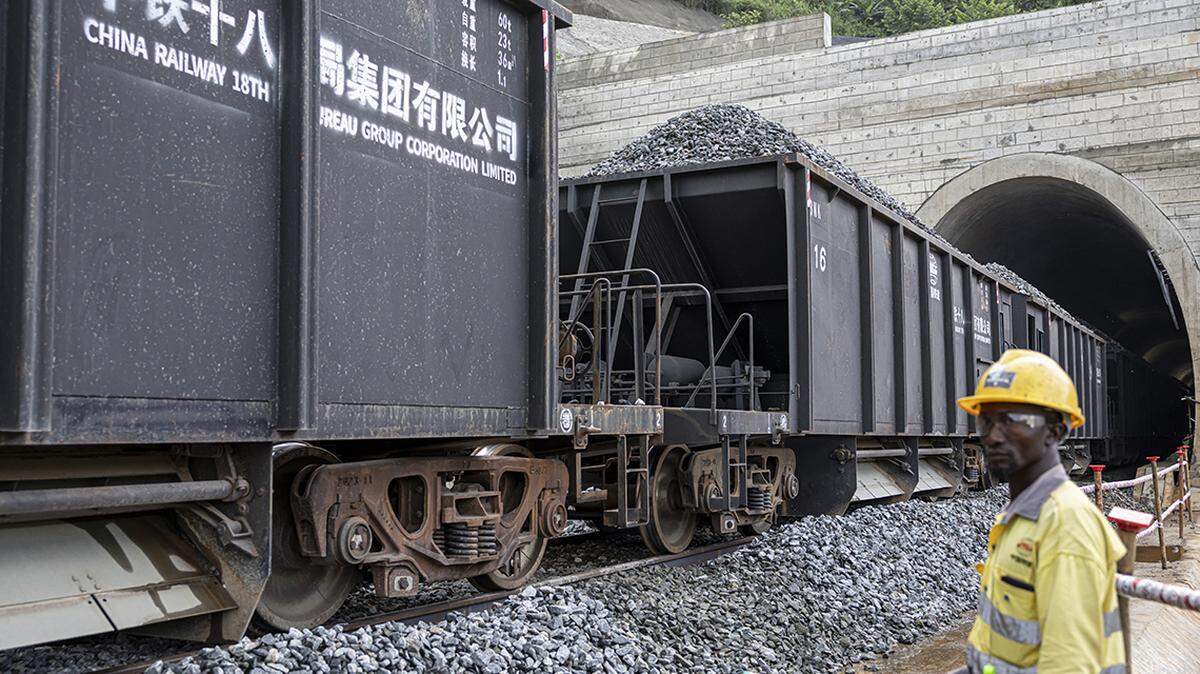
Beijing’s strategy in Africa has never been primarily about aid. It has been about infrastructure as leverage. The geography tells the rest of the story. The Tanzania-Zambia railway is now undergoing a $1.4 billion Chinese upgrade. The line moves cobalt and copper from the Democratic Republic of Congo’s Copperbelt to Dar es Salaam, Tanzania. A Chinese state enterprise holds the management concession for 30 years. China’s Sicomines mining joint venture locks in Chinese access to 10 million tons of copper and 600,000 tons of cobalt over the next 25 years. The raw materials flow east, get processed in Chinese refineries, and reenter global supply chains as finished components.
Washington is pushing back. In December, the U.S. International Development Finance Corporation and the Development Bank of Southern Africa jointly closed a $753 million loan for Angola’s Lobito Corridor, a rail line designed to route copper and cobalt exports to Atlantic ports outside Chinese-controlled logistics networks. The Trump administration has reframed the project as a hard geoeconomic instrument, a direct counter to Chinese logistics control.
What happens next matters in Kansas City. If the Lobito Corridor succeeds, it changes the cost and availability of minerals for Midwest manufacturers. The Democratic Republic of Congo’s rail system is currently operating at less than 5% of capacity, with no construction started. If it stalls, Chinese infrastructure would retain the routing advantage, and the pricing leverage that comes with it would flow upstream into American manufacturing costs.
These are decisions being made far from Kansas City, but they are not disconnected from it.
New intermodal investment, including a recently completed Union Pacific terminal, has positioned Kansas City to grow its share of international trade volumes. Whether that growth materializes depends on supply chains being routed through American logistics systems or competing ones. When infrastructure ownership determines routing, goods move through the networks that control it. Freight that never enters Western logistics systems does not benefit Kansas City. It benefits Dar es Salaam.
The question of which networks win is being answered right now, in a contest over rail corridors and mining concessions in central Africa. Kansas City built its economic position on being where freight flows.
The city’s freight economy will be shaped by how that contest plays out.
Shannon Roxborough is a freelance journalist and independent geopolitical risk analyst who advises executives and multinational institutional investors on strategic risk and decision-making across the U.S.-China-Africa triangle.