
Fear of ICE trickles down to Kansas City high schools. Who’s next? | Opinion
As a part of American Public Square’s Civic Education Initiative, nine Kansas City-area high schools come together for the opportunity to design a public program about an issue that directly affects us as students. We were told in the past that it was difficult to choose a topic, because there were so many issues to choose from.
This year, everyone in the program instantly gravitated towards an issue that impacted us all directly: the incredibly divisive topic of immigration, the U.S. Department of Homeland Security’s Immigration and Customs Enforcement agency and federal enforcement. Our free public program, Breaking the ICE on Immigration Enforcement and Federal Power on April 15, brings together a former head of ICE, immigration lawyers, journalists, legislators and the ACLU to have a conversation, and we hope you’ll join us. But what we learned about civic education in the program helped us speak about our own experience as well.
Students are living with the consequences of federal policy every day. Growing up in a community shaped by immigrants, the presence of the U.S. Immigration and Customs Enforcement agents has not felt like a safety measure, but like a shadow over everyday life. We’ve had to watch close friends weigh whether it’s safe to attend school, harming their education and overall mental health. They fear that any part of their daily routine could turn into a life-shattering encounter. The constant vigilance changes people, creating anxiety that makes it harder to participate in daily life meaningfully.
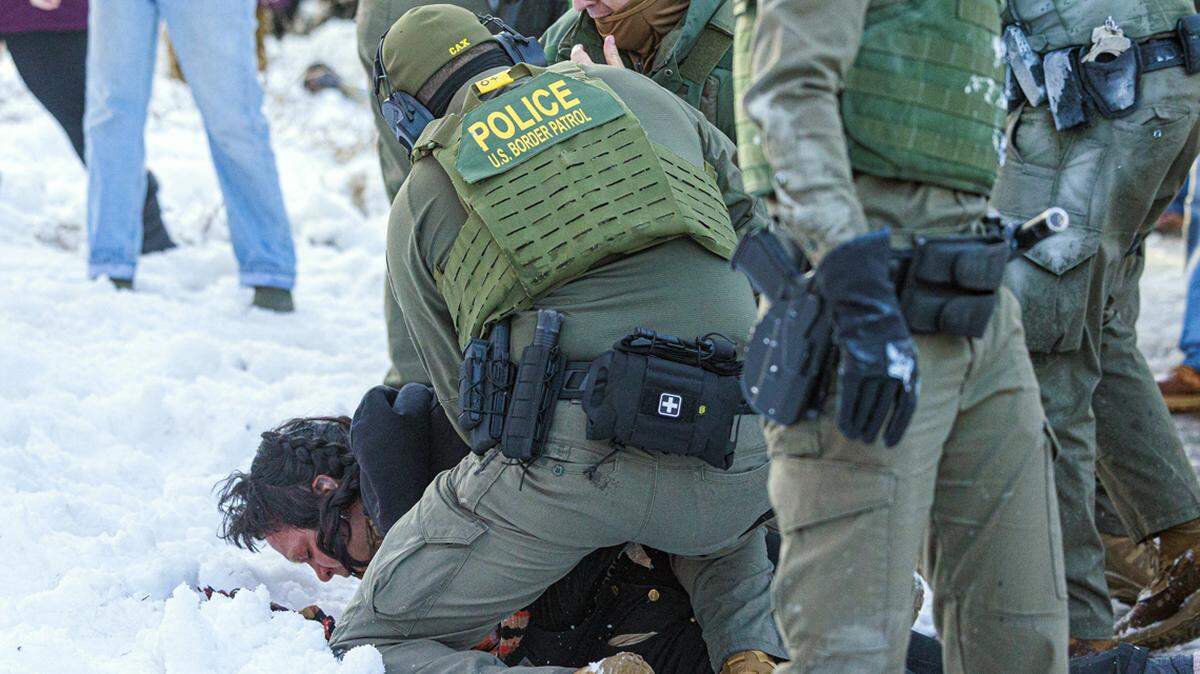
As students, we see the impact on young people and their families. We believe that immigration enforcement should reflect both the rule of law and human decency. A system that relies heavily on raids, detention and mass deportations erodes trust between communities and the government. The fear of our classmates is not just collateral damage, but evidence that our federal approach needs rebalancing. We see the fear of people who are not immigrants themselves, but simply standing up for immigrants. The public deaths of protesters in Minnesota caused trauma and fear. This chaos creates anxiety that trickles down to young people like ourselves, with a message that says anyone can be harmed by this agency’s approach to mitigating illegal immigration.
We can secure borders while still recognizing that immigrants are our neighbors, classmates and coworkers. Policies should help and strengthen communities, not divide them. Right now, families are being torn apart by this policy, both literally and figuratively, in the divisive ripple it causes.
Undocumented immigrants: lower crime rates
People are self-deporting just so they can survive, with a major justification being crime rates and the accusation that “illegal” immigrants are a significant cause of lawlessness in America. Research from the American Immigration Council shows that “immigrants — including undocumented immigrants — are less likely to commit crimes than the U.S.-born. This is true at the national, state, county, and neighborhood levels, and for both violent and non-violent crime.”
In a piece by the American Civil Liberties Union, Haddy Gassama outlines physical abuse and abusive conditions at federal immigration detention sites. There have been reports of discrimination and mistreatment in detention. A compelling study made by the American Immigration Council found that physical and verbal mistreatment of migrants is not a random, sporadic occurrence, but rather a systematic practice. It shows two indications of this are that 11% of deportees report some form of physical abuse and 23% report verbal mistreatment while in U.S. custody. Some also report being targeted with discriminatory remarks.
These day-to-day human decisions drive people to make choices out of fear, such as a woman who passed away after neglecting to seek necessary cancer treatment because of her intense terror at increased immigration enforcement in Minnesota, or Paulino Martin San Pedro, who died of pneumonia shortly after being deported to Mexico, with his family citing the stress of detention.
Perception of security
We want to believe this is a just country, but that cannot blind us from seeing that people are afraid and suffering. Systemic racism has not ended — it has evolved to look more professional and necessary for so-called “public safety.” How can we not feel that we are battling more than prejudiced individuals, rather that we are battling a system that was designed to prioritize the perception of security over the life of hardworking families?
The hardest part is recognizing the fear that our government is imposing may very well be the point. Who are we if we let ourselves be afraid? If we can see a pattern of injustice being passed on to the next group of minorities, we must ask ourselves: Who’s next?
As a part of American Public Square’s Civic Education Program, we have learned not only to express our own opinions, but to listen to other perspectives. Through five student workdays throughout the school year, we get on buses and meet with nine schools from around the Kansas City area — public, private, charter and parochial. The diversity of students we’ve met from other schools has expanded our view of the issues. We know that the harder the topic is to solve, the more necessary it is to understand it better and to understand why people have the viewpoints they do. American Public Square has brought in speakers from law firms, legislatures, newspapers, colleges, law enforcement and education to help us have better conversations. We hope you’ll join us at the event, either virtually or in person.
Scarlett Antonides attends Belton High School, and Garyn Watts attends Olathe North High School. They are both students in American Public Square’s Civics Education Initiative, which brings together 85 local high schoolers to engage in civic learning, media literacy, culminating in a student-designed American Public Square program on a topic that affects them.