Senators Hawley and Marshall shovel the, er, dirt on rising fertilizer costs | Opinion
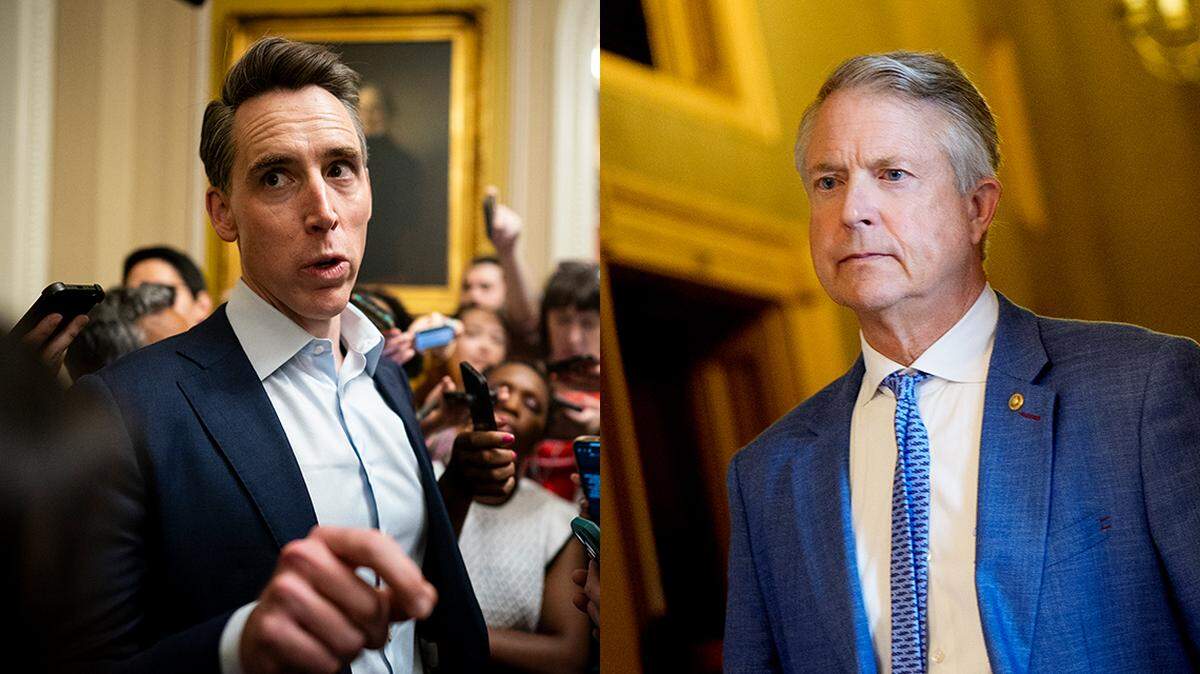
Josh Hawley and Roger Marshall are currently obsessed with fertilizer.
That’s not a joke or a metaphor. It really, truly is the case that both Republican senators, from Missouri and Kansas respectively, are alarmed about skyrocketing fertilizer prices.
You know: The stuff farmers use to grow the food that you and your family eat.
Hawley and Marshall are likely worried about how the crisis (and yes, it’s a crisis) will affect their farm constituents. They’re probably concerned about what that means for the prices that you will end up paying to feed your family.
Marshall — who faces voters in November — might also be contemplating what an affordability crisis is going to mean for Republicans during this election cycle.
That’s why Hawley earlier this month sent a letter to America’s biggest fertilizer companies, warning them against price gouging.
And that’s why Marshall last week introduced the “Homegrown Fertilizer Act” designed to “strengthen America’s domestic fertilizer supply chain.”
Both senators are getting down in the legislative dirt, so to speak.
There are a lot of reasons that fertilizer is getting more expensive: Russia’s war in Ukraine, trade wars and more. It’s been happening for years. The reason that fertilizer is suddenly an actual crisis, though, is because of President Donald Trump’s decision to go to war in Iran.
Which means Hawley and Marshall are trying to cover for the president’s big mistake.
Kansas, Missouri rely on Persian Gulf imports
2026 was already shaping up to be a tough year for American farmers. Trump’s decision to wage war on Iran has made it tougher.
America produces most of the fertilizer it uses. But it also relies on imports, and the Persian Gulf region is a big source of both nitrogen fertilizers and the liquid natural gas that is used to make the stuff. And here’s the kicker: “About one-third of global seaborne trade in fertilizers typically passes through the Strait of Hormuz,” says the Carnegie Endowment for International Peace.
That’s a problem.
Iran has closed the strait as retaliation for the attacks by the U.S. and Israel. Military strategists predicted for years that the Islamic regime would do so if it ever faced a war with America. But Trump reportedly waved off such concerns before ordering forces into combat.
He was wrong. He chose to launch the war expecting to make quick work of Iran’s government. He was wrong about that too.
You’ve probably already noticed that gasoline prices are higher as a result.
Farmers in our region are also feeling the pain. To take just one data point: The price of UAN28, a liquid nitrogen fertilizer, has spiked 13% in the last month to an average price of $464 per ton.
“That’s the difference between making money and not making money,” Clearwater, Kansas, farmer Michael Speer told KSNT last week.
Quick end to Iran war would help farmers
Hawley and Marshall are trying to help. That’s good. What’s notable, though, is that neither man is willing to name Trump as the immediate source of the fertilizer crisis.
Hawley, for example, puts the blame on profiteering.
“American farmers should not be forced to bankroll opportunistic pricing under cover of an overseas crisis,” he said in the letter to fertilizer companies. “If your company is using this conflict as a pretext to raise prices beyond what market conditions justify, Congress will not ignore it.”
Marshall’s bill — co-sponsored with Democratic Sen. Amy Klobuchar of Minnesota — at least goes beyond hectoring, creating a grant and loan program to support small and midsize fertilizer producers. That will be “good for farmers and good for our national security,” Marshall said in a press release.
Maybe. But it will take time for the added production to come online. The crisis is now.
Solving it quickly would mean bringing the war to a fast end. Hawley and Marshall could press Trump to do so. So far, they haven’t — not publicly, at least.
So the strait remains closed. Kansas and Missouri farmers appear to be stuck without a near-term solution.
And Americans ought to steel themselves. You think the gasoline prices are ugly? Just wait to see what happens to your grocery bill.
This story was originally published March 25, 2026 at 5:08 AM.