
When I look at my Kansas City high school graduates, I see the future | Opinion
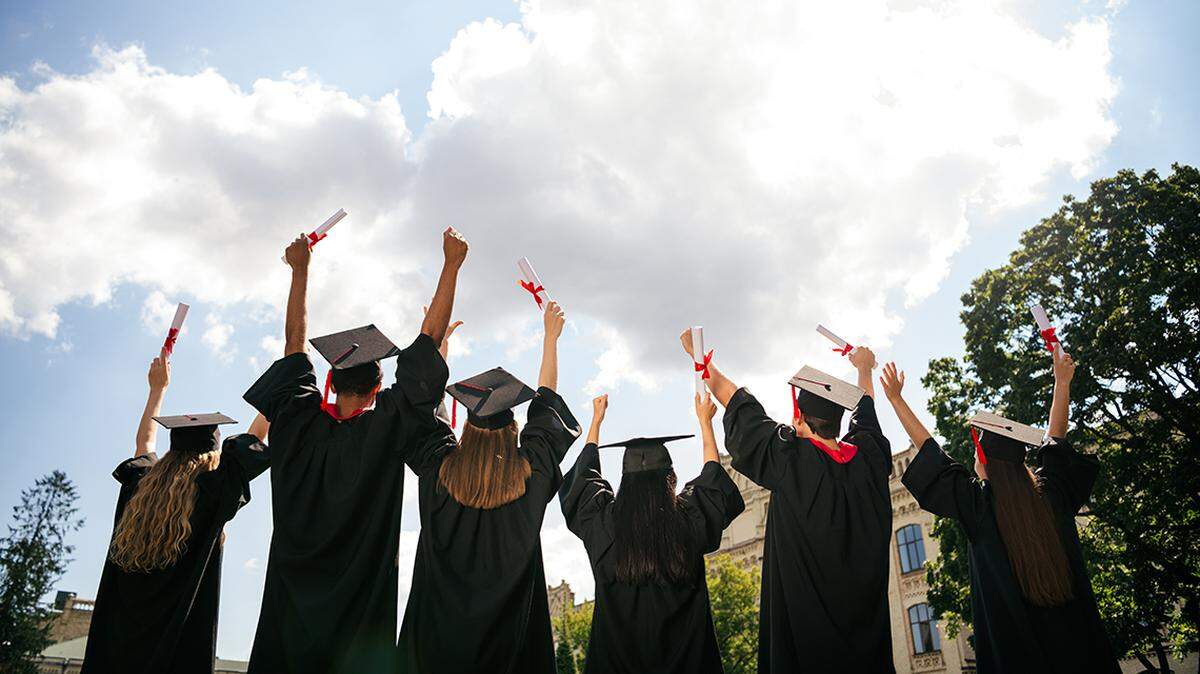
In the next couple of months, roughly 3.9 million public and private high school students — the second-largest class in U.S. history — will don their gowns, toss their tassels and cross the stage to graduate from one of America’s most successful institutions. Of that number, more than 106,000 will come from Kansas and Missouri.
It may sound odd to hear the term “successful” associated with American high schools. Most popular coverage of secondary education tends to highlight all the ways our high schools lag behind other countries, how our test scores are low or how our teaching methods are out of date. We’ve become so accustomed to denigrating our high schools that we’ve forgotten how unique they really are.
Take for instance the Kansas City-area high school where I teach. My school was built in 1914 when the drive for secondary education was so great that America was building a new high school almost every day. Prior to this boom, American teens were widely dispersed across factories, farms and apprenticeships. Only about a half a million enrolled in some form of secondary education per year, and only about 156,000 earned a diploma. Those who wanted an education after elementary school had to choose, if they were lucky, from a loose and sometimes costly confederation of academies, lyceums, preparatory colleges or normal schools to further their studies. Young women had even fewer opportunities, and African Americans were almost entirely shut out.
With the creation of high schools, perhaps for the first time in human history a place existed where large numbers of teens from different backgrounds, nationalities, competencies and social classes could gather in one place to socialize and learn everything from the complexities of math to the subtleties of dance. It’s no exaggeration to say that the American high school created the American teenager.
Cynics may argue that the large number of graduates this year actually represents a decline in rigor. High schools, they say, have become too easy. Perhaps. But high schools continue to be some of the only places where every teen, no matter their situation, can be around their peers, be introduced to new subjects and new people, and can learn how to grow into smart and thoughtful adults.
When I walk into my building, I don’t see the dilapidated remnants of a golden era. I see layer upon layer of teenage vitality, of kinetic mental and emotional energy, of teens trying to define themselves amid an ever-shifting landscape of social, political and economic uncertainty.
American high schools are America. While endless rounds of reform promise to fix this or fix that, institutions such as mine continue to embrace generation upon generation of hopeful, sad, brilliant and weird teenagers. And although my building is more than 112 years old, my students keep company with the ghosts of all those who preceded them.
What an amazing thing to be a part of. What a worthy source for our admiration. What a hopeful testament to our democracy.
Mike Bannen has taught in the Kansas City area for more than 25 years. He is the founder and executive director of the 501(c)(3) nonprofit Kansas Association of Veteran Teachers.