Sports vs. academics debate push no-confidence vote: Where is KU’s funding going? | Opinion
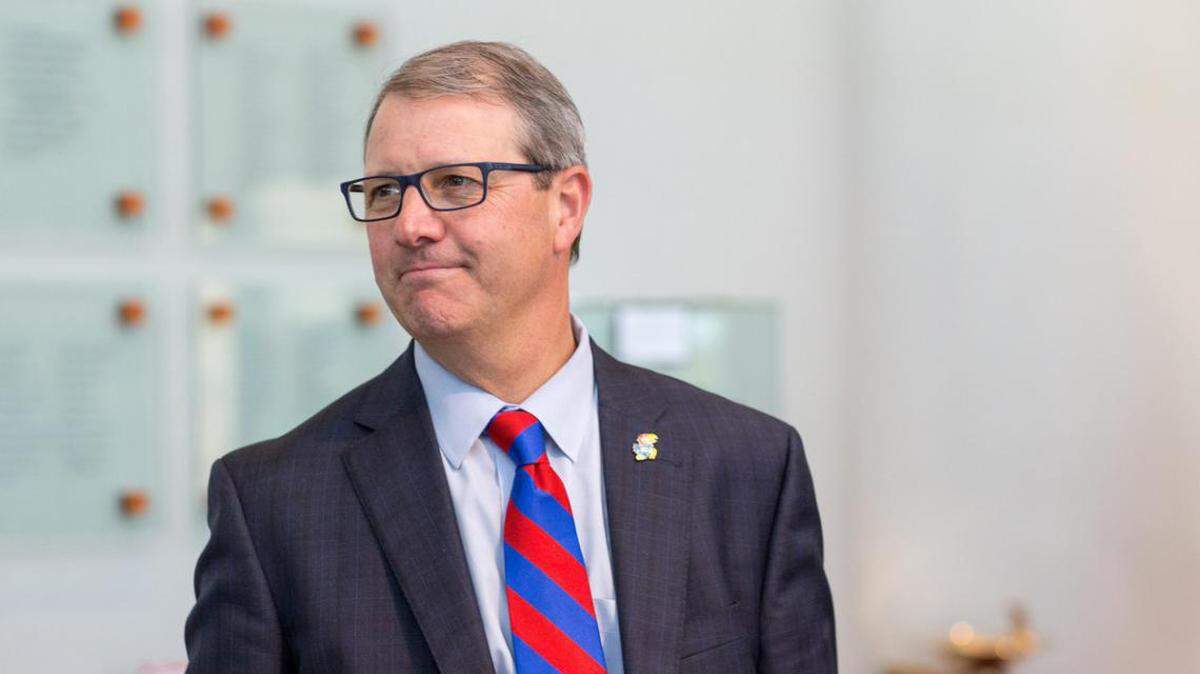
Kansas’ flagship university is officially in turmoil.
Faculty, staff, students and alumni of the University of Kansas this month overwhelmingly backed an informal vote of “no confidence” in the leadership of KU Chancellor Douglas Girod. KCUR — which first reported the results — said that nearly 80% of nearly 2,000 respondents gave Girod a thumbs-down in the unofficial straw poll.
University officials contest the poll’s validity — more on that later — but the results sure seem to signify a lot of discontent in the KU community.
Why the bad feelings?
Glibly, it’s about the jocks versus the nerds.
More seriously, the current tension is largely driven by the age-old tension between a university’s academic and research mission — the reasons for its existence — and the financial pressures created by the increasing professionalization of big-time college sports.
KU basketball star Darryn Peterson isn’t an amateur, after all. The money has to come from somewhere.
But KU faculty and staff are feeling their own squeeze. They recently endured a hiring freeze, and are staring down $32 million in budget cuts for the fiscal year that starts in July. Looming on the horizon: a Legislature eager to slash their funding even more and a federal government seemingly intent on upending American higher education.
Those beleaguered folks look at — for example — the $400 million-plus recently poured into the renovation of KU’s Memorial Stadium to host a few football games a year, compare it to their own sacrifices, and wonder if Girod has his priorities straight.
KU is “dealing with major deficits driven by athletics that are negatively impacting academic programs and faculty,” KU Faculty Senate President Misty Heggeness and KU University Senate President Poppy DeltaDawn said in a letter this month explaining the straw poll. That raises the question of whether the “university community still has confidence in leadership.”
Girod is taking the blame for these developments right now, but the problems are bigger than him.
What is KU’s real mission?
Universities like KU are supposed to educate students and do research that solve society’s challenges. The argument for expensive elite college sports programs is that they help further that mission by attracting non-athlete students, luring donations from deep-pocketed alumni and generally promoting the university brand.
Done right, the jocks and nerds exist in balance, supporting and sustaining one another.
The professionalization of college sports — universities can pay athletes directly now, capped at $20.5 million a year across all sports, in addition to the NIL payments players can take from non-university sources — threatens the balance.
Don’t misunderstand. Athletes like Peterson generate ticket sales, TV ratings and other benefits to the university. They deserve to get paid. But there are knock-on effects.
For example: KU Athletics used to pay $10 million a year into the university’s general use budgets for tuition, housing and feeding of athletes. But the department is operating at a deficit now, so those direct contributions to the larger university community no longer happen.
“Now we are covering expenses they (athletics) used to pay for,” Jeff DeWitt, KU’s chief financial officer, told the Lawrence Journal-World earlier this month.
KU isn’t alone. Kansas State reportedly plans to use $4.2 million a year of its general fund budget to support its athletics department. Wichita State plans to shore up its teams with a $1 million investment.
And it’s not just Kansas. Across the country, Bloomberg reported in November, there are growing concerns that “sports departments that tend to run chronic deficits will weigh even more on schools’ broader fiscal health.”
KU’s mascot is the Jayhawk. Maybe it should be a canary — the kind you bring into a coal mine.
Girod still in place
Girod isn’t going anywhere for now. The straw poll was conducted “outside of KU’s established governance processes” and doesn’t qualify as a “representative measure of sentiment across the university,” a KU spokesperson told KCUR.
Heggeness and DeltaDawn want KU administrators to take the results seriously nonetheless. KU leaders should “take these results to heart and consider action items that could be done to help better align faculty and academic needs with the necessary restructuring of budgets in higher education,” they said in a memo.
We’ll see if that happens. Last fall, with budget cuts looming, Girod proclaimed that KU is “probably the strongest it’s ever been.”
It seemed a bit tone-deaf, to be honest. All of American higher education feels a bit fragile at the moment. KU is probably not the exception.
This story was originally published March 20, 2026 at 5:08 AM.