
Missouri’s ahead of the curve. It’s time to return to the gold standard | Opinion
Every six to eight weeks, 12 members of the Federal Reserve’s Federal Open Market Committee gather behind closed doors and make decisions that ripple through every household in America. They set interest rates, expand or contract the money supply, and effectively determine the purchasing power of every dollar you earn. No vote. No referendum. No accountability at the ballot box. This is not the system our founders envisioned.
For most of American history, the gold standard served as a democratic check on monetary excess. It was elegant in its simplicity: Every dollar was tethered to something real, something that could not be manufactured by committee decree. Citizens voted with their dollars because those dollars meant something fixed and tangible. When Richard Nixon severed that link in 1971, he handed control of our monetary destiny to a small group of technocrats and set the stage for the fiscal dysfunction we live with today.
Gov. Mike Kehoe demonstrated leadership for Missouri by signing the Constitutional Money Act into law. It reestablished gold and silver as legal tender in the state, and prohibits state agencies from participating in any federal attempt to confiscate it, avoiding the Franklin D. Roosevelt confiscations of the Great Depression. Missouri’s action points toward a solution, but the problem is national in scope. To understand why a gold standard matters, we must first examine what we’ve lost.
Consider the national debt. In 1971, federal debt stood at roughly $400 billion. Today it exceeds $38 trillion, with more than $10 trillion in Treasury securities maturing in 2026 alone. This refinancing wall will force the Treasury to issue massive amounts of new debt, likely at higher rates, accelerating the debt spiral and further debasing the dollar — precisely the dynamic a gold standard would prevent.
Cantillon Effect drives wealth inequality
The consequences extend far beyond Washington, D.C. When the Federal Reserve expands the money supply, new dollars do not flow equally to all Americans. They enter the economy through financial institutions and asset markets first, inflating stocks, bonds and real estate long before they reach working families. Economists call this the Cantillon Effect, and it is one of the most powerful engines of wealth inequality in modern America: Those closest to the money creation process — banks, asset holders, financial institutions — benefit first, while working families see their purchasing power erode as prices rise ahead of wages.
The international implications are equally compelling. Today, foreign governments — China chief among them — manipulate their currencies to gain trade advantages, devaluing against the dollar to make their exports artificially cheap. A gold-backed dollar eliminates this game. When currencies are anchored to a universal standard, competitive devaluation becomes transparent and costly, forcing governments to compete on productivity rather than monetary games. American businesses and workers compete on a level playing field. Wealth is preserved across all income classes, not siphoned upward through monetary engineering.
Critics will argue that the gold standard is a relic, too rigid for a modern economy. Rigidity is not a bug, but rather a feature. Since 1971, the dollar has lost more than 85% of its purchasing power, meaning today’s dollar buys what 13 cents bought when Nixon closed the gold window. That is not sophisticated monetary policy. The Federal Reserve’s management and flexibility of our money supply, it turns out, is merely a euphemism for the power to debase your savings without your consent.
True value relative to monetary base
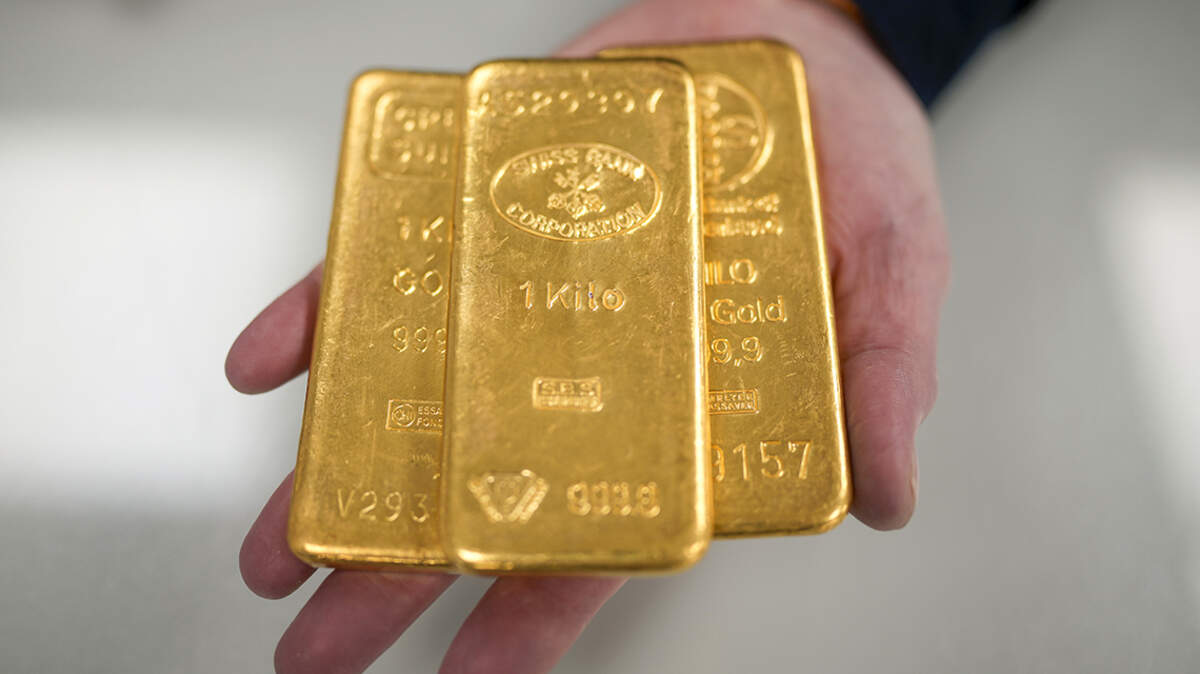
Others object that there simply isn’t enough gold to back our currency. This reveals a fundamental misunderstanding of how asset-backed money works. As monetary economist Judy Shelton has demonstrated, the question isn’t whether we have enough gold — it’s whether we’re willing to recognize gold’s true value relative to our monetary base. The United States holds 261 million ounces in official gold reserves, carried on Treasury books at the archaic statutory price of $42.22 per ounce, for a total book value of just $11 billion. At current market prices, however, these same reserves are worth approximately $1 trillion — nearly 100 times their official valuation.
Shelton’s proposed solution elegantly sidesteps the false sufficiency debate: Issue 50-year Treasury bonds convertible to gold at maturity, letting the market discover the appropriate convertibility price through demand for these securities. This mechanism — what she calls Treasury Trust Bonds — would provide real-time feedback on dollar confidence without requiring Congress to abolish the Federal Reserve or make drastic systemic changes. The bonds would offer holders a choice at maturity: Redeem in dollars if monetary discipline holds, or convert to gold if it doesn’t. As Shelton argues, incorporating gold convertibility into government bond contracts might be sufficient in itself to tie dollars back to gold, because dollar depreciation would create immediate fiscal consequences for the very institutions responsible for maintaining monetary stability.
The gold standard isn’t merely an economic policy — it’s a restoration of monetary democracy. It returns control from 12 unelected technocrats to every citizen who holds a dollar. When the Federal Reserve can no longer debase the currency by decree, Americans get something they haven’t had in 50 years: the power to vote with their dollars. And unlike political elections, this vote happens every single day, in every transaction, with immediate consequences for those who violate the public trust. That’s not nostalgia — that’s accountability.
Jason Nees is an investment consultant and private equity portfolio manager. He lives in Lee’s Summit.