
Missouri River is Kansas City’s lifeblood. Don’t cut it off upstream | Opinion
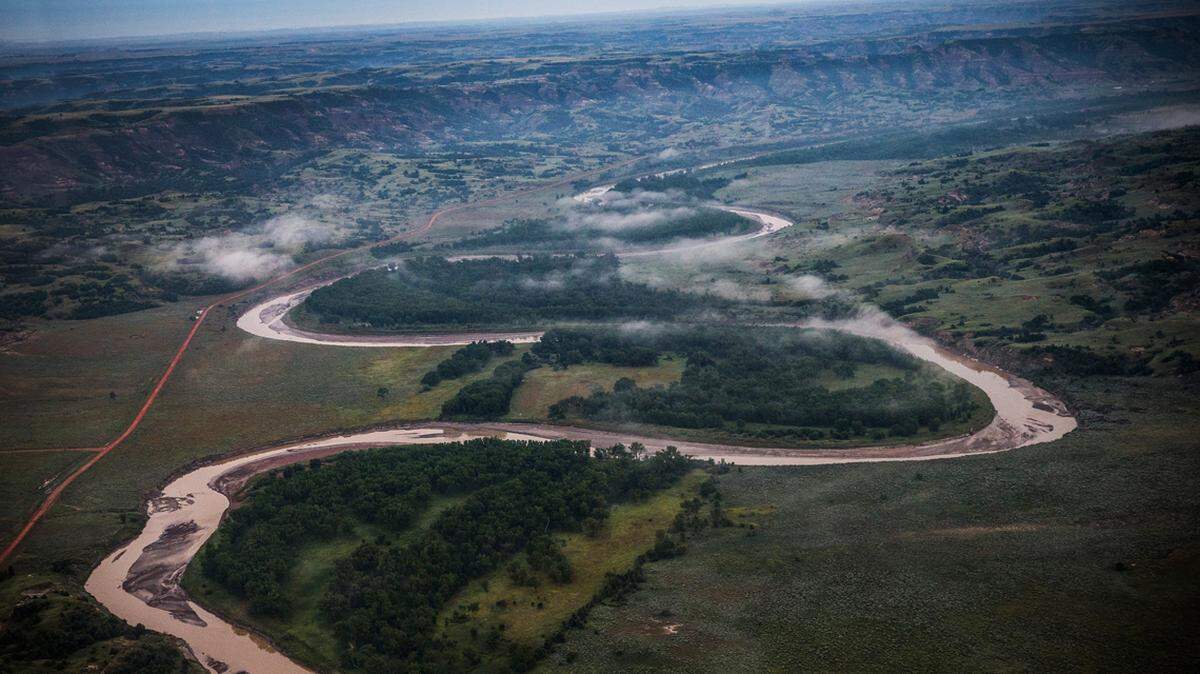
The Missouri River is the lifeblood of Kansas City. It supplies drinking water for the region. It’s essential for cooling the thermoelectric power plants powering Kansas City, and so much more.
But this natural resource is at risk.
For the past 30 years, Missouri has engaged in a water war with North Dakota. I spoke to the Agricultural Business Council of Kansas City recently, sharing the history of how Missouri’s congressional delegation, our governor and our attorney general — regardless of party — have worked together for three decades to protect our water.
It was a hard-fought battle 30 years ago, and it remains one now.
Congress recently approved $50 million for a North Dakota project that will move water out of the Missouri River basin. Federal tax dollars will now divert Missouri River water away from the lower Missouri River basin to the Red River basin, which flows into Canada.
Missouri Gov. Mike Kehoe flagged this $50 million North Dakota project last year when he sent a letter to that state’s U.S. Sen. John Hoeven, clearly communicating Missouri’s adamant opposition to diversions of water out of the Missouri River basin.
Reductions in the amount of water downstream will harm navigation and Missouri agriculture, the backbone of our economy. Missouri has more than 1,000 miles of navigable inland waterways, with 16 public ports on the Missouri and Mississippi rivers. Almost 42 million tons of freight valued at $2.6 billion moved on Missouri’s inland waterways.
More than 1 million tons of sand and gravel are shipped via barge in and out of the Kansas City region annually. Up to 300,000 tons of soybeans make their way to the world on the river, as do nearly 270,000 tons of asphalt, cement and concrete from the region.
Missouri’s inland waterways support key Missouri industries, including crop production. The most valuable commodities shipped are $858 million worth of agricultural products, such as oils and seeds, and $369 million worth of cereal grains, including wheat, corn, barley and oats.
It’s not just about navigation: Missouri has built an entire system of infrastructure on the lower river dependent upon the flow.
The federal reservoirs on the Missouri River store the largest volume of water of any river system in the country. Because of the current drought, the Army Corps of Engineers is releasing less water from the reservoirs in the winter, and Missouri power plants — including those in Kansas City — have had difficulty withdrawing cooling water from the river. This seriously threatens the reliability of Missouri’s electric grid at a time when its reliability is more important to our communities than ever.
We’ve seen what has happened in the West, where rivers have been diverted and depleted. These North Dakota diversions are the first, but they won’t be the last.
Missouri needs congressional champions in other lower-basin states to join us in protecting the interests of downstream states. We must oppose federal funding or other actions that divert water from the Missouri River Basin, and work together to achieve a fair balance between the upper and lower basin.
Missouri has a strong congressional delegation, and we thank Rep. Sam Graves for the leadership he provides at a national level as Chairman of the House Transportation and Infrastructure Committee. He, along with former Sens. Kit Bond and Roy Blunt and Iowa Sen. Charles Grassley, have protected Missouri’s interests by championing Missouri River issues for decades.
Missouri wants governance that guides decisions in the best way for the whole basin, not just one state. All Missouri River Basin states must approach this issue with mutual recognition and respect. Protecting the Kansas City region requires it.
Kurt U. Schaefer is director of the Missouri Department of Natural Resources. His legal career has spanned three decades, including serving as a former state senator and assistant attorney general.