
Trump’s EPA just reapproved this dangerous pesticide. How is MAHA coping? | Opinion
As many Missouri farmers and backyard gardeners are all too aware, twice before — in 2016 and 2020 — the Environmental Protection Agency approved use of dicamba across millions of acres of genetically altered soybeans and cotton in the Great Plains, Midwest and the South.
And twice before, judges struck down those approvals as careless and illegal after — as predicted by independent researchers — the extremely toxic pesticide’s extensive drift, sometimes for miles, damaged millions of acres of nontarget fields, wildlands and family gardens.
In Missouri alone, there were thousands of reports of drift damage.
But last year, for the first time in nearly a decade, there were no reports of dicamba damage from its legal use — because the courts had canceled its approval. No dicamba, no damage.
Not to be deterred by reality, science or the law, Donald Trump’s EPA Administrator Lee Zeldin assured Big Ag he’d get the problematic pesticide reapproved.
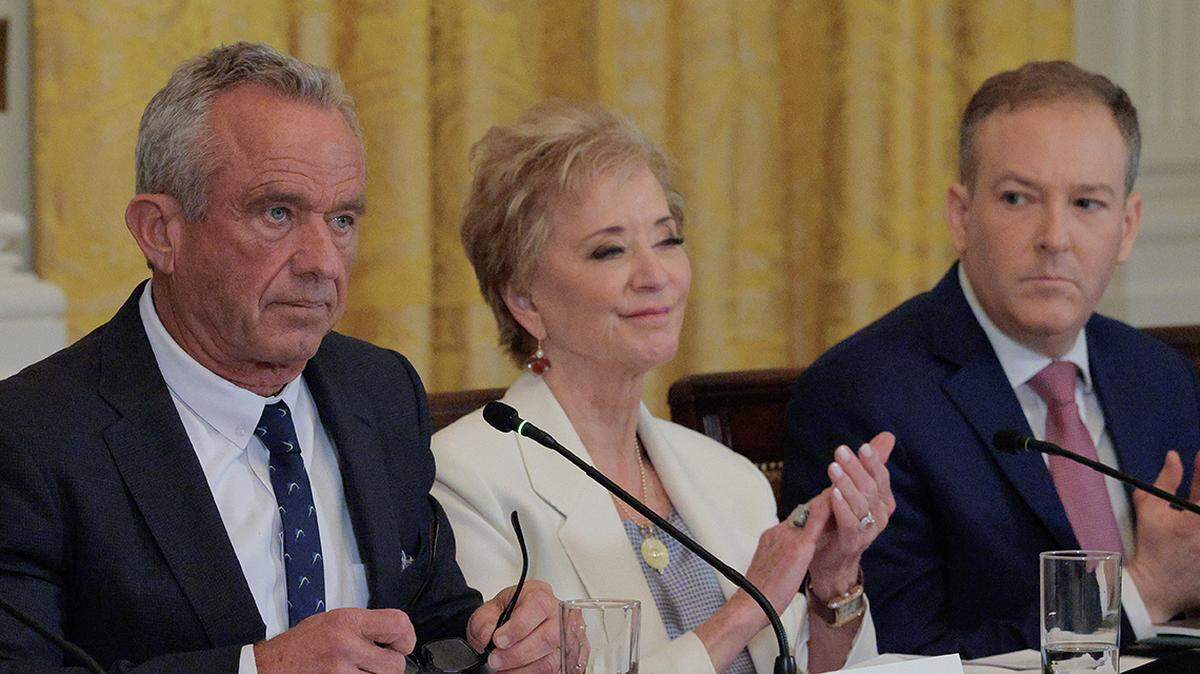
But Zeldin had a problem: In response to his agency’s egregiously pro-pollution policies — including approval of several new forever chemical pesticides — the emerging “Make America Healthy Again” movement was calling for his ouster.
Suddenly, Zeldin was offering assurances that he would be working much more closely with MAHA supporters on pesticide decisions.
But the EPA’s latest approval of the cancer-linked pesticide dramatically spotlights the gaping chasm between the known risks of dicamba and Zeldin’s empty promises, a process now called “MAHA-washing.”
Like greenwashing, MAHA-washing puts a positive spin on EPA decisions likely to harm people, wildlife or both.
And Zeldin had his MAHA-washer on the heavy-duty spin cycle last week, touting how the agency had established “the strongest protections in agency history” for dicamba spraying.
Not surprisingly this glowing report is unsupported by science-based facts.
Claims versus realities
Here’s a breakdown on why:
EPA claim: Cutting dicamba spraying in half “limits potential exposure to sensitive species.”
The reality: The EPA’s own analysis found that few farmers used dicamba at the highest concentrations, suggesting use is unlikely to be significantly reduced.
EPA claim: The approval requires doubling volatility drift-reduction agents, “significantly” reducing drift risks.
The reality: The same volatility agents were required from 2020 to 2024 but utterly failed to stop widespread damage. Now, the agency is asserting drift will be reduced by doubling something that to date has failed to prevent extensive volatility and drift.
EPA claim: Mandatory so-called “conservation” practices will protect waterways and endangered species.
The reality: The American Soybean Association’s own analysis found that nearly 100% of soybean farmers were already compliant with this weak requirement without having to implement any additional conservation protections.
EPA claim: Risk of volatility and drift will be reduced by allowing farmers to apply dicamba to only half their acreage on days with temperatures forecast between 85 and 95 degrees. No applications are allowed if temperatures are forecasted at or above 95 degrees on day-of or day-after application, eliminating applications during the highest-risk conditions.
The reality: Farmers themselves say temperature guidelines are virtually impossible to follow. And they make enforcement nearly impossible. And unlike with the two previous approvals, spraying will be allowed in the hottest months of the year, significantly expanding days of drift risks.
Unfooled by Zeldin’s claims, MAHA movement leaders were quick to point out that the only way to eliminate widespread damage from dicamba is to eliminate its use.
And the strong pushback to Zeldin’s dicamba reapproval makes clear that no amount of MAHA-washing can change the growing number of Americans demanding healthier foods that don’t depend on use of the ever-growing toxic soup of risky pesticides now fueling industrial agriculture.
Kansas City native Nathan Donley is a former cancer researcher who serves as the environmental health science director at the 501(c)(3) nonprofit Center for Biological Diversity.