
3 years after Ohio train disaster, Kansas City’s railroads still need help | Opinion
We don’t work in Washington. We work in a rail dispatch center in Kansas City, helping move trains across this country. We’re train dispatchers — people you’ll probably never meet, but whose decisions affect what rolls through your town every day. We direct trains that carry everything from groceries to hazardous chemicals. Those trains pass through neighborhoods, downtowns and farmland — often just a few feet from homes, schools and businesses.
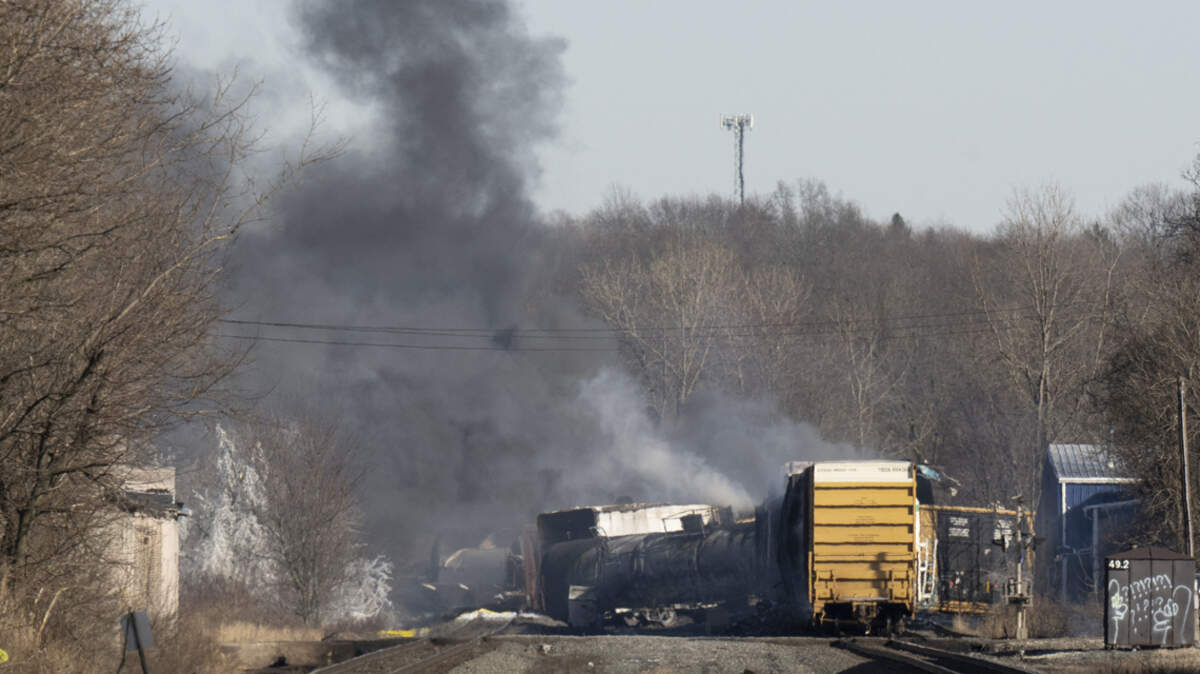
As we near another anniversary of the Feb. 3, 2023, derailment in East Palestine, Ohio, we want Americans to understand something important: What happened there — a train carrying hazardous chemicals left the rails, leading to a fire, the release of toxic vinyl chloride and up to seven deaths — was’t a freak accident. The conditions that caused it still exist, and they affect every community across the country every day.
One of the biggest problems is train length. Trains today are often 1 1/2 to 2 miles long. The railroads were never designed for that. When one of these trains stops, entire towns can be blocked for hours. That means ambulances detouring, fire trucks waiting, parents and workers stuck on the wrong side of the tracks.
This isn’t rare. It happens daily, all over the country. And there are no rules stopping railroads from running trains this long.
Safety sensors along the tracks are another concern. These devices detect rail equipment defects and are supposed to warn crews before equipment overheats or fails. They work if they’re properly set up and maintained, but there’s no consistent national standard. East Palestine showed what can happen when a warning comes too late.
Behind the scenes, dispatchers rely on computer systems to manage train traffic, protect workers and keep road crossings safe. But many of these systems are plagued with software issues and are entirely unregulated. When they freeze or slow down — and they do — mistakes can happen. Seconds matter in rail safety, and unreliable technology puts everyone at risk.
Then there’s train crew size. When something goes wrong on a train, having two trained people onboard can save lives. One person can’t safely handle everything alone. No one would accept a single pilot flying a commercial plane, so why should we accept a single person on massive freight trains rolling through our communities?
This isn’t about politics — it’s about safety. It’s about protecting our families, our communities and railroad workers. It’s about our needs being important and our voice being heard. It’s about doing what’s right.
U.S. Rep. Sam Graves of Missouri, head of the House Transportation Committee, has a chance to lead on rail safety by including the Railway Safety Act and other strong protections in the upcoming surface reauthorization bill, such as ensuring reliable safety equipment, regulating dispatching systems, maintaining two-person train crews and other commonsense safety improvements.
Every American has a stake in a safe rail network, whether you live next to the tracks or drive over them on your way to work. At East Palestine’s anniversary, we shouldn’t just remember what happened. We should demand action so it doesn’t happen again.
Rail safety isn’t a railroad issue. It’s a community issue. And it’s time we treated it that way.
Jesse Kottner and Heidi Phillips are train dispatchers in Kansas City.