
In Missouri, Churchill warned about Russia. Are politicians listening today? | Opinion
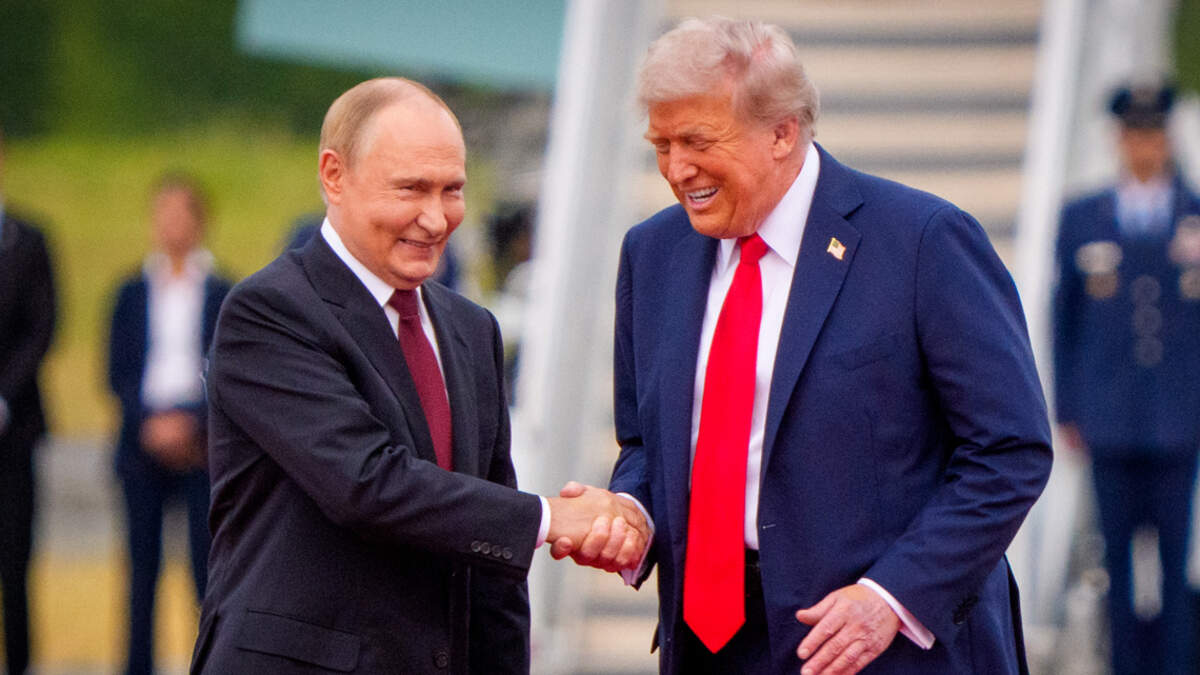
New reporting in the Financial Times indicates there is one issue blocking a deal to end the war in Ukraine. That issue is land. Russian President Vladimir Putin wants the Ukrainians to give up the remaining 20% of the Donbas region his army has been unable to take by force. President Donald Trump reportedly is offering Ukraine “NATO like” security guarantees to prevent another Russian attack if Ukraine will cede this land to Russia.
The piece of Ukrainian land on the negotiating table is Ukraine’s “fortress belt” — a 50-mile strip of land behind the Ukrainian army’s front lines. The fortress belt consists of a series of defensive positions, tank traps, dragon teeth and firing positions the Ukrainians have constructed at great efforts to slow a Russian breakthrough. Beyond the fortress belt to the west lies mostly open ground and an easier pathway to Ukraine’s capital Kyiv, should Russia restart hostilities.
Putin insists Ukraine give up the remainder of Donbas while he continues to fire missiles and drones into their cities and apartments nightly. Russia has knocked out much of the electricity and heat in Kyiv and Kharkiv in sub-zero temperatures. It is no exaggeration to say Putin is trying to freeze Ukrainian civilians to death, and he is committing war crimes in the process.
When asked about whether the U.S. was forcing Ukraine’s hand, Trump’s deputy press secretary Anna Kelly disputed any claim the administration is pressuring Ukraine to accept a bad deal. Kelly said, “This is totally false — the U.S.’s only role in the peacemaking process is to bring both sides together to make a deal.” Another person familiar with the negotiations told The Irish Times: “The U.S. has said that security guarantees depend on both sides agreeing to a peace deal, but the contents of the peace deal are up to Russia and Ukraine.”
If true, this would not be the first time Trump has pushed Ukraine to give up the Donbas to Russia in exchange for vague security guarantees from the U.S. Several sources reported in late 2025 that a major part of Trump’s 28-point plan for peace was that Ukraine cede the Donbas fortress belt to Russia. The deal was so favorable to Russia there was speculation the plan was authored by Russia — but that claim was quickly rebuked by Secretary of State Marco Rubio. True or not, it is surprising the number of times Trump and Putin are on the same page with Ukraine.
One of the main lessons the U.S. learned from World War II was the danger of trading land for peace to an aggressor such as Nazi Germany. British Prime Minister Neville Chamberlain signed an agreement in the fall of 1938 with Adolf Hitler ceding part of the Sudetenland to Germany for Hitler’s assurance he would not invade other countries. That peace was short-lived. On March 15, 1939, the Nazis took the rest of Czechoslovakia. Then in September, they invaded Poland, starting the war.
Britain’s Winston Churchill criticized the Munich agreement and warned “there can never be friendship between the British democracy and the Nazi power … which vaunts the spirit of aggression and conquest, which derives strength and perverted pleasure from persecution, and uses…with pitiless brutality the threat of murderous force.”
Churchill’s description of the Nazis at war could well be applied to Putin’s Russia today and raises the question of why more U.S. politicians are not questioning Putin’s brutal takeover of eastern Ukraine and threats against democratic governments in Europe.
‘Iron Curtain Speech’ in Fulton
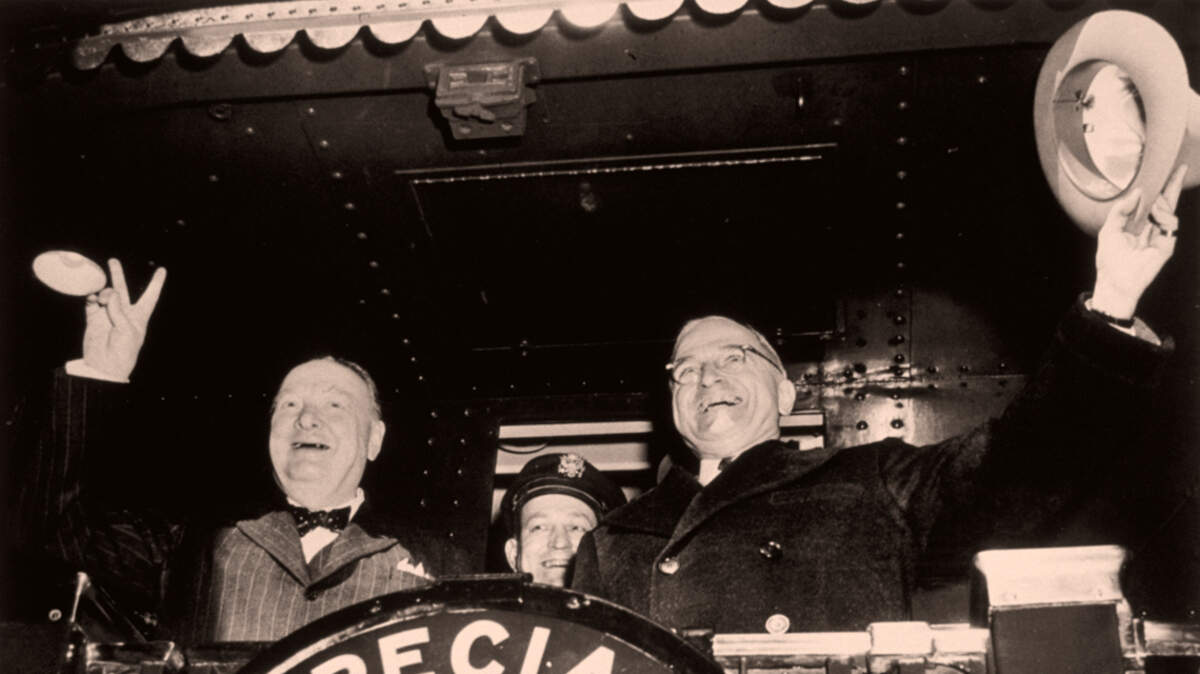
After the war, in March 1946, President Harry Truman accompanied Churchill to Westminster College in Fulton, Missouri, to deliver what became known as the “Iron Curtain Speech.” The speech was a recognition of the Allies’ victory over Nazi Germany and Russia’s great contribution to that victory in lives lost — but it was also a warning about the precarious peace that came after.
Churchill’s famous line from that speech is well known: “From Stettin in the Baltic to Trieste in the Adriatic, an Iron Curtain has descended across the continent. Behind that line lie all the capitals of the ancient states of Central and Eastern Europe. Warsaw, Berlin, Prague, Vienna, Budapest, Belgrade, Bucharest and Sofia, all these famous cities and the populations around them lie in what I must call the Soviet sphere, and all are subject in one form or another … increasing measure of control from Moscow.”
After the fall of Soviet communism and Iron Curtain in 1991, Churchill’s warning no longer had the same resonance to American politicians. Before this, American politicians made careers being “tough on communism,” but Churchill’s speech was as much a warning against the threat of authoritarianism (from the right and left) to the principles enumerated in our Bill of Rights, and “find their most famous expression in the American Declaration of Independence.”
It is a great irony that Ukraine — a country that has fought so hard for years against Russian aggression and whose occupied territories and now lies behind another “iron curtain” — seeks the same rights and freedoms Churchill spoke of in Missouri. It is an irony made more poignant by the fact the post-World War II order Truman and Churchill brought forth led to 80 years of unrivaled peace and prosperity in the West. It is unfortunate that Putin remains so paranoid and bitterly hostile towards these values he would sacrifice on the battlefield 1.2 million young Russians to prevent their taking root in Ukraine.
We can only hope Trump and Congress come to recognize Putin’s deep hostility toward what Churchill described as the “the great principles of freedom and the rights of man, which are the joint inheritance of the English-speaking world” — and act accordingly.
Mike McCaffree is a real estate broker in Nevada, Missouri. He has a degree in political science from Westminster College in Fulton, Missouri.