
Save your outrage for ICE’s violence, not an F-word at KC Plaza protest | Opinion
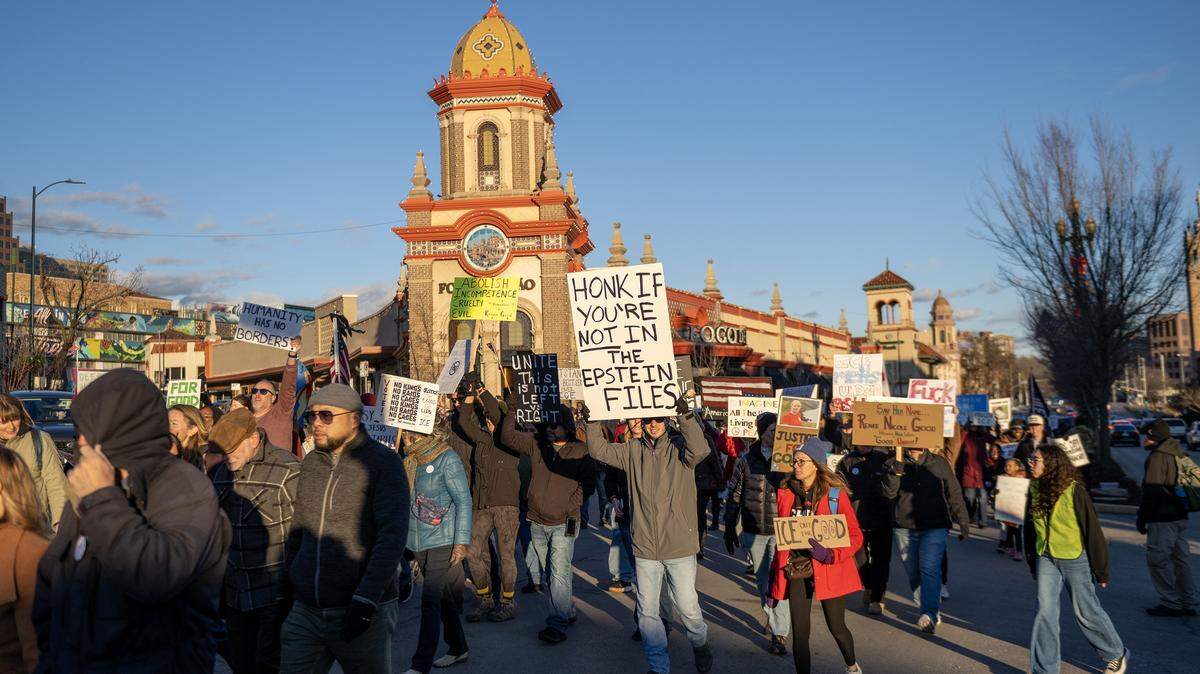
The author of a recent guest commentary in The Kansas City Star recounted attending a protest on the Country Club Plaza and leaving disturbed — not by the fear that brought people there, but by the repeated chants and signage of “F*** ICE.” The writer described this language as dehumanizing, contradictory to nonviolence and morally indistinguishable from the harm he believes Immigration and Customs Enforcement represents.
I take this perspective seriously. It is clearly written from a place of faith, history and an earnest desire to reject violence and chaos. But I believe it draws the wrong conclusion and in doing so, risks misnaming where the true harm lies.
The author is correct about one thing: Dehumanization is vile. It should alarm us wherever it appears. But profanity is not dehumanization. State power exercised in ways that generate fear, trauma and death is.
The protest described was not an abstract exercise in rhetoric. It was a response to the killing of a woman during an encounter with federal agents, and to the broader reality that many immigrant families live with daily: fear of detention, separation and sudden loss. That fear does not dissipate because a protest is orderly. It exists regardless of tone.
To suggest that the phrase “F*** ICE” is itself morally equivalent to the systems being protested collapses a critical distinction: the difference between speech born of anguish and power exercised with lethal consequences.
Nonviolence does not require emotional neutrality. It does not require grief to be expressed politely. And it certainly does not require communities under threat to regulate their language to make others more comfortable.
The author suggests that repeating a profane chant mirrors the same “vile, dehumanizing nature” attributed to ICE. But dehumanization is not simply harsh language. It is the reduction of people to targets, to case numbers, to collateral damage. It is policy without proximity. It is enforcement without accountability.
Anger expressed at a protest does not erase humanity. In many cases, it is an affirmation of it.
There is also a subtle but important shift that happens in arguments like this one. Attention moves away from why people are protesting and toward how they are doing it. The presence of fear near schools, parks and neighborhoods becomes secondary to whether a chant aligns with a particular moral aesthetic.
That shift matters. It allows us to critique reaction without interrogating cause.
The author invokes Luke 23:34 — “They do not know what they are doing” — as a call to mercy. Mercy is essential. But mercy in the Christian tradition is not passive. It does not ask the wounded to lower their voices before the harm has ceased. It demands truth-telling, even when that truth is uncomfortable.
If we are disturbed by the language of protest, we should ask why. Is it because profanity violates our sensibilities, or because it forces us to confront realities we would rather keep at arm’s length?
The author asks where it ends. It ends when fear ends. When schools feel safe. When families are not forced to choose between silence and survival. When state power no longer operates in ways that leave communities grieving and on edge.
Until then, our task is not to police language, but to reckon honestly with the conditions that give rise to it.
Edgar J. Palacios is founder and CEO of the 501(c)(3) nonprofit Latinx Education Collaborative in Kansas City.