
Even from Kansas City, we see freedom in Iran is closer than ever | Opinion
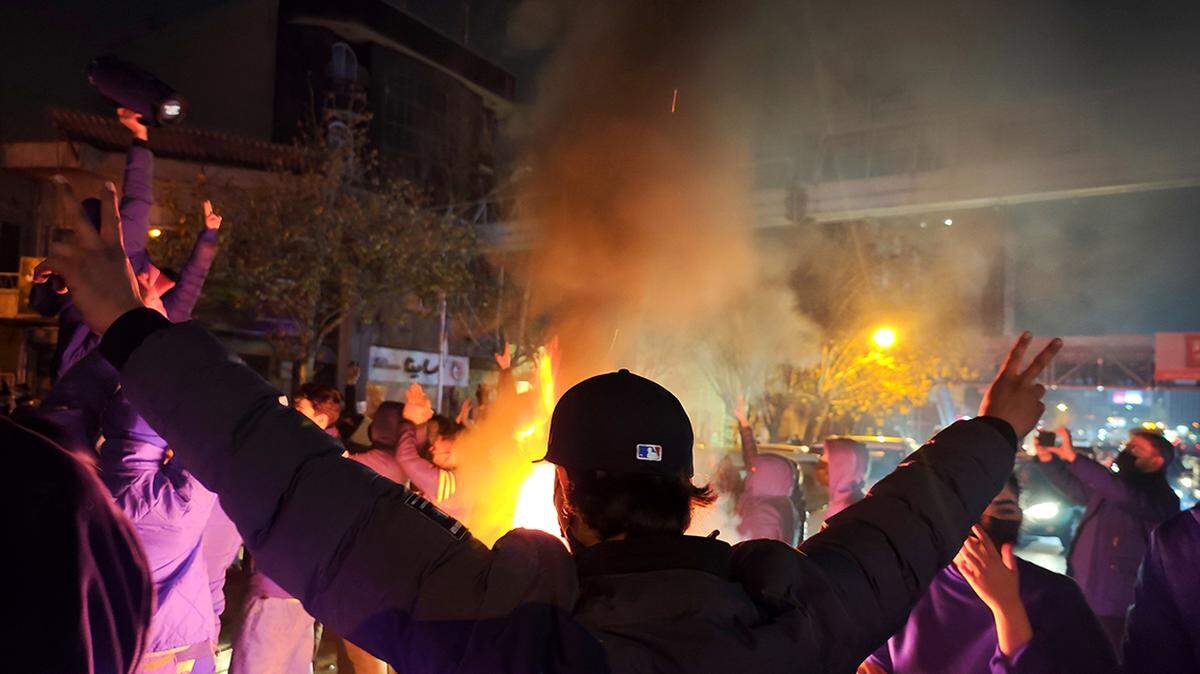
The ongoing uprising in Iran has entered its third week despite a heavy crackdown. As of Jan. 11, the main democratic opposition, — the People’s Mojahedin Organization of Iran, also known as the MEK — places the death toll at more than 3,000. Some reports cite figures exceeding 10,000. Following developments from abroad — specifically from Kansas City — is challenging, particularly against the backdrop of a complete internet shutdown inside Iran for the past several days.
What began in the capital, Tehran, has rapidly spread to more than 195 towns and cities across the country. Broad sectors of society — merchants from the traditional bazaars, university students, industrial and factory workers, teachers, retirees and a large segment of the middle class that has now been pushed into poverty — have joined the protests. The uprising is a revolt against decades of repression, corruption and economic collapse — and a struggle for freedom.
The uprising differs markedly from the 2022 uprising in two key respects. First, the fear equation has decisively shifted. Increasingly, it is the regime’s repressive forces who appear fearful, while protesters act with unprecedented resolve. In the southwest city of Abadan, security forces abandoned their posts after failing to disperse demonstrators with tear gas. In Bojnurd, the crowds grew so massive that security agents retreated to rooftops. In Borujerd, young people armed with stones clashed with Iranian Revolutionary Guard forces, ultimately forcing the agents to retreat.
Second, the rebellious units affiliated with the MEK are operating at a significantly more sophisticated level. Since the 2022 uprising, these units have increased in number and enhanced their operational capacity. They have concentrated on three core objectives: expanding and elevating their organizational networks, targeting symbols and centers of repression to keep the flames of resistance alive, and preparing logistically for the next nationwide revolt — the current one. Recent footage shows rebel units moving in a motorcade through the streets of Tehran in broad daylight with flags waving. This underscores an advanced level of organization, planning and coordination — especially given that any arrest could result in torture, imprisonment or death. Today, these units lead the uprising, amplify its momentum, expand its reach and manifest its inherent radical nature.
Uprising not about wearing hijab
This time, the uprising can no longer be falsely portrayed as a movement centered on opposition to women’s compulsory wearing of a hijab. The clarity of the slogans and the radical nature of the current uprising leave little room to reduce a movement for democratic revolution to a mere call for a policy change on the hijab. Substantial evidence suggests the mullahs themselves are behind such portrayals in an effort to obscure the uprising’s central demand: regime change.
The current uprising should be understood in its historical context. Iran’s freedom movement began with the 1906 Constitutional Revolution, which sought to limit monarchical power. In 1953, Prime Minister Mohammad Mossadegh led the national movement to nationalize Iran’s oil. The 1979 Iranian Revolution ended the monarchy. However, the rise of Ayatollah Ruhollah Khomeini to power was a direct consequence of Shah Mohammad Reza Pahlavi dictatorship, which suppressed all democratic forces while empowering the mullahs. The current uprising, continuing the waves of protest in 2017, 2019 and 2022, is bringing Iran closer to freedom than ever before.
Regime’s propaganda attacks MEK rebels
However, given the brutality and reach of the regime’s repressive apparatus, uprisings can be suppressed unless fortified by a battle-hardened vanguard organization on the ground. The MEK, with thousands of operational resistance units, is the only such nationwide organized resistance. Therefore, the cause of freedom in Iran hinges upon these rebellious units. The regime rightly recognizes this existential threat and has devoted the full force of its propaganda machinery against the MEK, while its repressive apparatus works to eliminate its members. At least 18 members of MEK resistance units are now on death row. Last year, a bipartisan majority in the U.S. House of Representatives endorsed the 10-point plan of Maryam Rajavi — the president-elect of the National Council of Resistance of Iran, of which the MEK is the pivotal organization — for the transitional period, as well as the MEK resistance units.
As support for the MEK grows inside and outside Iran, the clerical regime has covertly promoted Reza Pahlavi, the son of the deposed shah, as an alternative. This effort aims to divert attention from the genuine political alternative represented by the NCRI. Numerous protest videos have been manipulated through voice-overs to falsely suggest calls for the restoration of the monarchy.
Iran is closer than ever to freedom. The MEK resistance units operating inside the country are leading the uprising to uproot the ruling regime. They are the main reason the uprising spreads, radicalizes and endures. By supporting these resistance units, the international community and the Iranian diaspora in Kansas City and beyond can play a historic role in accelerating Iran’s path toward freedom.
Saeid Sajadi is a practicing physician in Overland Park and a representative of Iranian-American Community for a Free Iran.