
If Supreme Court lets Trump fire agency heads for politics, US will suffer | Opinion
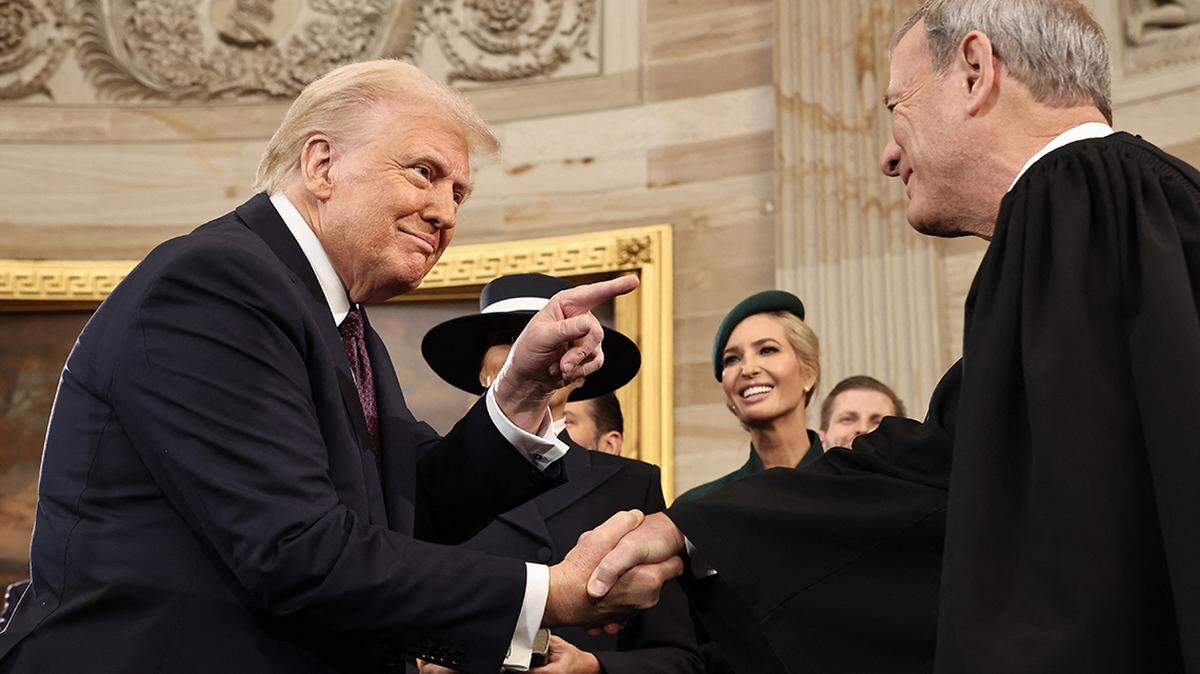
President Donald Trump, emboldened by the Supreme Court’s 2024 decision in Trump v. United States, unilaterally removed two members of the Federal Trade Commission (both Democrats) in March, and three Democrats from the Consumer Product Safety Commission in May. In August, he announced the firing of Lisa Cook, a President Joe Biden appointee, from the Federal Reserve in a Truth Social post. (The Supreme Court will hear her case in January.) The major obstacle standing in the president’s way is a precedent, established 90 years ago, which limits the president’s removal of heads of independent agency commissions.
In 1935’s Humphrey’s Executor v. United States, a unanimous Supreme Court ruled that the president’s removal authority could be restricted if the agency performs “quasi-legislative” or “quasi-judicial” functions (the so-called “nature of the functions” test). In that case, President Franklin D. Roosevelt had attempted to remove William Humphrey as head of the Federal Trade Commission because of political differences, but the statute creating the FTC allowed only “for cause” dismissals — in other words, removals for “inefficiency, neglect of duty, or malfeasance in office.”
The rationale of the decision was that independent agencies such as the FTC were established by Congress to be nonpartisan, and make decisions for the public good based on the best scientific and technical evidence available. In 1958, the Supreme Court, once again unanimously, relied upon Humphrey’s Executor and rejected President Dwight Eisenhower’s attempt to remove a member of the War Claims Commission, an independent agency. Justice Felix Frankfurter, the author of the court’s opinion in Wiener v. United States, lauded “the philosophy of Humphrey’s Executor” and called it a “cause célèbre.”
Humphrey’s Executor carved out an important exception to 1926’s Myers v. United States, in which the Supreme Court broadly interpreted the president’s removal power. Frank Myers, a postmaster from Oregon, had been removed by President Woodrow Wilson. In an opinion by Chief Justice William Howard Taft, a former president, the court held that the removal power (although not explicitly mentioned in the Constitution) was a necessary adjunct to the appointment power and included both superior and inferior officers. Importantly, the Humphrey’s Court did not challenge Myers’ holding that the president has the authority to remove officials who perform purely executive functions. (In other words, the president still has the authority to remove Cabinet-level officials.) In fact, four members of the Taft Court, which decided Myers, joined the unanimous decision in Humphrey’s Executor. Even though Chief Justice John Roberts’ Supreme Court has shown little concern about adhering to long-standing precedents, overturning Humphrey’s Executor would represent a drastic and harmful change to our system of government.
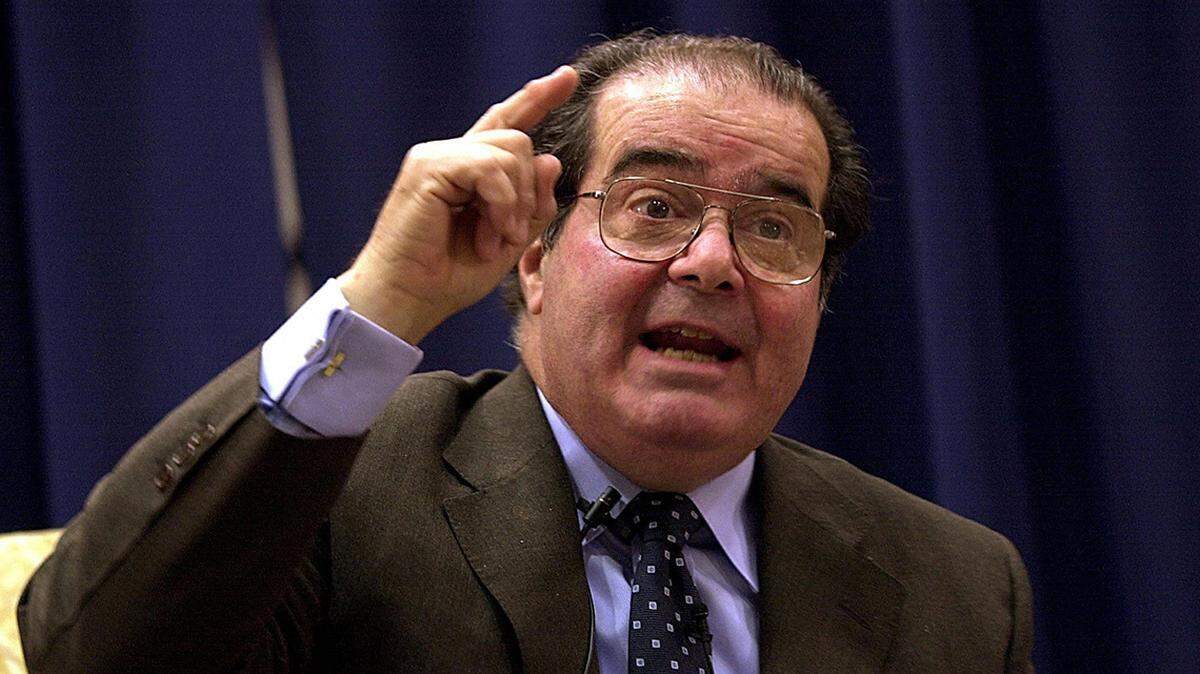
Originalism, unitary executive in 1980s
Humphrey’s Executor and Wiener were widely accepted cases until the concept of originalism and the unitary executive reared its head in the 1980s. Unitary executivists contend that — supposedly based on the original intent of the framers of the Constitution — a president must be able to control (remove) all agency heads who perform any sort of executive functions. This was first espoused by former Supreme Court Justice Antonin Scalia, then maintained by Justice Clarence Thomas, and now appears to be embraced by all six members of the Roberts Court’s conservative supermajority.
However, as pointed out during the oral argument in Trump v. Slaughter, if a president can unilaterally remove commissioners from the FTC for political reasons, what’s next: the National Labor Relations Board, the Federal Elections Commission, the Nuclear Regulatory Commission, the Securities and Exchange Commission, the National Occupational Safety and Health Commission or the Federal Reserve? What about non-Article III judges (so-called legislative courts), such as those who serve on the U.S. Tax Court and the U.S. Court of Federal Claims? Solicitor General John Sauer, who praised Justice Scalia “as one of the greatest jurists in the history of the court,” admitted during the oral argument that the Supreme Court’s decision would likely impact two dozen independent agencies.
If the Roberts Court makes such a radical decision (and one hopes it does not), it will undoubtedly base its decision on originalism and contend that Humphrey’s Executor was a departure from the Supreme Court’s removal decisions dating back to the founding. But that’s not true. Alexander Hamilton, probably the strongest proponent of executive power the country has ever produced, wrote in Federalist 77 that the consent of the Senate “would be necessary to displace as well as to appoint.” He continued: “A change of the Chief Magistrate, therefore, would not occasion so violent or so general a revolution in the officers of the government as might be expected, if he were the sole disposer of offices.”
It is true that Hamilton’s views changed during his time as President George Washington’s treasury secretary, but his cautionary remarks in the Federalist Papers (and his obvious uncertainty on the subject) should give the unitary executivists pause.
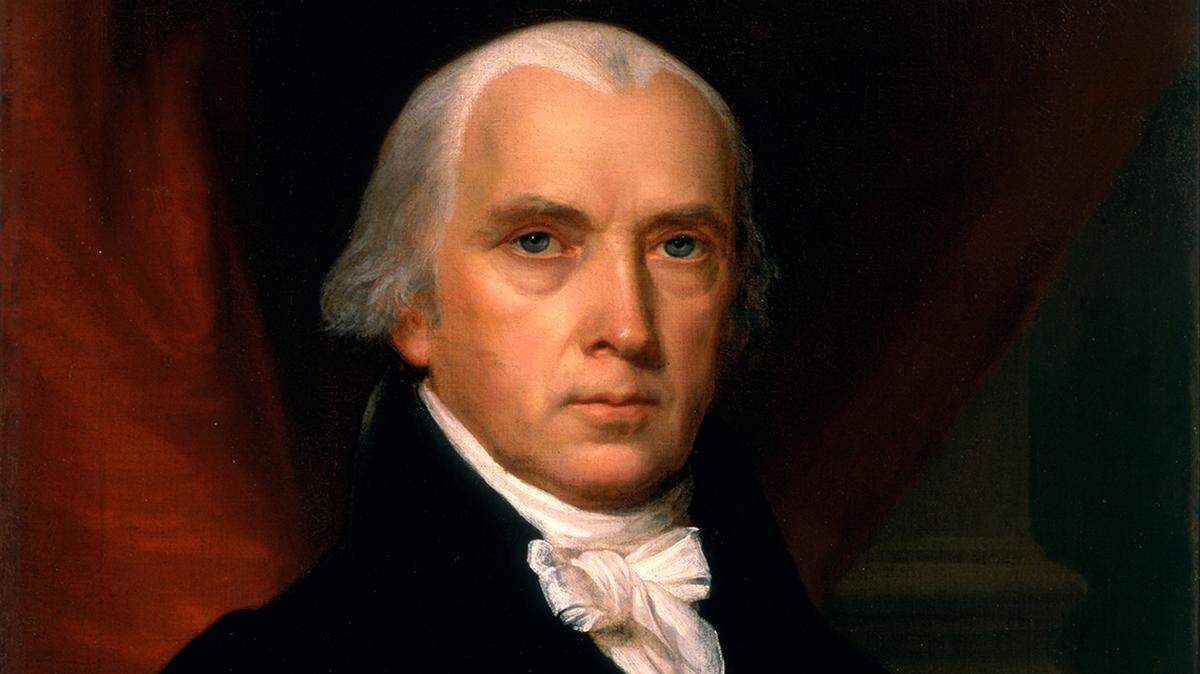
James Madison called for limits to power
James Madison, the so-called father of the Constitution, is often cited by unitary executivists for his principled defense of the president’s removal power during a famous debate during the First Congress called the Decision of 1789. Madison took the position — ultimately the prevailing one — that a president has the sole authority to remove the secretary of foreign affairs based on the text of the Constitution (the Vesting and Take Care clauses) and the policy argument that executive officers are essentially an extension of the president, and therefore have to be obedient to him. The unitary executivists fail to mention, however, that one month later, Madison qualified his position. In discussing the office of comptroller general, Madison argued that the president’s removal authority could be limited based on “the nature of the functions” of the office:
“It will be necessary … to consider the nature of this office, to enable us to come to a right decision on the subject; in analyzing its properties, we shall easily discover they are not purely of an executive nature. It seems to me that they partake of a judiciary quality as well as executive; perhaps the latter obtains in the greatest degree. … (T)here may be strong reasons why an officer of this kind should not hold his office at the pleasure of the executive branch of Government.”
Madison’s analysis of the comptroller general’s responsibilities was relied upon by the Supreme Court in Humphrey’s Executor, which provides compelling evidence that the decision was not a departure from the original understanding of the Constitution. Humphrey’s Executor was a sensible accommodation between the two political branches over the power of removal. Since Congress creates the agencies (and the offices within them), it should have the authority to limit the president’s removal of officers whose responsibilities are not exclusively executive in nature.
If the Roberts Court overturns Humphrey’s Executor, it will allow presidents to politicize the scientific and technical information that is relied upon by these administrative agencies, and that will harm the American people immeasurably.
James B. Staab is a professor of political science at the University of Central Missouri in Warrensburg. Justice Antonin Scalia gave a university-wide speech at UCM in 2008 after Staab published “The Political Thought of Justice Antonin Scalia: A Hamiltonian on the Supreme Court.” More recently, he wrote a book criticizing originalism as a theory of constitutional interpretation, “Limits of Constraint: the Originalist Jurisprudence of Hugo Black, Antonin Scalia, and Clarence Thomas.”
This story was originally published December 30, 2025 at 5:05 AM.