
Kansas City’s Edgar Snow gave us a view of China we need for the future | Opinion
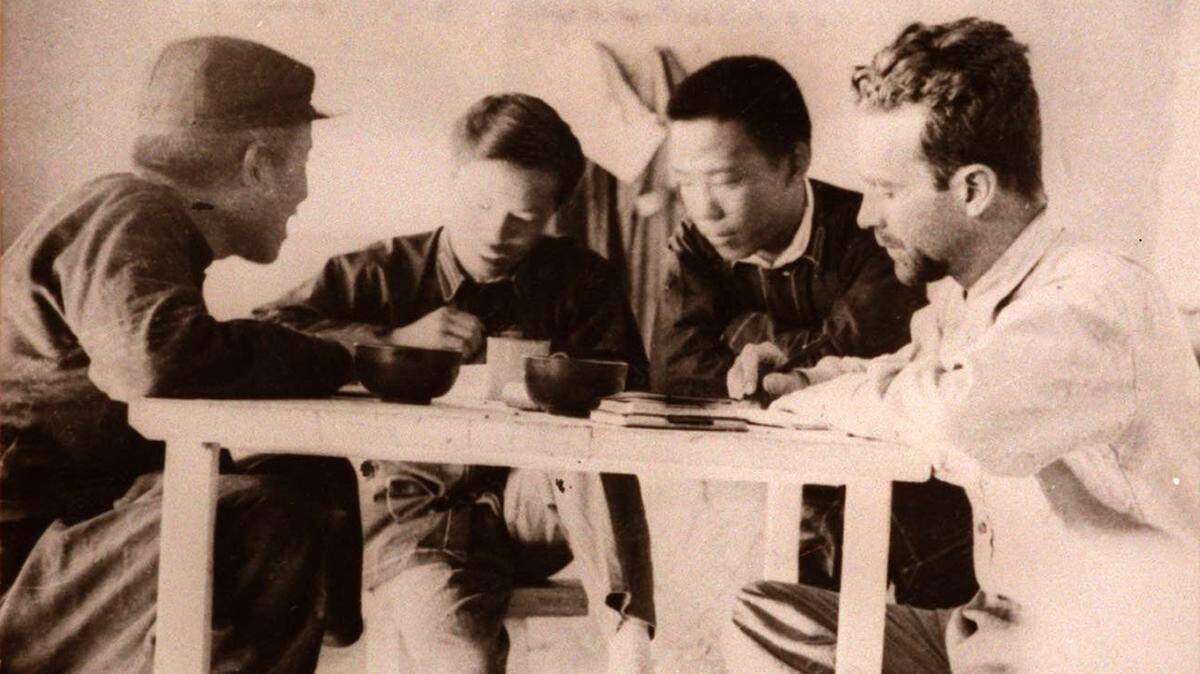
Kansas City native Edgar Snow wrote what has been described as the greatest book of reporting by an American foreign correspondent in the 20th century. That book, “Red Star Over China: The Classic Account of the Birth of Chinese Communism,” published in 1938, introduced Mao Zedong and the Chinese Communist Party to the world.
Snow never forgot Kansas City. He arranged for his notes, documents, photographs and correspondence to be archived at the University of Missouri-Kansas City. I recently spent three days in those archives and discovered that he was a tireless and talented journalist.
Snow continued to report on Chinese affairs for almost 40 years. He traveled extensively in China and wrote “Red China Today,” published in 1961, and “The Long Revolution,” published after his death in 1972.
Over those years, Mao and Premier Zhou Enlai granted Snow interviews at a time when journalists from the United States were not permitted entry into China. Zhou told Snow in a 1960 interview that he was different because he was a “historian,” not a reporter. In 1970, Mao shared an amazing bit of news with Snow: President Richard Nixon would be welcome to visit China.
Snow graduated from Westport High School and studied journalism at the University of Missouri. His biographer, John Maxwell Hamilton, wrote that the truth about Snow was not only in his travels “but in where he came from.” While the impact of his work was international, a friend once said that Snow “was always from Kansas City.”
Snow interviewed Mao several times in 1936. In July, Mao complained to Snow that “fascists are screaming of ‘control of China by Moscow.’” Mao dismissed the allegation by saying, “If all these things are true, then it is also possible to build a railway to Mars and buy a ticket from Mr. H.G. Wells.”
The archives contain Snow’s notes from his August 1960 interviews with Zhou. Those interviews demonstrated Snow’s skill and Zhou’s formidable ability to advance China’s foreign policy goals.
Zhou advised Snow that he would answer questions “in a general discussion of the problems concerned.” He proceeded to refer to the possibility of “diplomatic relations” with the United States, but he stressed the need for “settlement of the dispute between China and the U.S. over Taiwan.” Zhou admitted that there were differences between China and the Soviet Union. Snow noted that it was the first time a Chinese official had described differences between the two countries.
‘I like Nixon in power’
On Dec. 18, 1970, Mao gave Snow an interview that would have far-reaching implications for United States foreign policy. During the interview, Mao said, “I like Nixon in power.” He told Snow that if Nixon “wants to come to Peking, you may bring him a message. Tell him to come in secret.” Mao said, “Nixon is a good fellow. The No. 1 good fellow in the world. That (Soviet Communist Party General Secretary Leonid) Brezhnev is no good.” With those words, Mao simultaneously disclosed a significant rift with the Soviet Union and invited Nixon to China.
Snow wrote about those remarks in an April 10, 1971, article in Life magazine. Nixon’s foreign policy advisor, Henry Kissinger, went to work, and on July 15, 1971, Nixon announced he would visit China.
The next year, Snow developed significant health issues. In early 1972, Nixon sent a letter to Snow in which he referred to Snow’s “distinguished career” and said, “I can only hope that it will strengthen you to know that your distinguished career is so widely respected and appreciated.”
Snow died on Feb. 18, 1972, three days before Nixon was to leave for China. The Kansas City Times, The Star’s morning edition, editorialized that with his untimely death, Snow “had at last become a prophet of great honor in his own country.”
Given the foreign policy importance of China in the coming years, Snow’s archives at UMKC will be an invaluable asset for Kansas City and the United States.
Fred Logan is a retired lawyer in Leawood. He has previously written on China for The Kansas City Star.
This story was originally published December 16, 2025 at 5:04 AM.
CORRECTION: A quote in this commentary about building a railway to Mars was originally attributed to the wrong speaker.