
Commentary | US made promises to hardworking Afghan refugees. They strengthen the Midwest
On Thanksgiving, my family walked around a nearby lake. As we approached a stand of pines, we noticed a refugee family grilling over a hibachi. We guessed they were Afghan newcomers to us here in Nebraska, because their English was minimal and the mother and daughter wore hijabs. Their young son ran over to us and proudly demonstrated his battery-operated truck. His sister, who looked about 6, followed and my son handed her a golf ball that he had just found. The parents waved and smiled. We wished them happy Thanksgiving and moved on. A few minutes later the little girl tapped my granddaughter on the shoulder. She had raced after us to give us a handful of roasted carrots, still warm from the hibachi.
Late last month, two National Guard members were shot in Washington, D.C., by an Afghan refugee who had worked with the CIA. Since then, President Donald Trump has ordered the cancellation of all Afghan visa applications and has ordered ones that were printed but not yet delivered to be torn up. This leaves thousands of Afghans who worked with our soldiers adrift in dangerous places. In addition, all current Afghan visa holders, even those with green cards, may be reinterviewed and possibly deported. This will strand allies who have been waiting for years to come to our country, terrify people already here and break our promises to men who helped us fight a brutal war.
The Afghans living in the U.S. have already undergone exhaustive vetting processes, including biometric checks and security reviews. The parents are working in our factories, fields, hospitals and commercial kitchens. Their children are attending our schools and rapidly learning English. We are now betraying them.
Demonized as ‘killers,’ ‘leeches’
Because an Afghan shot two people, our government is painting a large community from Afghanistan and 18 other countries with a huge brush. One man is guilty, yet all are condemned. The administration is demonizing a whole population as “foreign invaders.” Secretary of Homeland Security Kristi Noem wants “a full travel ban on every damn country that’s been flooding our nation with killers, leeches, and entitlement junkies.” This demonization is unfair, untrue and un-American. Hate speech sets a dangerous precedent, one that has been used by many dictators throughout history. It leads to violence and, ultimately, is self-defeating. We will be seen as a nation that violates human rights and cannot keep its word.
I wonder if President Trump or his adviser Stephen Miller has ever had a conversation with a person seeking asylum. Or if they know of newcomers’ trauma, the financial struggles and loss of family and country. And, if they were to meet with refugees, would their hearts have the capacity of understand and help their fellow humans?
I’ve had many such opportunities. I’ve been working with newcomers since the first wave of Vietnamese refugees came to our town in the mid-1980s. In Nebraska, we have the most refugees per capita of any state in the country. Many of them work in our beef, chicken and food processing plants or our many factories. Since the fall of Kabul, my husband and I have sponsored multiple Afghan families.
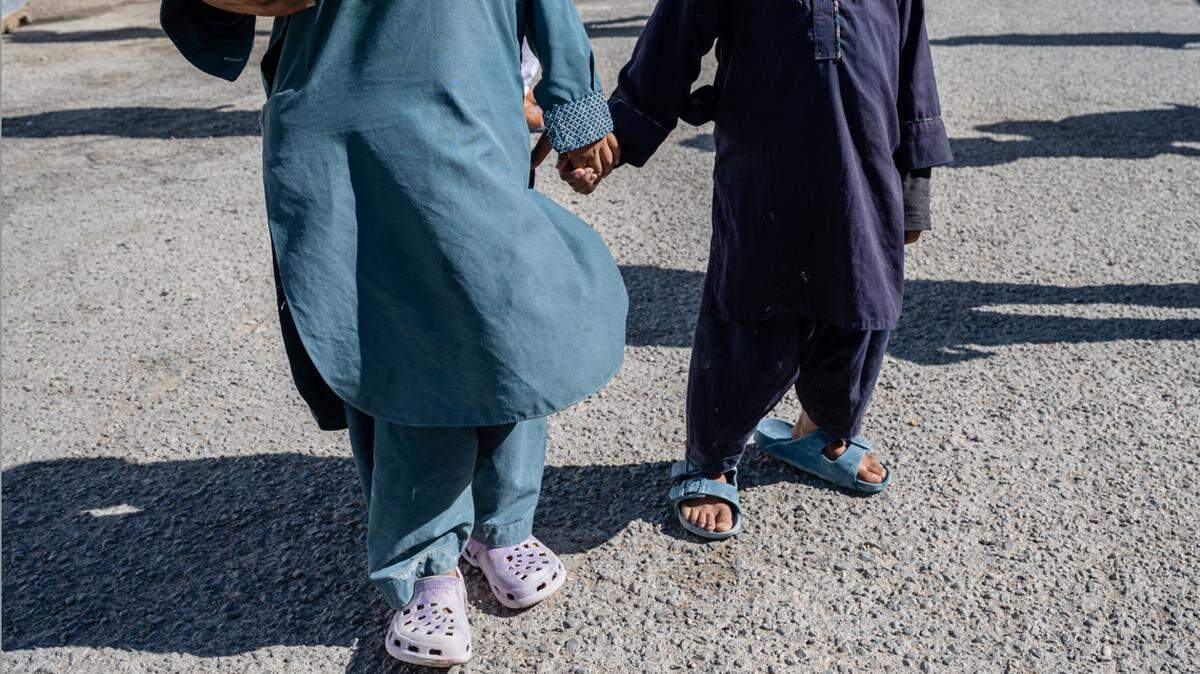
The extended families from Nuristan province arrived first. Since they were teens, the men had all worked with the U.S. government. Instead of going to school, they had learned to fight. Few of their wives and children had learned to read or write, and most spoke no English. The men soon went to work at a large factory and the women stayed home to care for the children. One I know, Zahra, was the first to go to school at 6. Like many Afghan children, she was small for her age. I remember walking with her into her building on the first day of school. She wore a long dress, head scarf and a brave smile. She was 40 pounds of courage ready to learn her ABCs.
Trauma Americans can barely comprehend
We met another family at the airport. The father had worked for the Americans in communications and spoke perfect English. He had a price on his head, and had moved from place to place to stay alive. His wife and four children had been in hiding in a basement, and the children hadn’t been able to play outside or go to school. When the family deplaned, the father shook hands and expressed his gratitude to us. His wife and children were bright-eyed and friendly. He told us they had flown all the way from Pakistan with no money even for a bottle of water. But they were excited to be in America. A few months later, I joined the family as the children played soccer in a park. The father had found a good job as a translator. Already the children were speaking English.
I could make an economic argument for granting asylum to people from what the president derides as “third world countries.” Newcomers do the dangerous, difficult and dirty work that Americans don’t want to do. And more than native born citizens, they believe in the American dream. They are hardworking, patriotic and determined to give their children better lives. They commit far fewer crimes than native-born citizens, and their children do better in school.
However, I prefer to make a different argument. Refugees in our country have suffered trauma we Americans can barely comprehend. For the most part, they have done so because they were fighting for democracy or human rights. They are here because they risked their lives to be our friends. We promised them our protection if they followed the complicated processes necessary to come to the United States. Now that they are here, they have adapted quickly and have greatly benefited our communities.
If we want to be a kind country, known for integrity, we will do all we can to protect the newcomers and to welcome those who fought with us in foreign wars. It is our moral obligation and our privilege.
Mary Pipher is the author of “Reviving Ophelia” and “A Life in Light.”
This story was originally published December 8, 2025 at 5:05 AM.