
World Cup 2026 is around the corner. Is Kansas City up to the security task? | Opinion
As a former Central Intelligence Agency officer, I worked numerous counterterrorism operations with other federal, state and local agencies. The process is hardly ever seamless, and the potential security lapses increase when information is siloed within disparate organizations and processes. We need clear command structures, shared information systems, unified operational protocols and the technology infrastructure to make it all work in real time.
Kansas City faces a coming challenge of delivering effective security operations at scale: How do we coordinate multiple agencies across two states, three levels of government and dozens of jurisdictions to deliver effective security for six World Cup matches and 650,000 visitors? The matches begin in June. We have seven months to get the right answer.
For the FIFA games, dozens of municipal police, fire and emergency services departments need to coordinate with 14 counties, state highway patrols and emergency management agencies. Then there are the federal partners — the FBI, Secret Service, Department of Homeland Security and the FAA, to name just a few. Add in the National Guard and FIFA’s security requirements, and you’ve got an operational challenge for the ages.
The question isn’t whether everyone wants to cooperate. The question is operational readiness. Do we have the systems and processes actually to execute how and when it matters?
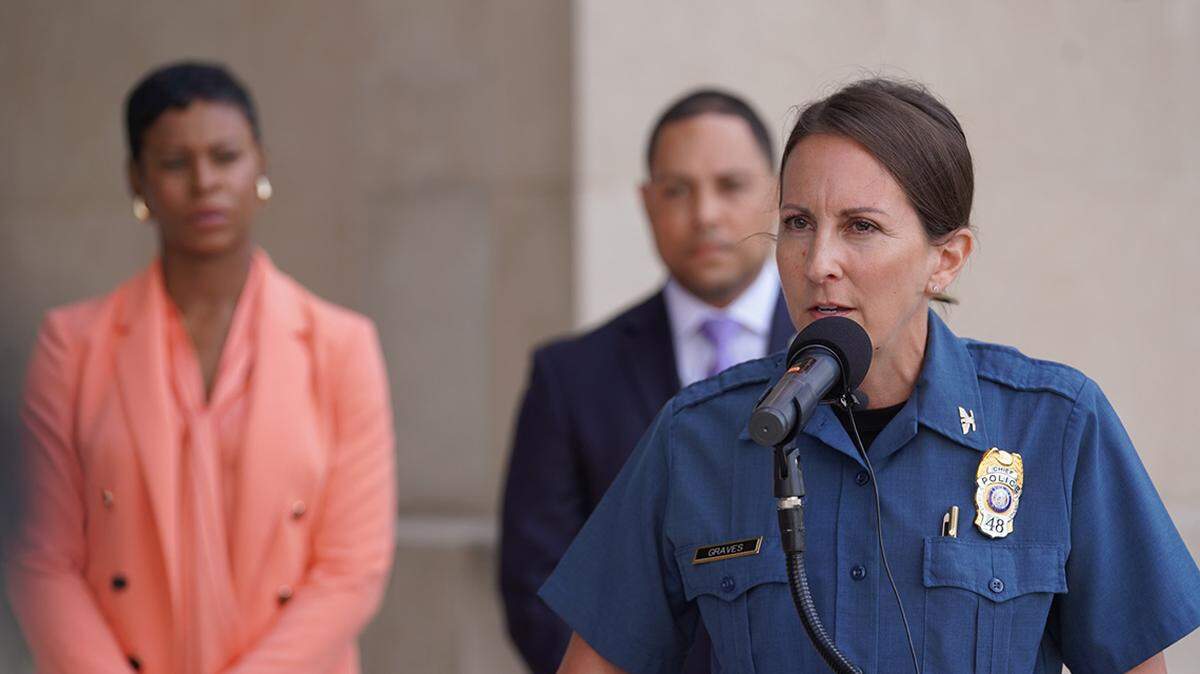
Kansas City Police Chief Stacey Graves testified before Congress in July that the KCPD hadn’t received federal funding for World Cup preparation. The clock is ticking. Major events require lead time for procurement, training, integration and testing. You can’t improvise a security operation at the last minute.
Fortunately, Kansas City has made some smart moves, including the purchase of $1.8 million in drone detection systems. But buying individual technologies doesn’t solve the core challenge of creating a common operational picture that all partners can actually use in real time.
A serious trap to avoid is buying solutions to individual problems without investing in the integration layer that makes those solutions work together. What’s needed is a unified framework that allows different systems to describe the same reality, whether that’s a threat, a vehicle, person or drone, and in language everyone understands.
Missouri has committed $110 million in state funding for World Cup preparation, with approximately $20 million designated for security. Kansas has committed $28 million. The Federal Emergency Management Agency has also announced two grant programs with up to $875 million available for World Cup security across all host cities next year.
The grants explicitly fund counter-drone detection and tracking systems, cybersecurity equipment and operational integration technologies. This focus is warranted and integration is key because federal regulations currently limit what local law enforcement can do about unauthorized drones, even over major events.
FEMA applications are due Dec. 5 — less than two weeks away. As the state submits its application, it has to remember the critical part is integration. Counter-drone systems need to feed into the same operational picture that includes video surveillance, intelligence reporting, crowd analytics and incident response. Every drone detection should automatically create an object in the system, with location, trajectory, operator position and threat level — which every authorized user can see and act on.
World Cup 2026 is an opportunity to demonstrate that midsize American cities can execute complex, multi-jurisdictional security operations successfully. That requires operational discipline, adequate resources and technology infrastructure that supports effective coordination under pressure.
The team is assembled. The funding exists. Now it’s about execution. The key is focusing on real integration — systems that connect data, operations and agencies, not just displays that show information from disconnected databases.
Nick Gicinto is chief information security officer and professor of practice in cybersecurity for William Jewell College in Liberty.
All statements of fact, opinion, or analysis expressed are those of the author and do not reflect the official positions or views of the U.S. government. Nothing in the contents should be construed as asserting or implying U.S. government authentication of information or endorsement of the author’s views.
This story was originally published November 26, 2025 at 5:05 AM.