
Roger Marshall targets Netflix but not Paramount in Warner Bros. deal. Why? | Opinion
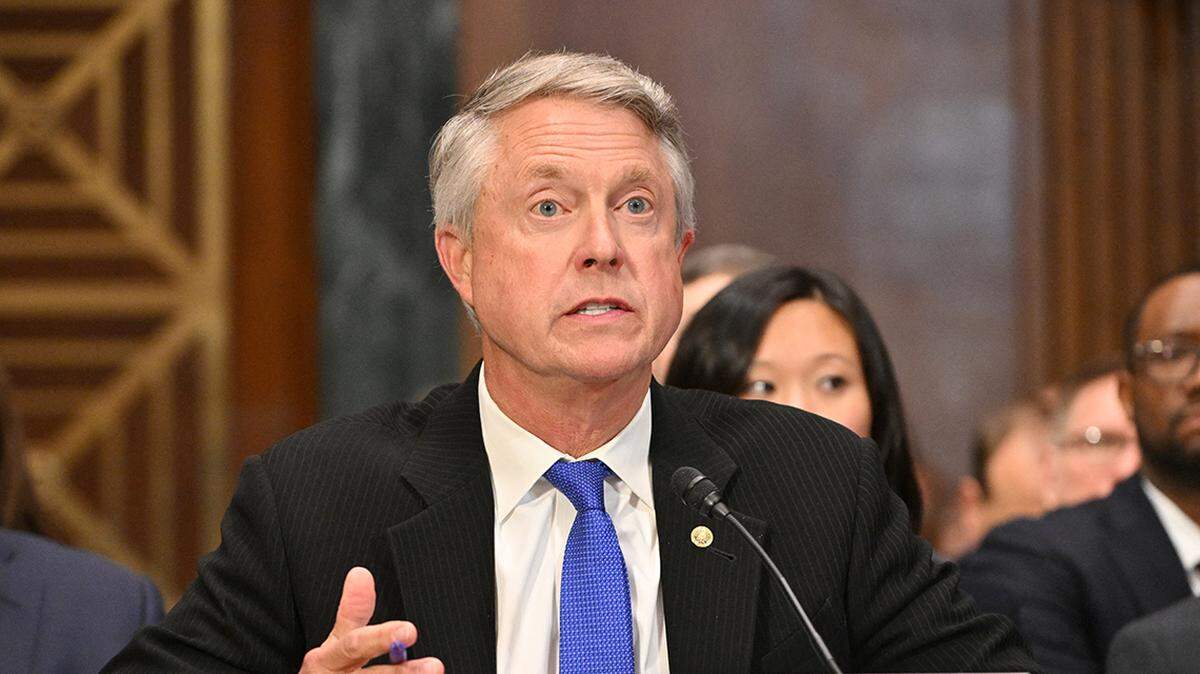
What does Sen. Roger Marshall have against Netflix? And why does it matter?
The junior senator from Kansas last week wrote to the Justice Department, expressing “serious concern” that the streaming giant is bidding for Warner Bros. Discovery, the media conglomerate that includes both the legendary movie studio as well as famous brands such as HBO, Food Network and — this might be most important for our purposes — CNN, the cable news network. More about that later.
“If a deal comes to fruition,” Marshall wrote to the government’s top lawyers, “I ask that you act decisively to prevent further anticompetitive consolidation in the entertainment industry.” (He published the letter in a press release.)
Netflix is reportedly bidding only for WBD’s movie studio and streaming services. If that deal succeeds, Marshall wrote, Americans might get fewer movies to see at their local multiplex. That in turn would harm “thousands of workers whose jobs depend on a robust and diverse pipeline of film and television projects.”
So far, so good.
More media consolidation “threatens consumer welfare, market dynamism, and the diversity of creative expression that is essential to a healthy democratic society,” Marshall concluded. He asked the DOJ to “evaluate carefully” any Netflix-WBD deal “to act decisively to prevent anticompetitive consolidation in this vital sector.”
Here’s the thing: Marshall is right. Too many major media properties are in too few hands.
The problem? You wouldn’t know it from Marshall’s letter, but Netflix isn’t the only company bidding for all or part of Warner Bros. Discovery. So are cable giant Comcast and — more important — Paramount. Both of those companies should also have antitrust problems if they take control of WBD. Media consolidation is media consolidation, after all.
Why isn’t Marshall asking the Justice Department to scrutinize those bids?
It is here we note that Paramount is largely owned by billionaire Larry Ellison. Who just happens to be President Donald Trump’s good buddy.
CBS News, TikTok, CNN
Wouldn’t you know it: The Guardian reported last week that Ellison has already been in talks with the White House about his bid to take over WBD, reportedly musing about firing CNN anchors “whom Donald Trump is said to loathe, including Erin Burnett and Brianna Keilar.”
Which means the takeover fight is about more than a “diverse pipeline of film and television projects.” It is also — and perhaps mostly — about control of one of America’s most-watched news networks, and about making our thin-skinned president happy with the picture of himself he sees on cable TV.
Trump-friendly Fox News, Newsmax and One America News Network aren’t enough, apparently.
Of note: Ellison and his son David acquired control of Paramount earlier this year. And Paramount owns CBS, which in turn owns CBS News.
You might have heard about some of the pre-merger maneuvering. Ahead of the deal, Paramount’s previous owners settled a lawsuit Trump brought against CBS’ “60 Minutes” for its interview of then-Vice President Kamala Harris — a lawsuit most legal observers said was without merit — in an apparent attempt to ease the federal government’s regulatory scrutiny of the deal.
After the takeover, the Ellisons installed Bari Weiss — an “anti-woke” journalist with no significant television experience — to run CBS News. She has reportedly looked at putting Fox News anchor Bret Baier in the chair once held by Walter Cronkite.
One more thing: Trump has also talked about handing control of the American version of TikTok (where a lot of young Americans get their news, believe it or not) to … Larry Ellison.
Media consolidation indeed.
If you think this all seems reminiscent of Hungary, where strongman Viktor Orbán helped put his country’s media in the hands of a few regime-friendly oligarchs to create what the Associated Press called a “sprawling pro-government media empire,” well, you’re not alone.
Silence from Marshall’s office
Which brings us back to Roger Marshall and his crusade against Netflix.
I had three questions for his office: Does the senator plan to also oppose a Paramount-Ellison purchase of WBD? If not, why not? And if not, what’s the difference?
I emailed Marshall’s press shop. I also emailed a couple of officials in his office directly. And then I left a phone message — though I never talked to an actual human to do so.
Nobody responded.
So let’s acknowledge the possibility that Marshall has a very good reason for opposing Netflix’s bid for WBD while remaining silent on Paramount’s effort. Maybe he has a good explanation for how that stance serves his Kansas constituents. If so, I’d still love to hear it.
Otherwise, it appears that — intentionally or not — Marshall’s letter has the effect of putting a thumb on the scale against Netflix’s bid and for Paramount’s. And that thumb — coincidentally or not — just happens to coincide with the president’s apparent inclinations about what Americans get to see and hear.
Draw your own conclusions.