
Targeting ‘anti-American’ speech hurts freedom in Kansas, Missouri, beyond | Opinion
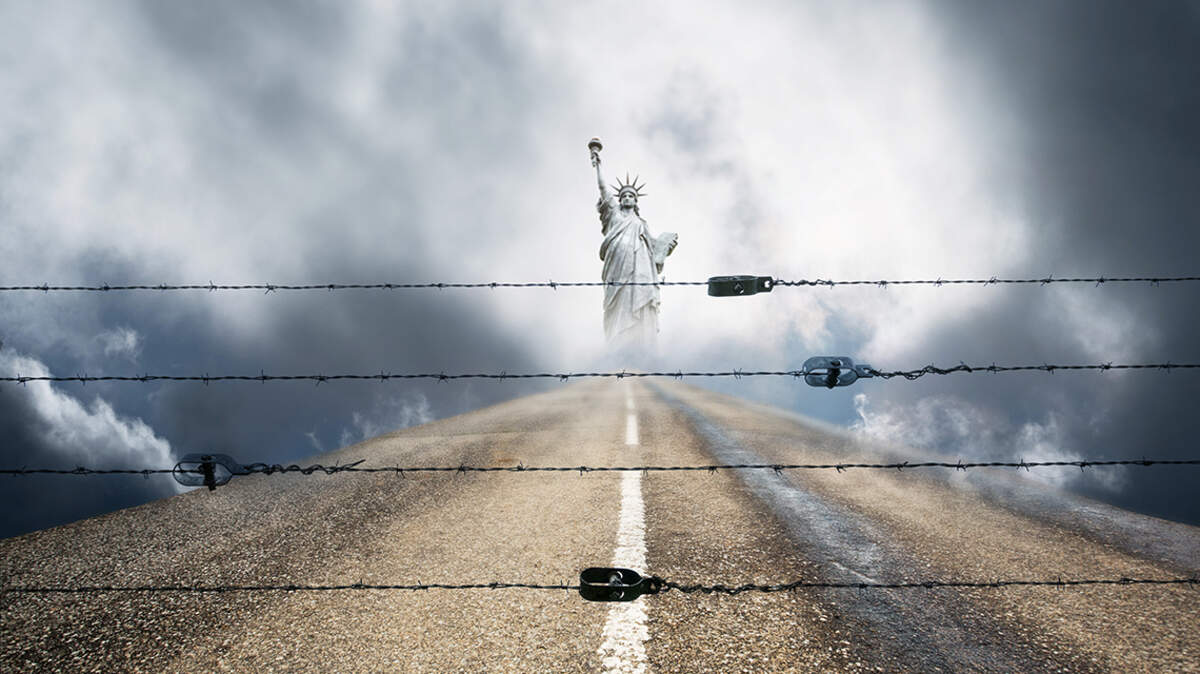
When author Nuruddin Farah was forced into exile from Somalia for writing about life under the rule of former dictator Mohamed Siad Barre, the United States welcomed him. Acclaimed as one of the world’s greatest contemporary writers, he became an esteemed professor and literary scholar. But under new immigration policy, a writer such as Farah could be denied refuge in the United States because of a Facebook post or viral TikTok video.
The new policy, which expands vetting of immigrants’ social media accounts, makes “anti-American” content an “overwhelmingly negative factor” in determining the outcome of immigration applications. This means that writers and artists could be sent back to physical danger and risk in their home countries, solely because they have expressed themselves in a way that immigration officers consider “anti-American.”
Immigration cases can be life or death, and they are always life-altering. Making these decisions on the basis of an individual’s speech is an affront to free expression, particularly from a nation that has long prided itself on its commitment to the First Amendment.
The policy will weaken one of the world’s most vital safeguards for free expression: asylum. When fear of persecution, violence and imprisonment has driven at-risk writers and artists to silence, migration to countries like the United States has given them the freedom to speak openly. Kansas and Missouri have resettled many of them — welcoming 15,000 refugees alone in the last decade.
Enriching Kansas City arts, universities
Kourosh Ziabari is one writer who has found the freedom to speak through resettlement in the United States. An Iranian journalist who faced persecution because of his coverage of the Woman, Life, Freedom movement against the country’s restrictions on women’s freedoms, Ziabari obtained permanent residency in the United States through a visa for immigrants of “extraordinary ability,” known as an EB-1. Reflecting on his decision, he said, “If I decided to return to Iran, I would be losing in perpetuity my goal–which was the pursuit of objective, truthful, ethical journalism.” He has so far been able to continue his critical reporting on Iran from the United States.
Various immigration pathways — including humanitarian avenues such as refugee resettlement and asylum, as well as talent or employment-based visas — have long offered persecuted writers and artists like Ziabari the ability to continue their vital work from the United States.
In turn, immigrants have made our culture richer. In Kansas and Missouri, immigrants such as Fidencio Fifield-Perez from Mexico have built our art scene by presenting art shows on immigration at Kansas City’s Garcia Squared Contemporary gallery — owned by a fellow immigrant from Mexico — and teaching at the University of Missouri in Columbia. Ievgenii Shulga, a scientist, researcher and refugee from Ukraine, now teaches law at the University of Kansas. Diana Kander, who fled the Soviet Union with her family at the age of 8, is a University of Missouri-Kansas City alum — and a New York Times bestselling author.
With this new policy, the United States is using its laws to silence the diverse voices it once protected, making ideological fealty with current government leaders a condition of entry. This is a politicization of immigration that echoes the McCarthy era. The parallels aren’t only in spirit. To define anti-American,” the policy guidance uses the definition from a clause in the 1952 Immigration and Nationality Act prohibiting the naturalization of communist sympathizers and other revolutionaries. While the 1952 clause applied to citizenship applications, the new policy outlines an array of immigration benefits requests — from green card applications to asylum — that will be subject to social media vetting.
Self-censoring, chilling free expression
A recent memorandum conflates “anti-capitalism,” “extremism” on gender and “anti-Christianity” with “anti-American,” hinting at how immigration officers could interpret this policy. Asylum outcomes are already notoriously variable and inconsistent depending on the presiding officer, and they could be even more so with officers using their individual judgment to determine what constitutes “anti-American” speech. This understanding of “anti-American” will chill free expression because individuals, unclear what speech is permissible and what is not, will self-censor.
The policy is already undermining the free expression of immigrant writers and artists in the United States. Karin Deutsch Karlekar — who has worked with persecuted journalists, writers and artists for more than two decades and serves as director of PEN America’s Writers at Risk program in the PEN/Barbey Freedom to Write Center — said: “Writers in exile are already self-censoring because of this policy. Writers who have fled oppressive regimes are changing how they express themselves online out of fear — writing under pseudonyms, not covering certain topics and in some cases deleting their social media profiles altogether.”
Those who once fled oppressive regimes such as those of Egypt, Iran and Russia to protect their free expression rights are once again facing an impossible choice between safety and speech. Karlekar continued: “It is extremely ironic that individuals who came here to escape censorship are now expected to silence themselves in order to survive and work safely.”
With this new policy, the United States is turning its back on the dissidents that it once prided itself in protecting. In the process, we jeopardize the richness of Kansas and Missouri’s immigrant communities, and our commitment to free speech for all.
Amanda Wells is the program coordinator for digital safety and free expression at the 501(c)(3) nonprofit PEN America. Before PEN, she worked at the International Rescue Committee of Atlanta, where she taught English and literacy courses to recently resettled refugees and migrants.
Alexia Gardner is a policy analyst with the 501(c)(3) nonprofit U.S. Committee for Refugees and Immigrants, where she manages the Latin America and Afghanistan advocacy portfolios. She was a Fulbright researcher in Colombia.