
How Kansas City, Kansas Public Schools connect students to the community | Opinion
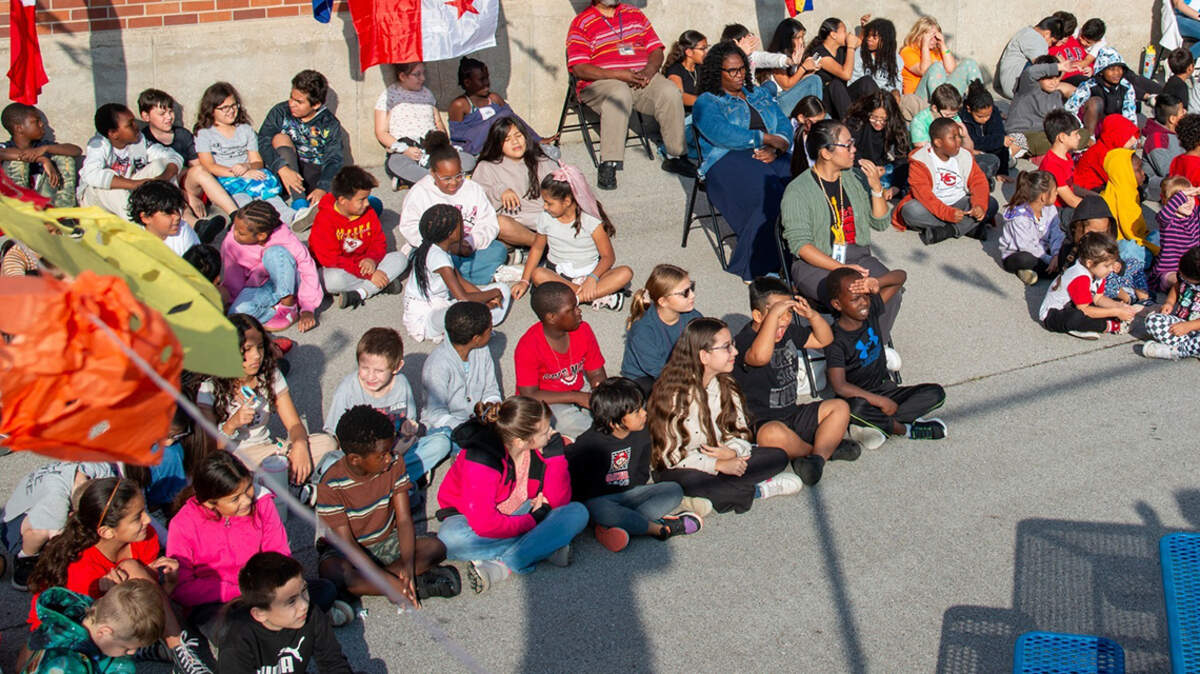
Founded in the mid-1880s, Kansas City, Kansas Public Schools today provides services to nearly 22,000 students, employs 4000 adults and serves as a beacon to the Wyandotte County community. Despite experiencing difficulties common to urban districts, KCKPS continually rises above said difficulties to focus upon meeting positive objectives relative to academics, activities and neighborhood outreach programs. Changes in recent years include the implementation of projects designed to address both academic concerns and the elevated rates of out-of-school suspensions.
Examples of meeting these objectives are the Restorative Education Program and the Alternative to Suspension Program. With a focus placed upon the building of strong relationships, the reparation of harm and the reduction of exclusionary discipline, both these strategies provide students with structured opportunities to “reflect, grow, and re-engage in their learning, as opposed to being removed from their educational environment,” stated La’Derrick Collins, the district’s director of alternative learning and special programs. “Through restorative practices, we are fostering safer, more inclusive learning environments that keep students connected to their school communities,” he said. Students are allowed to continue home-school classwork (via online access) while being held accountable for any infractions.
Within both external programs, one strategy utilized is that of Take Ownership (of Literacy, Learning, Life), which is implemented daily and strongly emphasized. The program is based upon the results of a recent educational-research study which revealed that the majority of students in alternative programs possess the highly positive characteristic of taking responsibility for past undertakings, both positive and negative. Students need the encouragement and support of educators in taking this characteristic they already possess and applying it to taking ownership of future pursuits directed at the advancement of literacy skills. Too often, it is assumed that middle- and high-school students are capable of reading at proficient levels, but many times this proves to be incorrect. Collectively, an increased willingness is needed to meet students where they currently reside.
‘None more important than literacy’
Literacy activities range from fundamental lessons in grammar to daily reading requirements and subsequent comprehension exercises. “We realize there are many factors in the improvement of the well-being of our students, but there is none more important than literacy.”
Heidi Louis, restorative-justice facilitator and lead middle-school instructor, added: “Some of our students come to us with lower than average literacy skills and the majority lack confidence in their academic skills. By focusing on literacy and meeting students where they are, we provide a foundation of support that builds not only skills but confidence. Growing this confidence often translates to behavioral success and helps regulate social-emotional challenges. Literacy skills provide a pathway to learning, and they provide our students with a sense of self-worth, knowing they have potential and support to be whoever they strive to be.”
A third option offered by KCKPS is virtual learning, an online format that provides students with “expanded access to flexible learning pathways to thrive in nontraditional settings,” explained Collins, “ensuring that education remains personalized, equitable, and aligned with unique needs and circumstances.” Paige Deathe, partnering with KCKPS as the assistant director of virtual learning with Greenbush Academy, said that in addition to independent study, direct assistance is made available during regular school hours, along with counseling services and the navigation of curriculum. Students are able to access their courses 24 hours a day, seven days a week, allowing for flexibility in meeting a variety of unique needs. While enrolled in the virtual program, students remain eligible to participate in school activities and, upon completion, graduate with their respective classes. Opportunities are also made available for adults over 18 to complete previously unfinished diplomatic pursuits.
Collectively, “these initiatives reflect our district’s innovative and student-centered approach to supporting the whole child, closing opportunity gaps and creating pathways for every student to thrive.” This observation made by La’Derrick Collins, and shared by the community, reflects the 2025-2026 mission of Kansas City, Kansas, Public Schools: inspiring excellence for every grown up, every child, every day.
Donald L. Robertson serves as a reading specialist and language arts instructor in the KCKPS Restorative Education Program.