
How Missouri’s learning to build spaces that welcome people with autism | Opinion
I was formally diagnosed with autism spectrum disorder in May 2025. ASD is a spectrum, with some people — myself included — needing relatively little day-to-day support, while others require daily assistance to complete tasks ranging from basic hygiene to personal care, including cooking, cleaning and paying bills.
ASD consists of a variety of characteristics, including hyper or hypo sensory sensitivities, repetitive behaviors, and a strong need for order and clear direction in instructions. While environmental factors might not directly contribute to autism, the environments people with ASD exist in contribute, positively and negatively, to their well-being. For example, I frequently use the extensive trail and park network in Missouri, including the MKT Nature and Fitness Trail in Columbia and Little Dixie Lake Conservation Area near Kingdom City, to escape from the nearly constant buzz and chatter of daily life.
On the other hand, characteristics of ASD can make it much more challenging for individuals such as myself to effectively function in spaces designed with neurotypical people in mind. For example, moving through an airport is a stressful experience for many people. However, for people with ASD, the heightened sensory load (think about the crackle of flight announcements and walkie-talkies, the pattering of feet on concrete, the bustle of crowds, the constant buzz of conversation and an array of unfamiliar odors) can make air travel an extremely and unnecessarily difficult experience.
Being in the hospital is already stressful for neurotypical people. However, for people with ASD, being in an unfamiliar setting, trying to understand potentially unclear instructions, dealing with existing medical issues and absorbing a vast array of intense sensitivity inputs can turn a hospital stay into an overwhelming and exhausting experience.
One way to address these challenges is through adaptation of inclusive design principles. Inclusive design can be used to create environments that are naturally accessible to people with ASD. A recent study focusing on making airports more accessible highlights two key components of inclusive design: First, make these environments easy to navigate, using clear and precise instructions. Second, reduce sensory overload.
People with ASD are often highly literal thinkers, which makes it difficult for them to understand vague or unclear instructions. This tendency can be intensified in extremely heightened sensory environments, because we might be pouring large amounts of energy into preventing a complete shutdown due to sensory overload. Clear instructions, such as signs clearly stating how to get to a given location, can be helpful in navigating these environments. Using simple and clear directions can make environments more easily navigable to people with ASD.
Additionally, a second concrete step designers may consider is to reduce the amount of unnecessary stimulation. For example, rather than harsh, direct, artificial lighting, natural light could be utilized in buildings, along with recessed artificial lighting. Noise absorbing foam could be used when appropriate to reduce noise levels. Nature, such as plants, could be incorporated into structures, to create a relaxing feel (think about a fish tank in a hospital waiting room). Communication devices could have their noise level reduced, and sound dampening materials could be used to minimize the sound of footsteps.
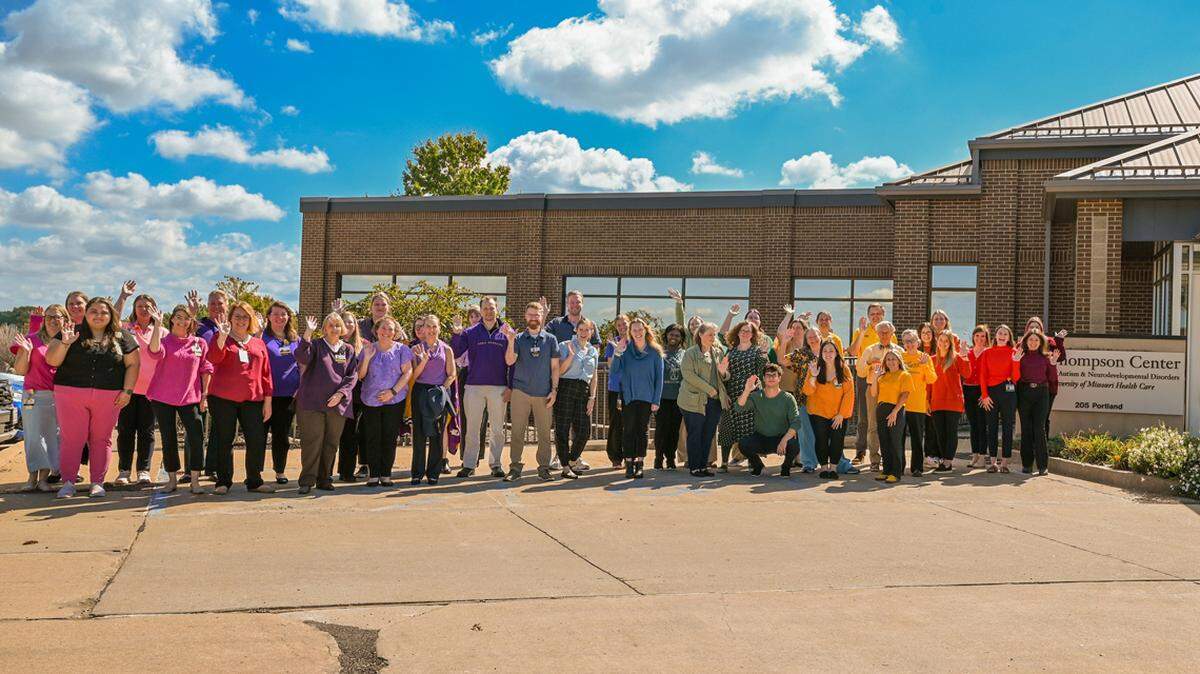
Another path is to create quiet spaces within busy and noisy environments, such as the quiet and sensory rooms in the Kansas City International Airport. SFS Architecture, a Kansas City based firm, incorporated many of these concepts into designing a new building for the Thompson Center for Autism and Neurodevelopment, a University of Missouri-based research institute focused on autism.
Fundamentally, people with ASD should be able to participate and engage in everyday life to the best of their abilities, in similar types of social and public spaces enjoyed by their neurotypical counterparts. By advocating for and advancing inclusive design systems, focusing on neurodiversity, these spaces would not only become more welcoming for people with ASD, but may also provide a more enjoyable experience for neurotypical consumers.
Blaine Ravert is a Columbia resident whose work has been published in The Columbia Missourian, The Columbia Tribune, The St. Louis Post-Dispatch, The Cipher Brief, and CSPC News Roundup.