
Tariff war offers a win-win-win for Trump, Midwest soybean farms and India | Opinion
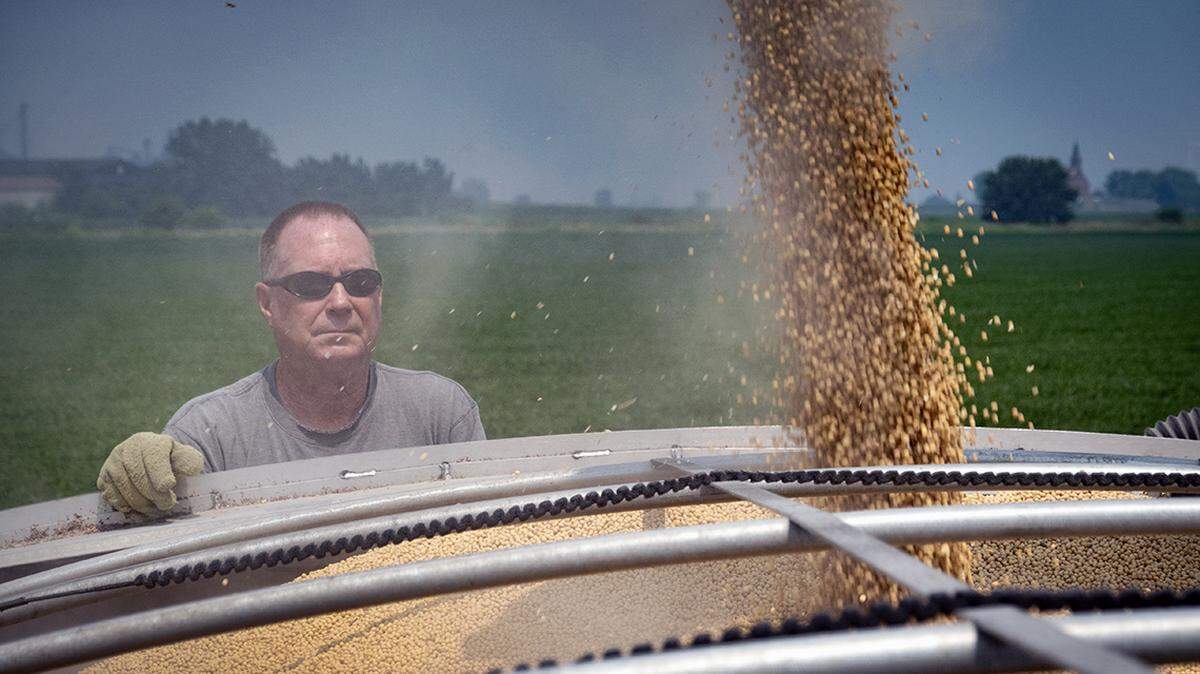
When President Donald Trump first imposed tariffs on China in 2018, the shock from the dragon’s retaliation was felt far from Washington, D.C. — across the soybean fields of Missouri and Kansas, where exports to China had long sustained local economies. These states sit at the heart of America’s “soy belt,” where generations have tied their livelihoods to global demand. China’s counter-tariffs wiped out a $14 billion U.S. soybean market, and the impact was brutal: Grain piled up in silos, prices crashed and farmers were forced to depend on federal aid to survive.
Many in the Midwest, proud of their independence, hated taking checks from Washington. Some began shifting acreage to corn or cutting back altogether — not out of choice, but necessity. Although a 2020 “Phase One” deal briefly revived exports, China had already pivoted to Brazil and Argentina by then. This year, Trump’s renewed tariffs have triggered another round of retaliation, again squeezing American soybean farmers. Now, as China continues sourcing from South America, U.S. producers are searching for alternatives that promise both stability and scale. Increasingly, attention is turning to India — a 1.4 billion-population market whose cooking oil dependence could offer Midwestern farmers a new lifeline and restore confidence in rural America.
The pairing makes sense. The United States is the world’s second-largest producer of soybeans, while India is the largest consumer and importer of edible oils, spending more than $20 billion annually — mainly on palm and soy oil from Southeast Asia and South America. Even though it seems natural for the U.S. to sell soybeans to India, very little of this trade happens. India’s political caution, protective rules for its own farmers and distrust of genetically modified foods have prevented any major agreement.
Yet it is precisely this political caution that could make a bilateral deal feasible. For Trump, selling more soybeans would mean protecting jobs for his supporters in the Midwest. For Indian Prime Minister Narendra Modi, the priority lies in safeguarding millions of small soybean farmers across central India. In short, neither leader can afford a deal that appears to sacrifice domestic farmers for political gain.
A workable soy partnership must therefore rest on three clear principles: long-term market stability for U.S. farmers, protective flexibility for Indian growers and a phased model that builds trust.
Oil today, beans tomorrow, technology later
India imports more than 15 million tons of edible oils each year, much of it soybean oil processed from genetically modified crops in Brazil and Argentina. Because refined oil contains virtually no living DNA, it can be imported freely — but the processing and protein-rich soy meal remain abroad. India pays for the oil but loses out on livestock feed, rural jobs and the addition of domestic value.
A hybrid approach could change that. In the short term, India could expand imports of crude soybean oil from the United States, offering quick relief from food price inflation while giving American farmers new export outlets. In the next phase, as regulatory approvals progress, India could import raw soybeans for cooperative-led domestic oil production. The oil would feed Indian kitchens; the meal would feed Indian poultry and the processing jobs would stay within India’s economy.
India’s soybean yield, roughly one-third that of the United States’, remains a major constraint. Over time, this partnership could evolve into joint research and technology transfer, helping Indian farmers cultivate high-yield, pest-resistant soybean varieties suited to local conditions. That should be pursued cautiously — learning from the mixed legacy of genetically modified insecticide-producing Bt cotton — by keeping technology in the public domain, ensuring farmer ownership of seeds, and embedding biosafety transparency.
If executed wisely, such cooperation could help India reduce its import bill, raise rural incomes, and make soybeans a symbol of agricultural self-reliance rather than dependency.
Skeptics in India worry that a soy deal could deepen import dependence or open the door to corporate dominance. Meanwhile, many in the United States remain wary of India’s unpredictable trade policies, slow regulatory approvals and long-standing resistance to genetically modified crops. Yet these concerns could be addressed through a transparent, rules-based framework that puts farmer-owned cooperatives at its core — ensuring that value addition, not just raw trade, drives the relationship, and that farmers on both sides of the world share in the gains of global commerce.
Politically, it’s a rare win-win. Trump can tell his voters, “I opened a billion-plus-person market for our farmers and defended America’s heartland.” Modi can tell his citizens, “We made food affordable and empowered our farmers through innovation and smart trade.”
In a world too often defined by zero-sum politics, soybeans may offer something unusual: a trade built on mutual trust, shared prosperity and renewed hope across the farmlands of Missouri, Kansas in the U.S. and Madhya Pradesh in India alike.
Anurodh Lalit Jain is vice chairman of the All India Congress Committee - Minority Department and a graduate of Ohio State University. Nidheesh Jain assisted with research for this commentary.
This story was originally published October 23, 2025 at 5:03 AM.