
Missouri has a teacher shortage. Our Kansas City school has a solution | Opinion
There is a national teacher shortage, and Missouri is no exception. In our state, 2 in 5 teachers leave after their first five years in the classroom. Explanations for the shortage in Missouri and beyond are nearly as numerous as the shortages themselves.
There is the fact that the Show-Me State doesn’t show teachers the money: We are ranked 49th nationally in both average teacher starting salary and average teacher salary.
And there is the fact that teaching, most educators agree, has become more challenging after the COVID-19 pandemic, with bigger academic gaps and a wider range of behavioral and mental health challenges among students.
As a result of these challenges and others, Missouri has hundreds of vacancies and fewer prospective teachers to fill them. The number of students enrolled in Missouri teacher preparation programs dropped more than 40% between 2012 and 2022, the most recent year for which federal data is available, which is greater than the nearly 33% decrease nationally.
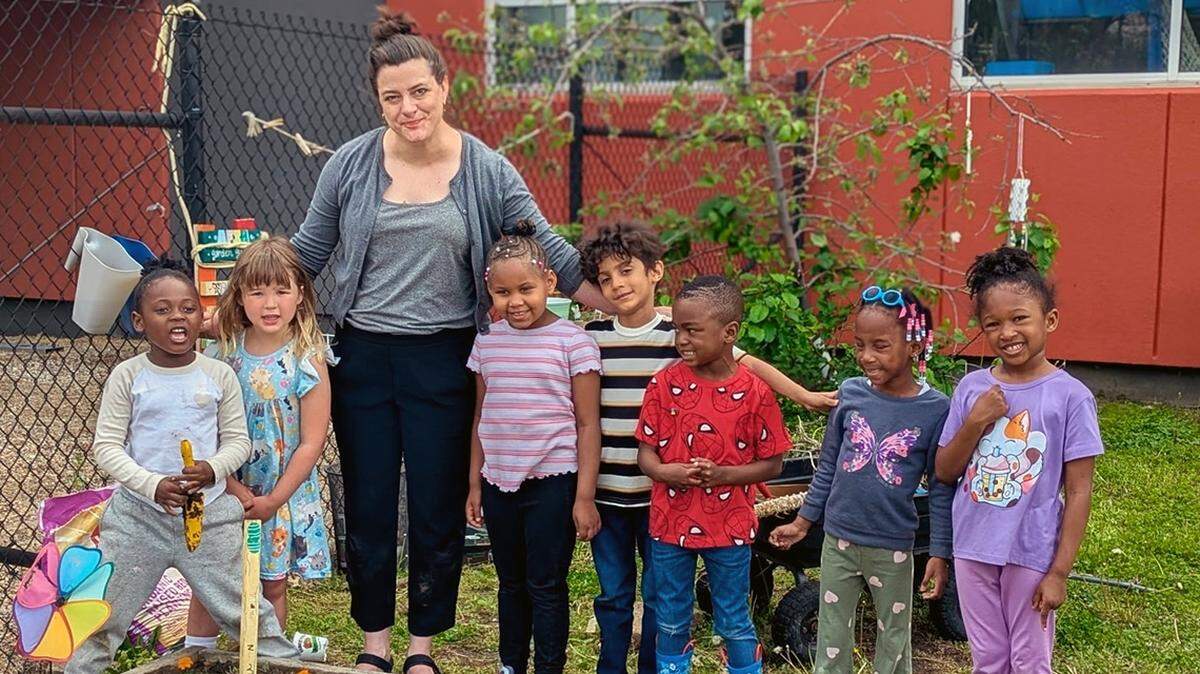
But as a former teaching professor and current executive director of a charter school in Kansas City, I’m not despairing. I’ve seen firsthand how schools can help solve teacher shortages.
The change is happening — on a small scale, but nonetheless — at the school I lead, Academy for Integrated Arts. I started leading this school after supporting aspiring teachers at the University of Missouri-Kansas City.
Historically, students in teacher preparation programs do some student teaching in their final year of college. This experience is normally one semester and not compensated. As a result, student-teachers are stretched particularly thin, both in terms of their schedules and their finances. At a time when aspiring teachers should be preparing most intensively for a job that we as a society have deemed critically important, many college students are juggling multiple jobs to make ends meet.
At my school, we’re doing things differently, and our students are benefiting as a result. In 2019, we expanded our partnership with the Institute at Urban Education at UMKC to create a teacher apprenticeship program that allows fourth-year education students to teach full-time in our school for the entire academic year and receive a $12,000 stipend. Thanks to funding from the Kauffman Foundation and a Grow Your Own grant from the state of Missouri, we were able to fund this program in the initial years and now, based on the early success, my school budgets for it annually.
The partnership is mutually beneficial. Student-teachers get a deeper appreciation for the rigors of teaching full-time, and can confirm this path is right for them. They also become better-prepared teachers. We use a team teaching model, so the apprentices are paired with a more experienced teacher whom they support and learn alongside. As a school, we’re able to offer families a smaller student-to-teacher ratio and provide students with more individualized support. We’re also able to create a pipeline of teachers to fill any vacant positions.
To date, the results are moderate in scale but impressive in impact. All 16 of the aspiring teachers who have participated in the apprenticeship still work in education. Nearly half of them still work at our school.
As a result, our school has a reliable pipeline of teachers and rarely needs to look beyond our partnership to find new teachers. Last school year, more than 60% of our certified teachers were UMKC alumni. This past summer, we had to hire only for a single certified position.
Most importantly, the teachers are getting results for students. For example, during the 2023-24 school year, our first-grade students were taught by two of the former apprentices. The students taught by these individuals made more than typical growth in math, as measured by the NWEA test.
This year, we have three apprentices from UMKC joining our school faculty, nudging the total number of participants to 19. I’m not under any illusions that our program is single-handedly addressing the teacher shortage problem in the state, which, according to data gathered by University of Missouri professor Tuan Nguyen, numbered 873 in the 2023-24 school year.
But our program is a proof point. It’s evidence that a small school and a local university can partner to better serve today’s students and tomorrow’s teachers.
And I believe that is a worthwhile place to start.
Tricia DeGraff is executive director of Academy for Integrated Arts, a tuition-free charter school that serves pre-K through 6th grade students in the Kansas City Public School district.