
Deploying military to US cities like KC isn’t just wrong. It’s dangerous | Opinion
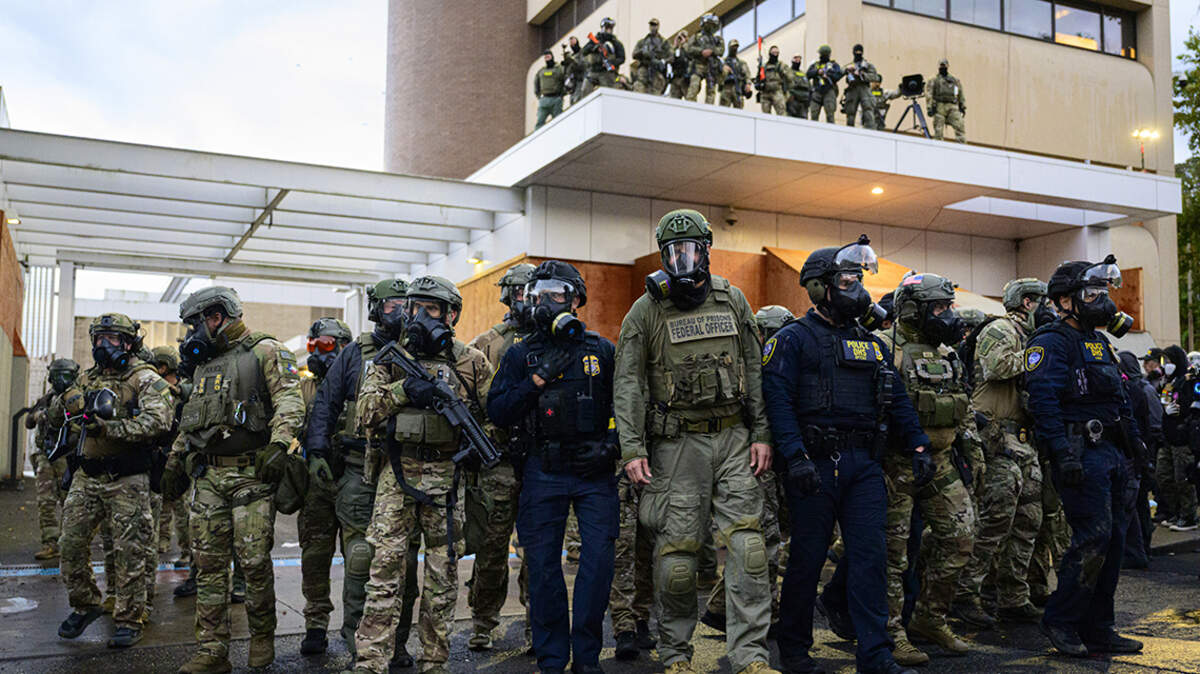
We’re at a very dangerous place in our democracy. The president and leading Republicans have threatened or ordered deployments of troops to U.S. cities — including in Missouri — ostensibly to bring about public safety and reduce crime. However, there is no emergency and no justification, as the governors and elected officials attest in states and cities targeted for deployments of military personnel.
Are these presidential actions being carried out in good faith, in the interest of the American people, or are they not? In all, these actions appear to politicize, to create a pretext for sending troops to U.S. cities. The president’s words have been inflammatory, in White House executive orders, press releases, and speeches. The deployments, with the exception of Memphis, are primarily in blue states, without the governors’ consent or agreement. The secretary of defense’s decision to arm troops with full combat gear is provocative at the least, and should be reversed.
The president’s recent “Enemy from Within” speech was truly shameful, in which he said to senior U.S. military leadership: “I told Pete (Hegseth), ‘We should use some of these dangerous cities as training grounds for our military, National Guard, but military.’” The speech betrayed his motivation and laid bare the pretext. He revealed an inclination that is a significant threat to our way of life and to our democracy.
If the president’s actions in this regard are not conducted in good faith and are primarily a pretext for deploying troops to U.S. cities, then they are immoral, and pose a psychological risk to the troops. The U.S. military knows that fellow Americans are not the enemy within. They know that the Posse Comitatus Act prohibits use of the military for domestic law enforcement. So military members who are ordered to deploy to U.S. cities are in psychological lose-lose situations. They will probably experience a fundamental dissonance. They have to obey lawful orders, but they know at a basic level they should not be conducting military operations against Americans, except in the rare circumstance — and then only when strict legal requirements are met.
‘They spit, we hit’ escalates violence
In addition, the president’s use of language vaguely promotes the use of force by the military against fellow Americans. For example, the president authorized “full force, if necessary” in the planned deployment to Portland, Oregon. In his speech to the assembled generals and admirals, he justified escalatory violence against protesters by saying that if “they spit, we hit.” This language is damaging, because it muddies the rules of engagement, on which military members are held to strict account.
The president’s use of our military in American cities would likely increase the incidence of moral injury to the troops, especially if conditions develop into violent situations. Moral injury occurs when a person violates his or her personal moral code, such as using excessive force against an unarmed person. Moral injury is a contributing factor to developing traumatic stress and post-traumatic stress disorder.
Could this happen to Kansas City? Yes, it could. U.S. Sen. Eric Schmitt stunned Missouri by singling out Kansas City in a recent Senate Judiciary Committee hearing discussing lessons learned from the military deployment in Washington, D.C. The senator’s comments then and later were misguided, more so for someone on the Senate Armed Services Committee. He showed a poor understanding of the military by promoting its use in domestic law enforcement. Second, the senator’s comments were divisive and, frankly, short-sighted.
Deploying the military to Kansas City, absent any real emergency, or to St. Louis, could pit the Missouri National Guard against people of Missouri, and Missourians against one another, squandering hard-earned trust. Additionally, any deployment to or from another state could pit Missourians against people of the other state. That is why deployment to other states, when perceived as one state against another, is a bad policy idea. We need to come together, not be more divided.
Good discipline, judgment of armed services
The strengths of the U.S. military, though, are in our favor, and these include its discipline, unit cohesion, esprit de corps and professionalism. For example, armed service units and members train to develop discipline. It’s foundational. These strengths provide confidence that the U.S. military can handle complex situations with restraint and good judgment. And we are very fortunate indeed to be Americans, to live in a country with a military that we can trust.
There are several things that we can do together to protect our democracy. Protests should in all circumstances be peaceful, not provoking. Then there can no stated justification for the military deployments, however strained the rationale. State and local officials should continue to speak truth to power in the public sphere, and continue legal challenges to the deployments where indicated.
Ultimately, these issues will have to be decided in court. The judiciary has review authority. Recently, U.S. District Judge Karin Immergut found that the predicates for deployment to Portland were not met: There was no invasion, no rebellion or threat of rebellion, and no instance where federal law could not be enforced. The president also has recently threatened to invoke the Insurrection Act, but it too has legal requirements that must be met.
Above all, we as Americans should never think that it is acceptable or normal for the U.S. military to be deployed to our cities in the absence of necessary justification, even as highly as I regard the military. Our best defense, in these times especially, is to stay informed and stay engaged.
Gregory Ellermann dedicated his professional career to the U.S. military as a clinical psychologist as an Army civilian and an Army Reserve officer. He deployed to Iraq from 2004 to 2005.