
No arrest for deputy in Charles Adair’s death is another WyCo injustice | Opinion
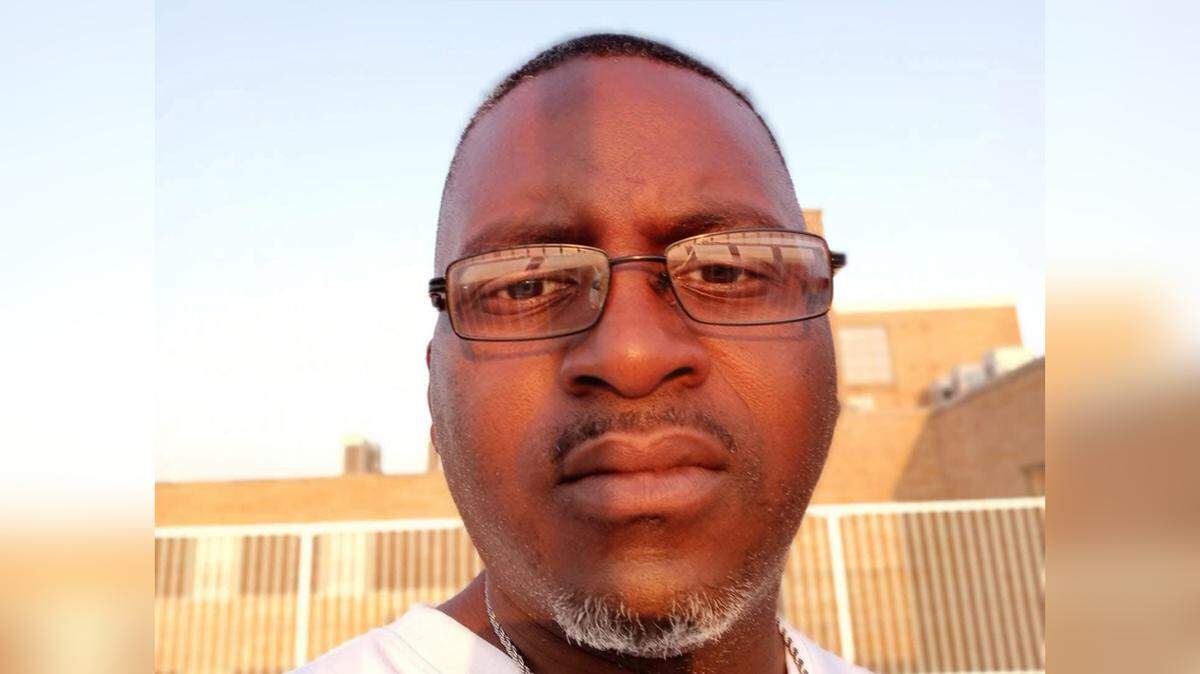
In the middle of America, being great once again, a legal phenomenon has occurred in Kansas City, Kansas, in the backdrop of a local tragedy. On Sept. 23, the Adair family’s attorneys reviewed body camera footage of the tragic death of Charles Adair while he was in custody at the Wyandotte County Jail. He was arrested on July 4 on a misdemeanor traffic warrant. The next day, he was dead.
Charles, a man in his 50s, suffered complications from diabetes and had been advised by doctors to undergo a leg amputation, which had not yet taken place. He was receiving treatment in the jail’s infirmary when a reported dispute occurred. During the altercation, Adair threw himself to the ground, prompting deputies to intervene and transport him back to his cell in a wheelchair.
Once inside, deputies attempted to uncuff him while he lay face down on the jail bed. At this moment, Deputy Richard Fatherley, a detention officer, placed his knee on Adair’s upper back and neck to pin him down. As Adair cried out in pain and distress, deputies stood by without intervening. His pleas went unanswered. Despite Adair’s frail condition, deteriorating leg and the fact that he was already handcuffed, Fatherley kept his knee pressed against him, and doubling down until Adair could no longer breathe — 1 minute and 26 seconds, just a few seconds shorter than the time it took to kill George Floyd.
Adair was pronounced dead the night of July 5 at 9:19 p.m. The medical examiner has ruled it a homicide.
A naive person would expect that a death in custody under such fatal circumstances would lead to immediate accountability. Yet, that is not often the case in Wyandotte County. Here, something unprecedented has occurred — a series of events that left many disoriented, confused and emotionally torn. On Sept. 18, during a press conference, District Attorney Mark Dupree announced that instead of an arrest warrant, Deputy Fatherley was issued a summons for second-degree murder and involuntary manslaughter. He is on unpaid leave and will remain free until his trial in November.
For those unfamiliar with criminal procedure, this is extraordinary. Across the nation, when suspects are charged with murder, they are typically arrested, booked and held accountable under the full weight of the law. A summons — a simple notice to appear in court — is normally reserved for minor offenses or low-level felonies. To use it in a homicide case is not only unusual, but sets a new precedent.
KBI didn’t authorize arrest warrant
This does not appear to have happened ever before in our country. Dupree, the first and only Black district attorney in Kansas, has once again made history by exercising the full power of his office to pursue charges even when state investigators refused to issue a warrant for arrest. While his actions show courage and determination, the decision to rely on a summons continue to send a dangerous message: that law enforcement officers, even uncertified ones, such as detention officers, are treated differently from ordinary citizens.
This case is both tragic and a legal anomaly, leaving many in Wyandotte County asking why an arrest warrant wasn’t issued for such a serious crime. The district attorney has not directly explained. But a reasonable person could deduce that going so far as to issue a summons in such an unusual manner suggests he believes a serious crime occurred. Local media released court documents that show the Kansas Bureau of Investigations signed off on the affidavit, acknowledging the evidence of the crime, but yet still refused to authorize an arrest warrant. It is exceedingly rare for state investigative agencies to deny such a request in cases of serious charges such as second-degree murder or manslaughter. Historically, district attorneys likely complied with such refusals. Here, however, Dupree has shown that a DA can use his authority to press charges and force a hearing if he feels there is enough evidence to do so.
The ripple effect of this new legal guideline has yet to be seen. But in this moment, it exposes the deep flaws in how accountability is applied in cases of police violence. Officers and detention staff are rarely punished for misconduct that results in death. But what makes this case even more concerning is the appearance that state investigators blocked the DA’s effort to demand accountability through normal procedures.
Despite the fascinating nature of this legal maneuver, this is not an equal application of justice under law. This is why Justice for Wyandotte is calling on the Kansas Bureau of Investigation to reconsider its refusal to initiate an arrest warrant for Deputy Richard Fatherley and honor the request of our district attorney. Anything less denies Charles Adair, his family and our community fair and equal justice.
Nikki Richardson is co-founder and chief executive director of Justice for Wyandotte, a 501(c)(3) nonprofit fighting corruption and advocating for victims in Wyandotte County.
This story was originally published October 14, 2025 at 5:07 AM.