
Did Charlie Kirk’s murder change minds on guns and the 2nd Amendment? | Opinion
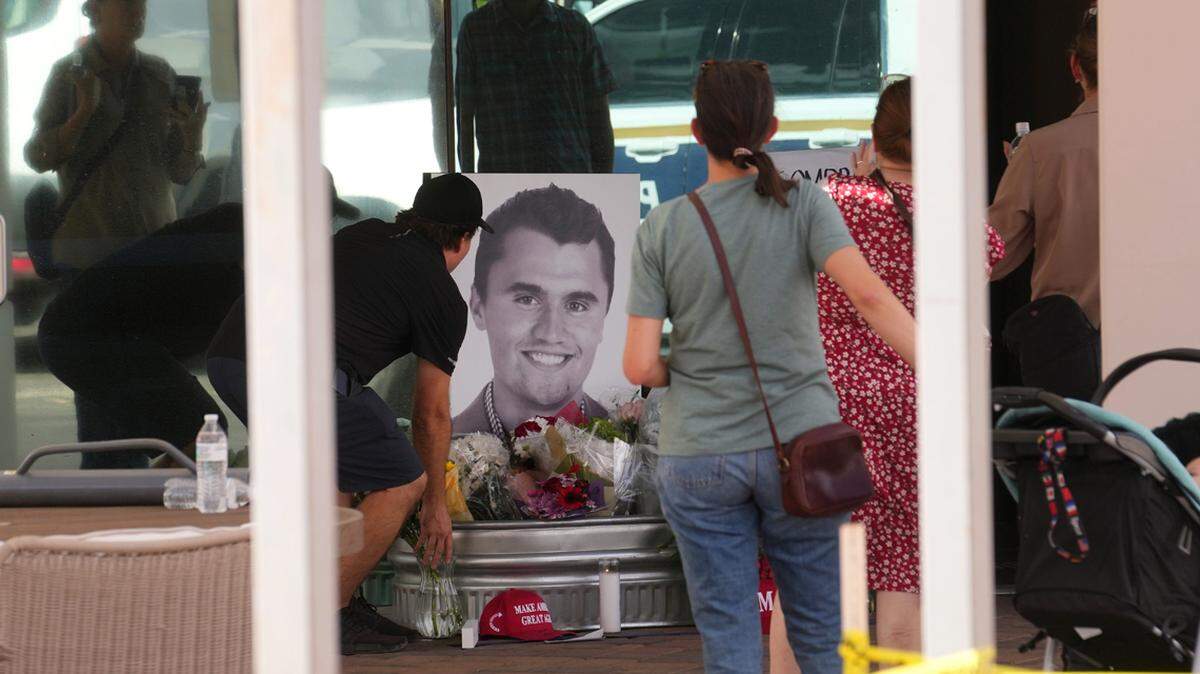
On Sept. 10, conservative activist Charlie Kirk was murdered in Utah with a rifle commonly used for hunting. The murder drew condemnation across the political spectrum and led to a predictable debate about the value of guns.
In early June, we surveyed a representative sample of 800 Americans about their rights, including the statement, “Gun violence and school shootings should make us limit Second Amendment access to guns.” Americans were evenly distributed across the range, and the average was smack dab in the middle. About a week after Kirk’s murder, we asked another representative sample of 600 Americans the same question.
Did the murder affect attitudes about the Second Amendment? Overall, it did not. The average support for the amendment after the murder was exactly the same as before.
The attitudes about access to guns differ across familiar fault lines. Men, older and rural people all support gun rights more than women;. Young people and urban dwellers, and those with larger incomes and more education are associated with opposing it. The divide along political lines that is the most contested: Conservatives and Republicans prefer a broad reading of the Second Amendment, while liberals and Democrats tend to favor assault weapon bans, gun registration and background checks.
After the murder, Democrats increased support for gun limits a small amount, and Republicans equally decreased support for gun limits. Independents didn’t change at all. Kirk’s murder had a small polarizing effect: People on the left and right became a bit more extreme, and people in the middle did not.
Across the political spectrum, Americans rejected the motives of the gunman: Eighty-one percent of Americans moderately to strongly rejected the statement “I can support the motivations behind the violence against Charlie Kirk.” This included most Republicans (88%), independents (79%) and Democrats (75%).
Kirk had been remarkably honest about the value of gun access. He acknowledged some deaths every year were the price of the Second Amendment — a price he paid himself. At a 2023 Turning Point event he said, “I think it’s worth it … to have a cost of — unfortunately — some guns deaths every single year, so that we can have the Second Amendment to protect our other God-given rights. That is a prudent deal. It is rational.”
Because the murder was so public and because he was a staunch defender of gun rights willing to accept their cost, we wondered if Kirk’s murder changed anyone’s mind about the consequences of guns. Many Americans admired Kirk’s candor about the cost of Second Amendment rights, but do they agree with him?
We asked them if “several gun deaths every year is worth it if it means Americans can freely own firearms.” Most Americans — 58% — absolutely disagreed with this, but about 20% showed some agreement that gun deaths are worth it to preserve gun rights.
Midwest polarization versus South and West
The poll allowed us to compare areas of the country. Kansas City’s region — the Midwest — was the least likely to think that gun deaths were an acceptable cost of gun rights and the least likely to approve of the motivations behind Kirk’s murder. The Midwest region did not show increased polarization. There was no change in the distance between Democrats and Republicans after the shooting. Midwestern response to the murder was characterized by restraint. The increase in polarization about gun rights was mostly in the South and the West of the country.
We compared a range of attitudes about political violence and human and civil rights. Kirk’s murder had no effect on support for burning Teslas or sabotaging abortion clinics, denying due process to immigrants, limiting First Amendment rights or encouraging aggressive policing. The killing didn’t change American attitude about guns, civil rights, political violence or free speech.
There are 400 million guns in private possession in the U.S. according to Small Arms Survey, with 17,000 deaths and 31,000 injuries annually due to guns, not counting suicides. Gun possession and gun violence are commonplace. People do not change their minds about guns rights or limitations because of public murders.
The murder of 20 small children and six adults at Sandy Hook Elementary School had little effect on people’s attitudes about guns, and the death of Charlie Kirk seems to have had almost no effect at all.
Chris Crandall is a professor of psychology at the University of Kansas and president-elect of the Society for Personality and Social Psychology. Kelly Swanson is a graduate student in psychology at the University of Kansas.