
At the dark anniversary of Oct. 7, connect with Kansas City’s Jewish community | Opinion
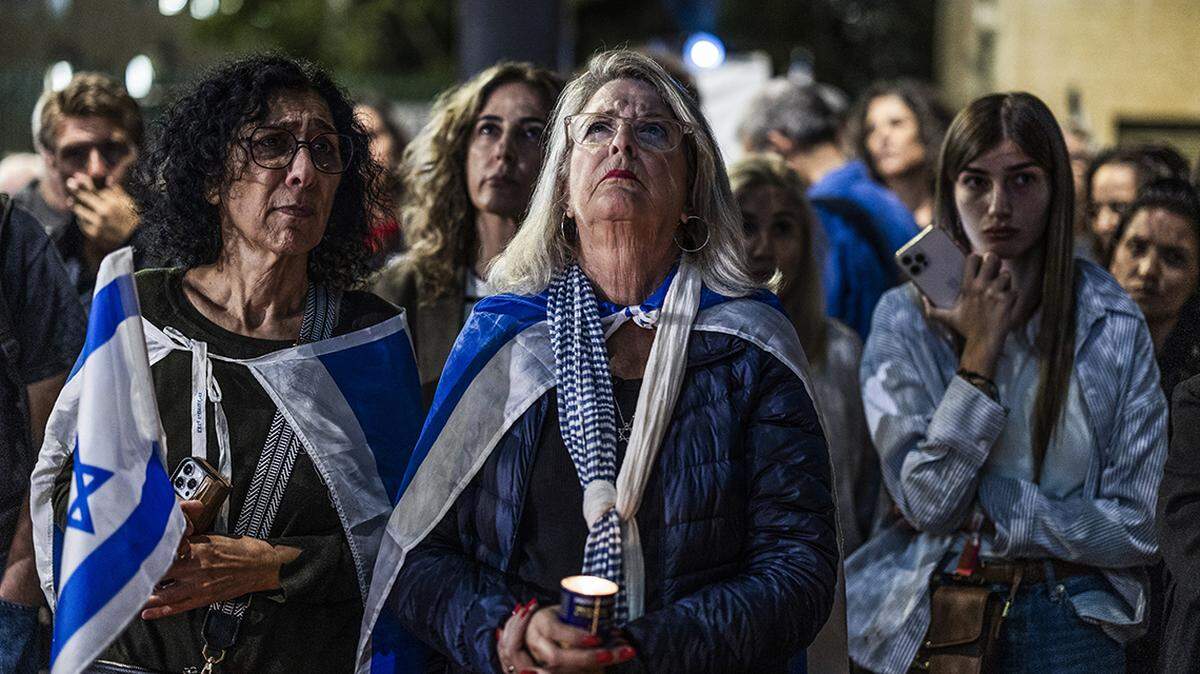
“What’s the whole story with Israel?” a colleague of mine asked me in 2017. We were at a team dinner out of town, unwinding after a long day of meetings and site visits. It was a time in recent history when anti-Zionist sentiment was prevalent enough in some spaces, all but invisible in others, and not yet nearly as bewilderingly normalized as it has become in the almost two years since Oct. 7, 2023.
I’m sure I made a joke in response, something along the lines of, “How much time have you got?” The answer to her question could easily fill several semesters of college courses, and it still wouldn’t manage to cover thousands of years of culture, history, tradition, indigeneity, peoplehood and other core elements of the Jewish story, and certainly not one that can be told in the fleeting and flattening methods of communication best suited to the most popular social media platforms of our day.
It’s also not one that can be told on behalf of the Jewish people. Not by those for whom the Jews are a political poker chip; not by those who wish to erase our history and distort our trajectory; not by those who seek to force us into contemporary identity categories, even though ours is an ancient peoplehood, not a type of identity with which most are familiar today. It is a story we must tell ourselves, about ourselves, and for ourselves. It is one that, especially over the last two years, we have had to fight — alongside the various physical battlefronts of the war Israel has been fighting since Oct. 7, alongside the fight against the rising tide of antisemitic hate and violence — to reclaim.
As I spoke to my colleague, it became clear that what she knew about Israel had come from the propaganda of anti-Zionist activism that was gaining ground in those days. I didn’t recognize it then, but the most important part of that conversation was that it was just that: a conversation. It was the fact that she asked me a question and was open to hearing an answer that, in its depth, complicated a set of beliefs she had absorbed from unreliable sources. And that complication is enough to pull so many of us out of the extreme positions we’ve grown so comfortable with in our modern-day discourse and open our minds to realities that perhaps take some time to learn but are ultimately more honest and productive in the work of seeking justice and a better world for us all.
It’s no secret that our society is facing a level of division unlike any in recent memory. As we near the second anniversary of one of the darkest days in Jewish history, I offer a remedy: Talk to one another. Talk to the Jewish community. Ask questions. Seek to understand rather than to pass judgment or validate your existing beliefs. Approach with humility — slogans and soundbites can never truly capture all there is to know about our people, our history, our homeland. Even when this war ends, the fight for the Jewish people to be understood will endure as it has since time immemorial. But with that understanding will come connection, unity, and a stronger and safer Kansas City — not just for the Jewish community, but for us all.
Neta Meltzer is the executive director of Jewish Community Relations Bureau |AJC in Overland Park. The JCRB|AJC in Kansas City provides education and training on recognizing, preventing, and responding to antisemitism. In those trainings, the team often explains that certain trends often anticipate increases in antisemitic incidents.