
How something simple as a tortilla can make healthier kids | Opinion
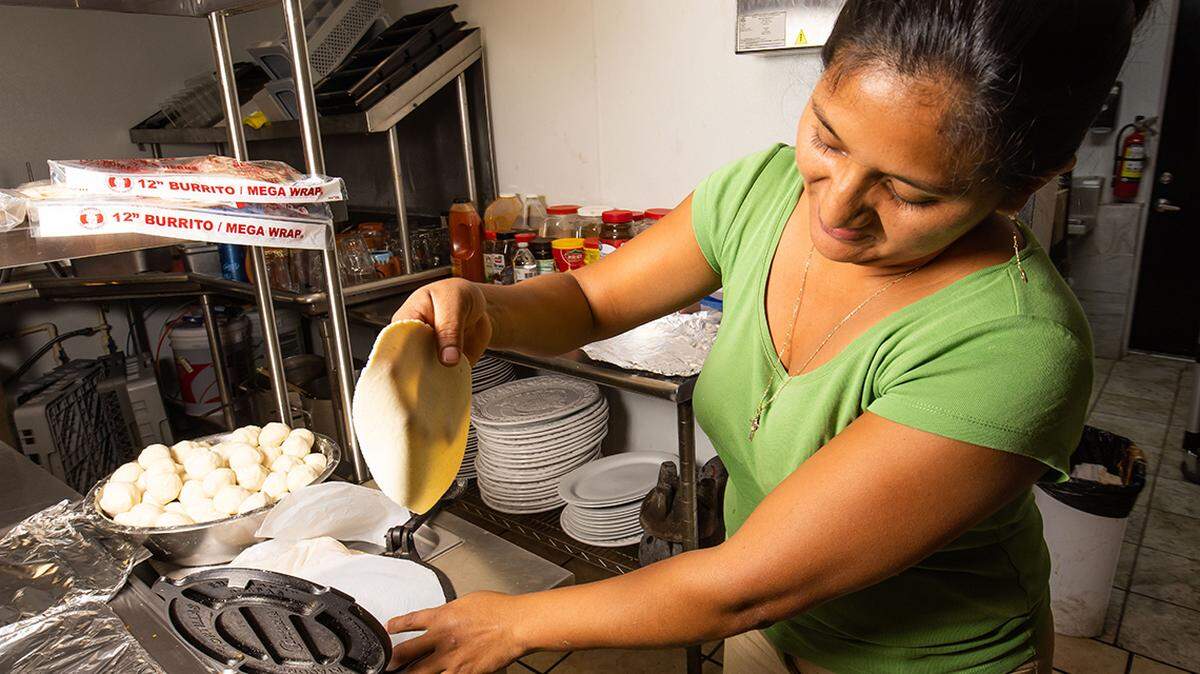
For many of us, tortillas, tamales and pupusas are more than food — they are part of our family traditions and daily lives. For decades, these foods were excluded from a lifesaving public health protection: folic acid fortification, putting families and babies at greater risk of preventable birth defects.
Neural tube defects, such as spina bifida and anencephaly, are serious conditions of the brain and spine that occur in the earliest weeks of pregnancy, often before a woman even knows she is pregnant. These conditions can mean lifelong disability, or in some cases, that a baby does not survive.
Science has shown for more than 30 years that folic acid, a simple B vitamin, can dramatically reduce these risks. Studies have found that folic acid can reduce neural tube defects by about 70% in women who have previously had an affected pregnancy.
That is why in 1998, the federal government required wheat flour and other grain products to be fortified with folic acid. The results were powerful: Neural tube defects dropped by about 35% nationwide.
Yet corn masa, an essential ingredient in a majority of Latino households, has never been subject to this federal requirement. This omission left millions of Latino families behind. As a result, Hispanic women in the United States continue to have higher rates of babies born with neural tube defects, when compared to non-Hispanic white and Black women.
This is not just a health gap. It is a preventable and serious inequity, with devastating consequences for every impacted family and child. And it is one that UnidosUS has been working to fix for nearly two decades.
Since 2006, we have advocated for the fortification of corn masa. In 2016, we helped secure the U.S. Food and Drug Administration’s approval for this voluntary fortification, alongside trusted partners such as March of Dimes and the Spina Bifida Association. But we soon learned that voluntary action was not enough. By 2022, a shocking six years after the standard permitted fortification, only 14% of corn masa products were being fortified with folic acid. Millions of families were still missing out on this proven protection. Reaffirming our commitment, UnidosUS began again to work with private sector partners from across industries, including retail giant Walmart, to protect Latino families through the fortification of corn masa products.
Last year, UnidosUS filed a petition with the FDA calling for stronger action and warning labels on unfortified products. We met with then-U.S. Health Secretary Xavier Becerra and brought food industry leaders to the table.
Most important, our effort spurred allies in California to enact legislation that requires corn masa products sold in the state to be fortified by 2026 — a bill we supported. After the legislation in California, major manufacturers also started fortifying corn masa sold in grocery stores. This progress shows that change is possible, and that strong and persistent advocacy can deliver real improvements to people’s lives.
Families should not have to wait decades for policies that reflect their reality. Latino Americans, as a group who are more likely to form families while having less access to high-quality prenatal care, should have been a top consideration in public health policies such as this one.
Every mother should have easy access to the nutrients she needs to support a healthy pregnancy. Every child should have the chance to be born healthy and thrive. And every community, including Latino families here in the Midwest, should benefit equally from public health protections.
As we mark both Hispanic Heritage Month and Folic Acid Awareness Week, we are reminded that the fight for health equity is part of the fight for civil rights. We will keep pressing the federal government and industry to act, because no family should have to wait for legislation to be safe from a preventable birth defect.
Kansas City, Kansas, native Janet Murguía is president and CEO of the 501(c)(3) nonprofit UnidosUS.