
Returning to Kansas City is a reminder that every one of us belongs | Opinion
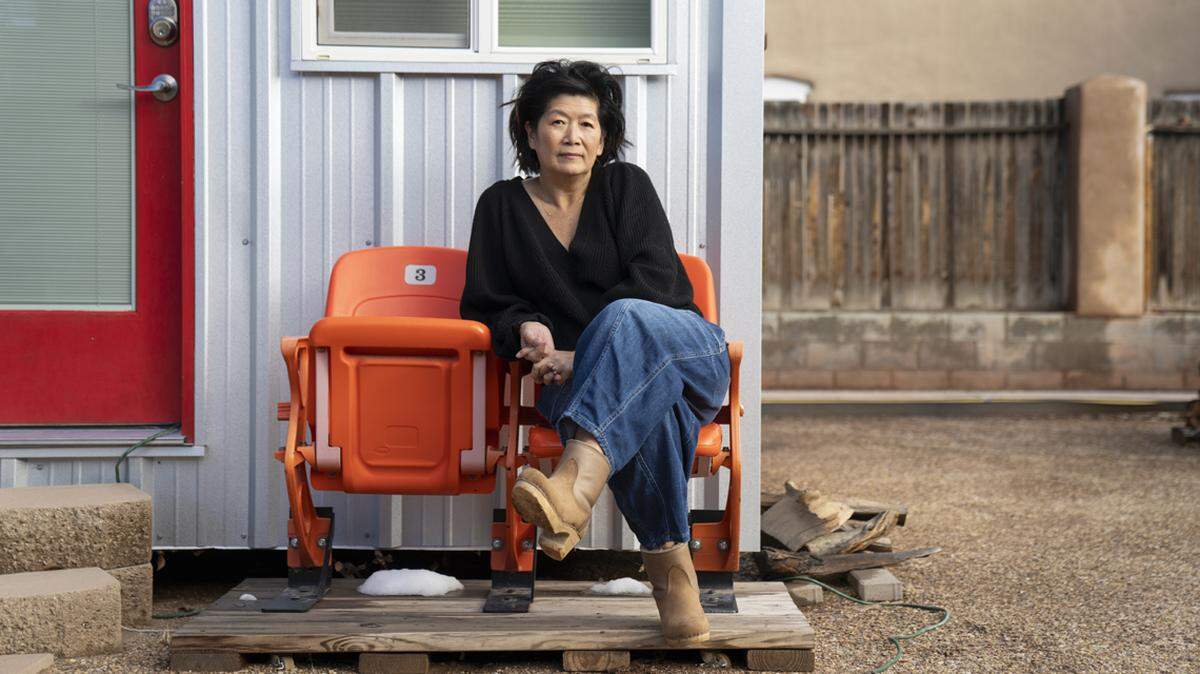
I grew up in Kansas City in the 1970s and 1980s. I have fond memories of swimming at Round Hill and playing Sardines in our Overland Park neighborhood, where all the backyards seemed to connect into a vast, open, locust-song-filled prairie. We walked to Briarwood Elementary School and attended the Shawnee Mission Public Schools until our parents moved us to the private Sunset Hill School (me) and Pembroke Country Day School (my brother) for high school.
In ninth grade, there was an influx of new girls to Sunset Hill, girls like me. My parents had immigrated to the U.S. from Korea after the Immigration and Nationality Act of 1965, and like many parents, wanted to send their kids to the best college preparatory school in town. We were Jewish, Asian, Black and Catholic. The girls who had been there since kindergarten were in general, richer, blonder and from old families in Kansas City society. Their families were members of country clubs that wouldn’t admit the likes of us new girls. They were unprepared for us, and we were unprepared for them.
One day in ninth grade, the Jewish girls found swastikas painted on their lockers. I was shoulder shoved and told to go back to where I’d come from, “bitch.” We were only 14 years old.
About once a year, something awful would happen to me and my family that had to do with race, othering and belonging. As I wrote in my book “The Big We,” belonging, or not, is a recurring theme in the ongoing experiment that is America. The debate over who belongs in this country is very much alive today. And yet, the beautiful, hard truth is that belonging is an ideal that we can create only if we do it together.
All around us are efforts to constrain, shrink and limit who belongs. I see this shrink-wrapping in efforts to define who one might love, who might make up a family, who gets to vote and how, who gets to be a citizen, who gets what medical treatments and where. The idea of a public sphere (like national parks and public schools) is being similarly shrunk, privatized into the hands of billionaires and corporations. There is an overwhelming insularity at work when the sociopolitical moment we are in calls for expansiveness.
Rather than a relentless focus on me, me, me and mine, mine, mine (which is related, in my opinion, to the epidemic of loneliness in the US that is literally killing us and our planet), we all benefit when we switch to a We and Us. It’s moving from an individualistic frame to a collective one. In my book and work, I call this moving from a Me to a We mindset.
Rather than working so hard to define and constrain another as an Other, it would be way more productive to work toward including and building a bigger We. Doing so brings more resources to bear and more hands to work, at a time when we need both.
Moving from a Me to a We can also help us be more civil toward one another, in a time that is marked by great incivility. Doing so can be as simple as inviting some folks over to talk about a local issue and then doing one action together. We are called upon now, more than ever, to step into what it means to be a citizen of our blocks, neighborhoods, towns and country.
I’ll be back in Kansas City on Sept. 26 to receive the Distinguished Alumni Award from the now combined Pembroke Hill School, and I’m honored to be the school’s Hazard Lecture speaker, where I’ll be in conversation with Fr. Justin Mathews, class of 1995, CEO of Reconciliation Services and founder of Thelma’s Kitchen, two Kansas City nonprofits.
As I return to my alma mater to accept this award, I am reminded that my 14-year-old self still lives inside me. That self was told emphatically that she did not belong. It’s been my life’s work to build belonging by building community across differences. It’s good to be back in Kansas City. Though I’ve lived in NYC for 30 years, it still feels like home.
Hali Lee is co-founder of the Donors of Color Network and founder of the Asian Women Giving Circle, both 501(c)(3) nonprofits. She is a lifelong Kansas City Chiefs fan who now lives in Brooklyn, New York, with her husband, young adult children, a big love of a dog and rooftop honey bees.