
From Kansas City to Palestine: experiencing the colonial reality | Opinion
“You’re a tourist. A tourist. Just a tourist.”
It’s the reminder I mentally chant as I stand beneath the gaze of the soldier. He analyzes me. My facial expressions, my demeanor, my responses to his interrogation. “What’s your name? Are you traveling alone? Where are you going? Why? How long? Do you have any friends or family in Israel?”
He smirks, as if he knows he’s the last barrier between me and Palestine. I fall numb and heavy, preparing to be sent to “the room” for further interrogation that would likely result in a return ticket to Jordan.
The soldier returns my passport with a crisp new entry visa. His smirk morphs into a prideful smile.
He says, “Have a great time.”
Somehow, I passed the test. My stomach turns, but at least I can breathe. In front of me now lies a month of advocacy education in Palestine. Behind me, manicured Israeli soldiers, a distressed crowd of predominantly Arab travelers and five hours of luggage screenings, body scans, passport checks, $200 in visa, border and shuttle fees, and waiting, waiting, waiting. Amman, Jordan, may have only been 40 miles away, but I might as well have traveled 500.
By the time I reach my destination in Bethlehem — only another 30 miles away — I could have driven from Kansas City to Chicago, with time to spare. What should have been a two-hour journey quadrupled, manufactured by Israeli military occupation, something the ethnostate will not let one forget.
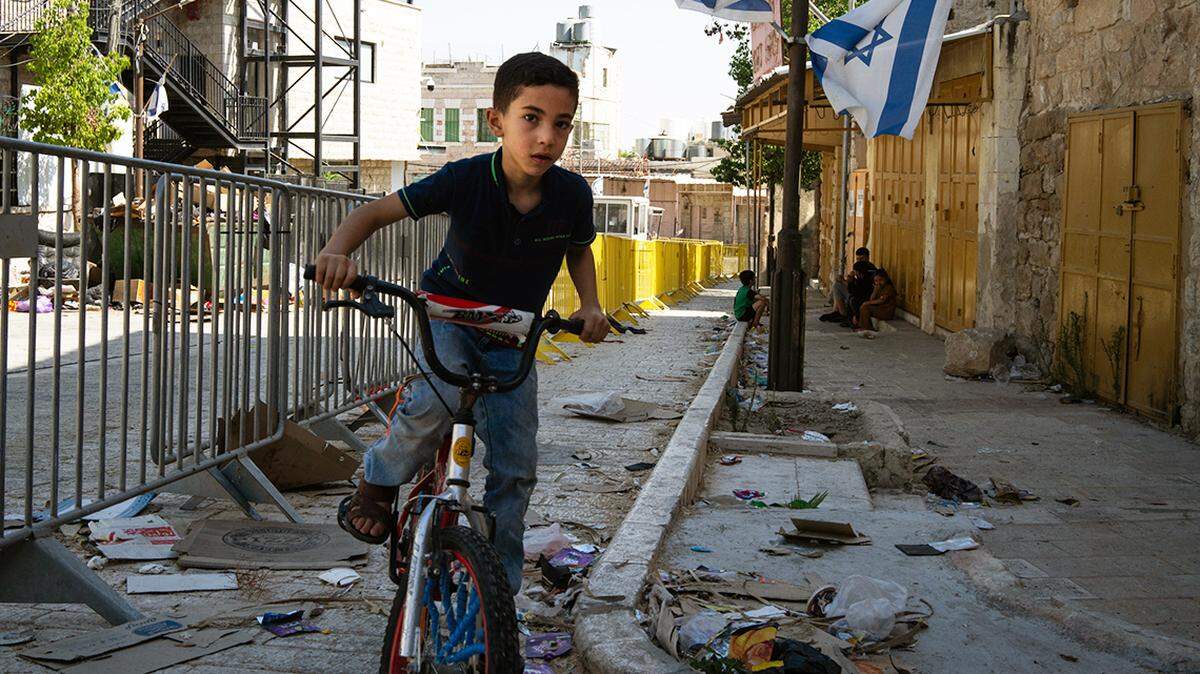
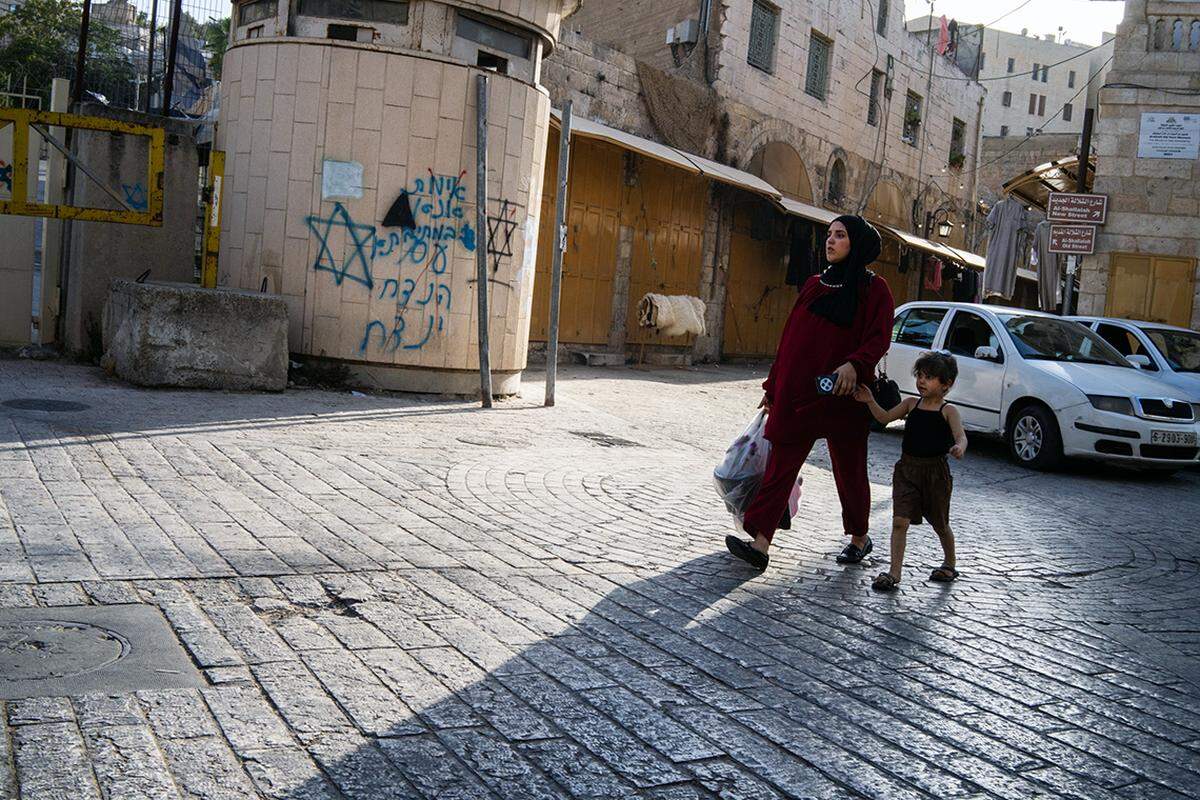
Signs of Zionist dominance could not be ignored. Israeli flags perched everywhere — on buildings, roads, hillsides, cars, homes. They marked every checkpoint and roadblock designed to restrict Palestinian movement. They waved at the entrances of Jewish-only colonies and on watchtowers along the 440-mile separation wall, manned with armed guards and artificial intelligence machine guns. Rarely was there a Palestinian structure unbranded by a spray-painted Star of David.
It reminded me of photographs from authoritarian regimes throughout history, where flags and symbols plastered the streets as a reminder of control, ideology and dominance, only the colors and players were different — and this was happening now.
Have a great time.
Everything I signed up for
Like many U.S. citizens, I was ignorant of what was happening in Palestine until October 2023, when Israel began its ongoing aggression in Gaza following the Hamas attacks. Immediately recognizing the atrocities unfolding — and America’s role — I dove headfirst into Palestinian solidarity work and, in April 2025, discovered BADIL Resource Center’s International Mobilization Course taking place in Palestine in July. BADIL is a nonprofit organization defending the rights of Palestinian refugees and internally displaced people.
This summer, as one of 13 participants from around the world, I engaged in workshops and legal analysis grounded in BADIL’s framework of Israel’s 77-year regime: colonization, apartheid and forcible transfer.
Through testimonies and field visits throughout the West Bank and historic Palestine, I witnessed:
- Refugees crammed into camps, deprived of basic necessities and denied the right to return to their ancestral homes.
- Farmers struggling to maintain lands while their greenhouses lie destroyed by Israeli forces.
- Families separated not only by physical barriers, but by tiered-ID and permit systems that restrict their movement.
A survivor of the 1948 Tantura massacre told her story of being surrounded by Israeli beachgoers enjoying the resort built atop mass graves. A man who survived 91 days in a coma explained that he was poisoned by the Israeli government for refusing its bribes to abandon his land.
Young Palestinians with Israeli citizenship described how U.S.-funded programs create identity crises through the illusion of equality.
A former prisoner fought back tears, unable to describe the feeling of being chosen for release after 23 years of deprivation, isolation and abuse.
Being searched at checkpoints, traveling segregated roads (smooth highways for Israelis but long, winding backroads for Palestinians), witnessing a young Palestinian alone on his knees, blindfolded and bound, while Israeli soldiers wielded M16s — these were temporary experiences for me.
This is a Palestinian’s everyday life, and has been since the 1948 Nakba (the “catastrophe” in Arabic), when Zionist militias forcibly expelled 750,000 Palestinians and confiscated 78% of historic Palestine.
These experiences validated BADIL’s framework surrounding the primary goal of the Israeli colonial-apartheid regime — maximum land with minimum Palestinians: that the Nakba never ended. It continues today, fully backed by U.S. financial, diplomatic, and military support.
No place like home?
It’s been a little over a month since I’ve been home, and I’ve been floating in a dreamlike haze ever since — except the world has never been clearer.
The parallels between the systems of oppression I witnessed in Palestine and the systems here in the U.S. are profound. From housing segregation and gentrification, to discriminatory legal systems and militarized policing, to the rights of immigrant, LGBTQIA+ and other minority communities and the looming threat of Christian nationalism — every struggle is interconnected.
I know there’s heart in the heartland, but it’s time to move beyond humanitarian sympathy toward political action. Under international law, Israel’s colonial-apartheid regime is illegal. As citizens whose tax dollars fund the regime, we have an obligation to act.
There’s no turning back to blissful ignorance. You’re all in now.
Welcome to never being able to unsee these injustices, and the lifelong responsibility of standing against them.
Have a great time.
Evie Reed is an activist and writer based in Kansas City, Kansas.
This story was originally published September 18, 2025 at 5:06 AM.