
What now? Roger Marshall getting softer on tariffs and immigration? | Opinion
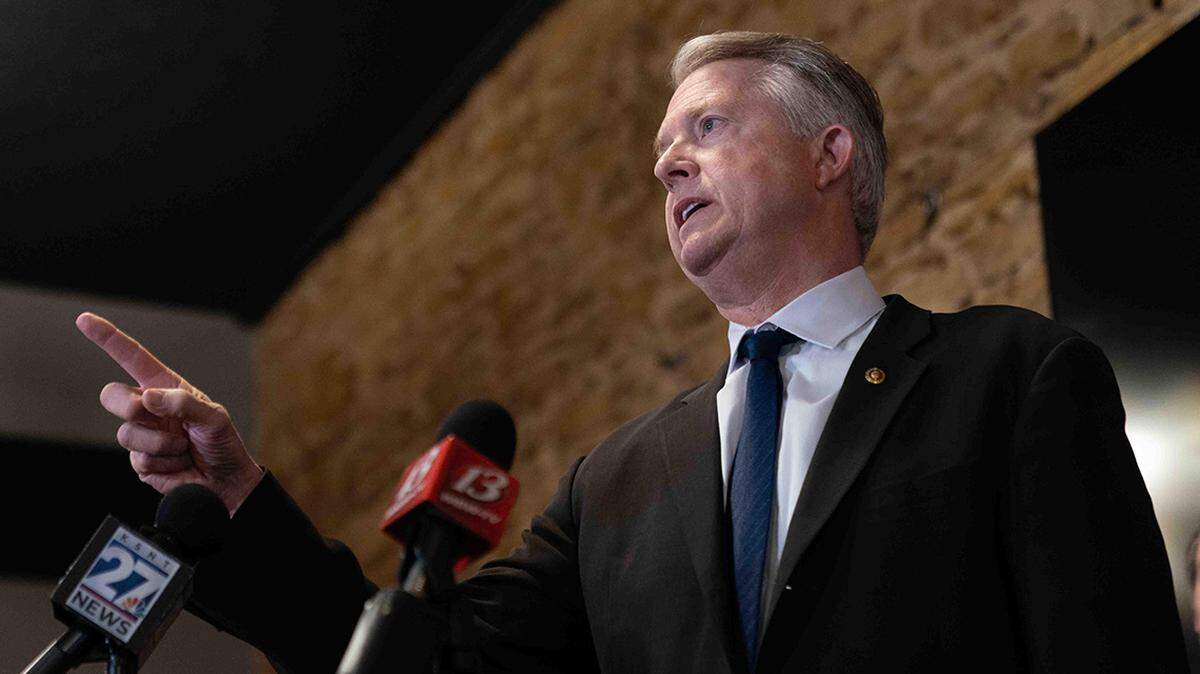
There is every reason to think that Roger Marshall — like just about every Kansas Republican before him — will easily retain his U.S. Senate seat in next year’s midterm elections.
It sure looks like he’s running scared, though.
Why do I say that? Because of a noticeable recent shift in Marshall’s rhetoric.
In a Tuesday speech to the Wichita Regional Chamber of Commerce, the senator’s words were a little more skeptical of tariffs, a little softer on immigration and — this is most significant — maybe just a tiny bit more willing to create some daylight between himself and President Donald Trump’s policies.
That’s a surprise. Marshall has always been among the most devoted of Trump’s devotees.
Yet there he was on Tuesday, telling the city’s business leaders that the president’s trade wars are “starting to make it harder” for Kansas businesses to succeed. He said he even raised the issue with the boss man.
“Gosh, Mr. President, these aluminum and steel tariffs are starting to hurt people in Kansas,” Marshall said he told Trump.
Funny thing: Marshall’s right. Only that’s not quite what he was saying just three weeks ago.
‘Workforce is basically an immigrant population’
“The success of President Trump’s strategic application of tariffs cannot be overstated,” the senator said in a triumphant Aug. 5 press release. Trump’s trade policies are “are establishing American national security, economic prosperity, and our standing internationally.”
That was then. Now it seems Trump’s tariffs have a downside.
What changed? Not Trump’s policies, that’s for sure.
That’s not the only shift. For example: Marshall has made a habit in recent years of smearing and demonizing immigrants — he even launched an ongoing social media campaign to highlight migrant crime.
“These crimes are horrific, torturing, raping, murdering young girls,” he said on Fox Business last year.
On Tuesday, he praised Trump’s immigration crackdown — but also added that it’s time to start looking for a path to legalizing some undocumented workers. Apparently the senator from Kansas just discovered those folks fuel big chunks of the Kansas economy.
When it comes to agriculture, manufacturing and housing construction, he said, “the workforce is basically an immigrant population.”
If only somebody had said something!
Having it both ways
Marshall’s actual Trump-friendly positions haven’t changed much. He made clear on Tuesday that he expects the president to take the lead on building a worker-friendly immigration policy. We’ll see if that ever happens.
But the senator at least acknowledged some downsides and tradeoffs to Trump’s policies this week. He hasn’t usually done that. Why the shift?
One guess: Trump and his policies aren’t very popular. The latest Gallup poll shows that just 40% of Americans approve of the president’s job performance. They don’t like how he’s handling foreign affairs (39% approval), education (38%) or the economy (37%). Other polls show Trump’s approval on immigration is also sinking.
Maybe that doesn’t matter in a GOP-friendly state like Kansas. Or maybe it does.
The Center for Politics this week ran a report describing how the 12-state Midwest region has shifted toward Republicans in presidential races over the last 20 years. No surprise there.
One surprising exception to that rule: Kansas. We’ve shifted left. (Thank you, Johnson County.) George W. Bush carried the state by 25 points in 2004. Trump won last year with a mere 16-point margin over Kamala Harris.
That’s still a healthy advantage, admittedly, but it does suggest some softness in the president’s standing locally.
And Marshall might not even be as popular as Trump. In 2020, the last year both men campaigned for office, Trump won 57% of the Kansas electorate. Marshall — in his first Senate race — ran a bit behind, with 53% of voters.
Two years after that, Sen. Jerry Moran won his reelection with 60% of the vote.
Put it all together, and there are good reasons for Marshall to run at least a little bit scared. There are warning signs everywhere, in a midterm year that looks to be tough for Republicans nationally: Sen. Joni Ernst of Iowa — Iowa! — just bowed out on Friday morning rather than face the headwinds next year.
The big question now is whether Democrats can or will come up with a candidate strong enough to truly test the Kansas senator’s electoral weakness.