
No matter whose job it is, let’s help Kansans, Kris Kobach | Opinion
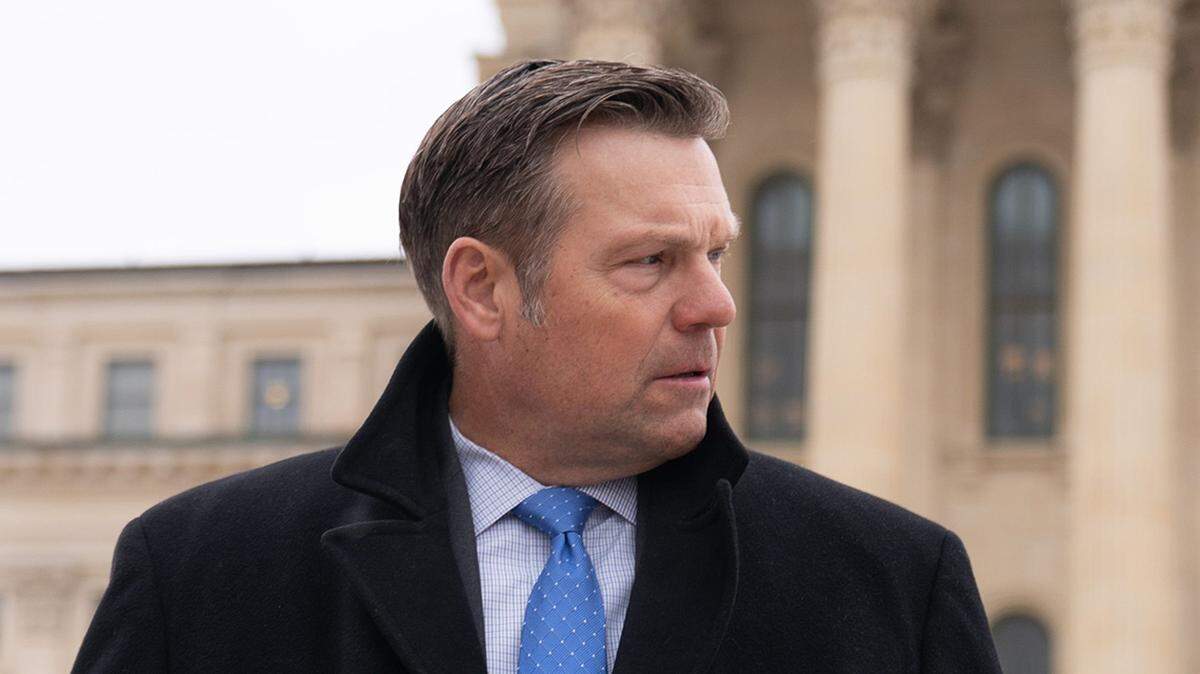
Kris Kobach had a choice between the best interests of Kansas or the best interests of Donald Trump.
He chose Trump.
Were you expecting anything else?
Here’s what happened: The state attorney general last week asked a federal court to boot Kansas Gov. Laura Kelly from a multistate lawsuit challenging the Trump administration’s decision to withhold grant money allocated by Congress. It’s cash that funds everything from school meals to clean water efforts and a whole bunch of other stuff.
Kobach says it’s his job — not Kelly’s — to bring lawsuits on behalf of the Sunflower State.
Kansas law “vests the Attorney General—not the Governor—with the authority to direct the State’s litigation in federal court, vindicate the State’s legal interests, and otherwise sue on behalf of the State,” Kobach said in a court filing.
“Accordingly,” he wrote, “this Court should dismiss her claims.”
I’m not here to take a side on Kobach’s legal argument. That’s not my area of expertise. The federal court is better equipped to decide whether Kelly or Kobach is correct, and whether the governor can continue to hound the Trump administration for federal cash the state can use for good purposes.
Let’s say Kobach is right. If so, the real question is this: If the Kansas attorney general really is uniquely empowered to “vindicate the State’s legal interests” in federal court, then why isn’t he?
Why isn’t he fighting alongside Kelly instead of against her?
Depriving states of ‘critical funding’
The lawsuit was filed in June by a coalition of Democrat-led states. Kelly joined at the end of July, saying she was doing so to “ensure funds going towards critical programs our state depends on are not ripped away by the Trump administration — or any presidential administration — on a whim.”
The states argue that the Trump administration’s DOGE-driven “slash-and-burn campaign” to terminate already-awarded federal grants has had “devastating” effects.
“With the stroke of a pen,” the states said in their complaint, “federal agencies have deprived States of critical funding they rely on to combat violent crime and protect public safety, equip law enforcement, educate students, safeguard public health, protect clean drinking water, conduct life-saving medical and scientific research, address food insecurity experienced by students in school, ensure access to unemployment benefits for workers who lose their jobs, and much more.”
That’s bad.
As one example, the suit points to a $2.7 million grant used by the Kansas Department of Agriculture to “purchase fresh, local foods directly from farmers and producers” and distribute it through food banks that serve needy Kansans. The award was suddenly canceled in May, leaving pantries in a lurch. “This program will not continue in Kansas without additional federal funding,” the lawyers wrote.
Other grants could be at risk in the future, the lawsuit says, including federal money for Kansas dam safety, upgrading water systems, lead testing, floodplain mapping, reclaiming abandoned coal mines and protecting children from drugs.
That’s money that helps keep Kansans healthy. Kobach is ready to walk away from it. Kelly isn’t.
‘Consequences for Kansas’
Kelly, for what it’s worth, says she asked Kobach to join the lawsuit. He didn’t. Kobach last week told the Legislative Coordinating Council that the effort will fail. The Trump administration, he said, flat-out has the power to halt funding if it chooses.
“We don’t believe any state has the ability to compel the federal agency to spend the money,” he said.
Maybe he’s right. But it would be nice to find out if the federal courts agree instead of preemptively surrendering. And Kobach’s decision to wade into the case against Kelly isn’t really a neutral decision.
The attorney general made his sympathies clear.
“Some of the cuts which are not given front position in this lawsuit are ones that most people would say probably are not worthy,” he told the council. “Those are programs that probably should not be continued because they go to very narrow interests, often in the DEI realm.”
Kansas Senate Minority Leader Dinah Sykes disagreed.
“I think the fact that we’re not fighting for those cuts is we are saying that we are complicit, and it will lead to cuts and have consequences for Kansas,” she told Kobach.
Here’s betting Sykes is right. Kobach may win his legal dispute with Kelly. But the interests of Kansans — their health and safety — will hardly be vindicated.
This story was originally published August 19, 2025 at 5:08 AM.