
KC’s Kauffman Center can teach Trump, the left a lesson about arts funding | Opinion
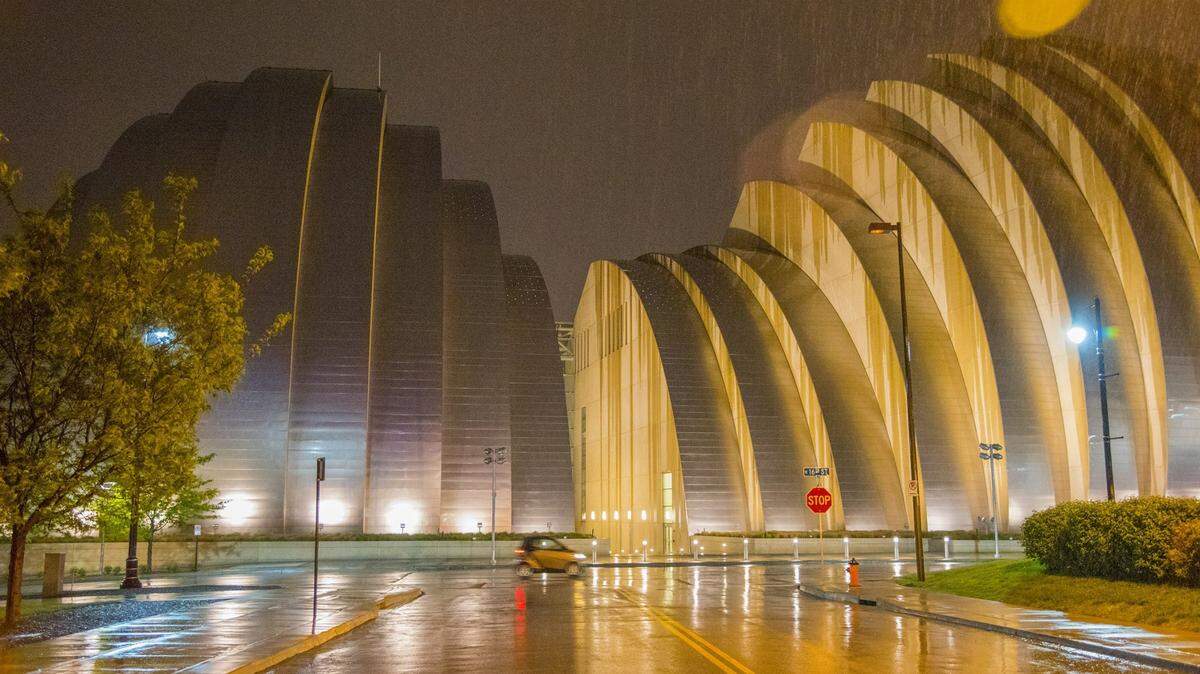
President Donald Trump’s takeover of the John F. Kennedy Center for the Performing Arts is in the news again. One doesn’t need to be a stalwart opponent of Trump to be uneasy with how he is inserting himself and his tastes in the arts landscape. But there may be lessons from Kansas City that can help resolve the conflict.
In 2011, Kansas City celebrated the opening of the Kauffman Center for the Performing Arts — an impressive, $300-million architectural beauty on the downtown skyline. Its two performance halls have hosted everything from grand opera to Broadway tours. But perhaps the most remarkable thing about the project wasn’t the music on stage. It was the money behind it.
The Kauffman Center was built entirely with private funds. Every dollar for construction and endowment came from individuals, families and foundations. The only public investment was the adjacent parking garage, financed with city bonds. Whether or not donors consciously sought to avoid political meddling, and I have heard they did, they got it: The center operates free of the political skirmishes that so often entangle taxpayer-supported cultural institutions.
History shows why this matters. Federal and municipal arts funding has a way of attracting political intervention, no matter who is in power. In 1989, North Carolina Sen. Jesse Helms attacked National Endowment for the Arts grants to Andres Serrano’s “Piss Christ” and Robert Mapplethorpe’s photography, leading to new content restrictions. A decade later, New York Mayor Rudy Giuliani threatened to pull city funding from the Brooklyn Museum over an image of the Virgin Mary by Chris Ofili. Now, Trump has upended tradition at the Kennedy Center Honors, rejecting artists he deems “woke” and using the event to reinforce his political brand.
The pattern is consistent. Artists and institutions often welcome government dollars but resent the oversight that comes with them. As the saying goes: Take the king’s coin, dance to the king’s tune. This isn’t unique to the arts. Public broadcasting — often a flash point itself — weathered periodic attempts by politicians to reshape programming according to their own priorities. Recent congressional action, and the announcement that the Corporation for Public Broadcasting is shutting down, may be the end of that particular battle. The fact that funding is public invites the possibility, and often the temptation, for politicians to intervene.
The irony is that most arts funding in America is already private. Individuals, foundations and corporations supply the overwhelming majority of the money that keeps theaters, museums and orchestras alive. The federal government’s entire arts budget — through the NEA and other agencies — amounts to a fraction of a fraction of overall cultural spending. Yet those public dollars often cause the biggest fights.
This isn’t to suggest eliminating arts education in public schools, only to acknowledge that even it can become a political debacle.
If artists want to safeguard their creative independence, the most effective way is to forgo government money altogether. Private donors can be demanding too, but their influence is not backed by the coercive power of Capitol Hill or City Hall. With private support, programming choices are ultimately between artists, audiences and patrons — not legislators or cabinet officials.
Shifting entirely to private funding would not eliminate controversy in the arts, but it would eliminate the expectation that the government should referee it. Liberals and conservatives alike could embrace this arrangement for different reasons: Conservatives would avoid subsidizing work they oppose, and progressives could keep political appointees from shaping cultural expression.
Kansas City’s Kauffman Center shows what’s possible when a major civic arts institution grows from private generosity rather than public subsidy. Government has enough to do in maintaining roads, ensuring public safety and providing basic services. The arts — whether performances, installations, broadcasts or films — are best left to the men and women who create them and the communities who choose to support them.
That way, the next great performance will be judged on the strength of the art, not the politics of the purse.
Patrick Tuohey is co-founder of Better Cities Project, a 501(c)(3) nonprofit focused on municipal policy solutions, and a senior fellow at the Show-Me Institute, a 501(c)(3) nonprofit dedicated to Missouri state policy work.