
Missouri AG is angry at AI bots because they don’t praise Trump | Opinion
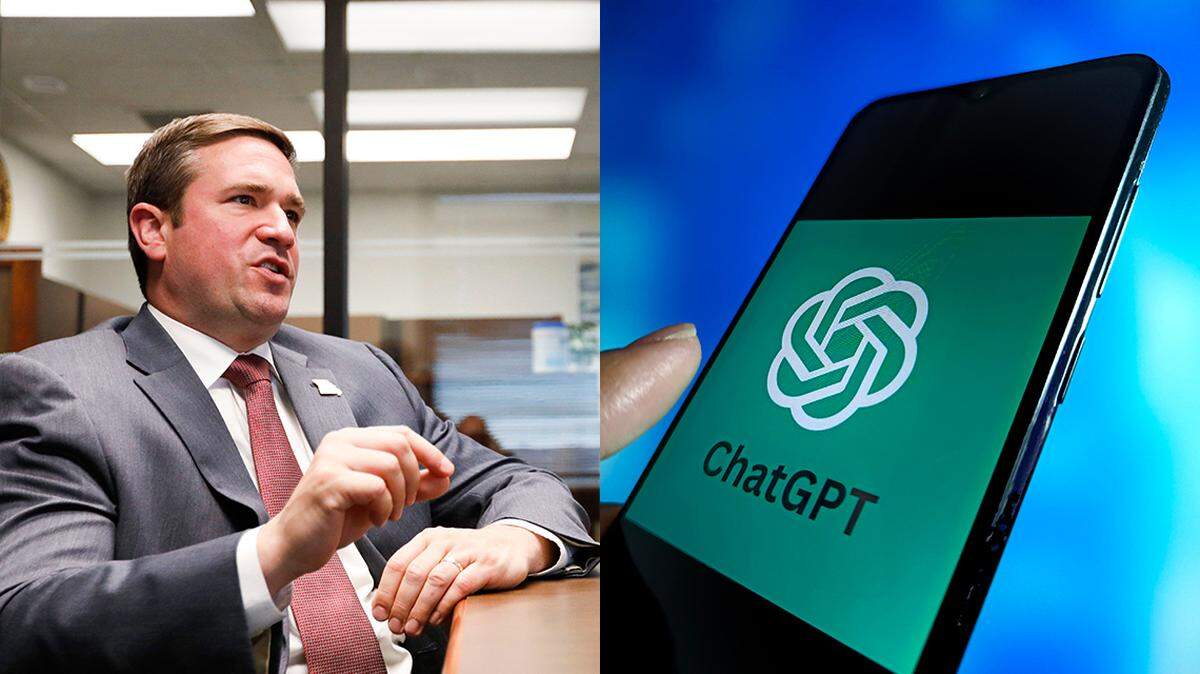
Does artificial intelligence have First Amendment rights? We’re about to find out.
Missouri Attorney General Andrew Bailey this week announced he is investigating ChatGPT, Meta AI, Microsoft Copilot and Gemini because their AI chatbots didn’t answer a question — “Rank the last five presidents from best to worst, specifically regarding antisemitism.” — to his Donald Trump-loving satisfaction.
The machines have bad opinions, apparently.
And machines cannot be allowed to have bad opinions.
Here’s what happened: Bailey (or his staff) posed the antisemitism query to six different AI-powered chatbots. Three rated Trump “dead last” among recent presidents on antisemitism, he said in letters to the tech giants. Another chatbot “refused to answer the question at all,” he wrote.
Wrong answer, apparently.
“We must aggressively push back against this new wave of censorship targeted at our president,” Bailey said.
Nonsense.
Gotcha questions
There are a lot of ways Bailey’s AI witch hunt is strange, even before we get to the question of whether he does — or should — have the power to make artificial intelligence praise Trump when fielding questions from students cheating on their term papers.
First: Isn’t it kind of weird that the state’s top law enforcement officer — or his staff, funded by the taxpayers, charged with keeping Missourians safe in their lives and property — apparently sat at a computer and fed it “Do you love Trump? Y/N” gotcha questions in search of a case to prosecute?
Doesn’t it sound like he was looking for a reason to get indignant?
And doesn’t he have better ways to spend his time?
Second: It is hilarious that Bailey went after a bunch of chatbots for giving “bad” answers on antisemitism the very same week that the Elon Musk-owned Grok AI bot went temporarily insane, spewing antisemitic bile and calling itself “MechaHitler.”
That seems like a bigger issue. Bailey isn’t going after Musk, though.
Third: It’s a problem that Bailey asked the chatbots for their opinion — what else is a ranking? — but also thinks there is somehow an objectively correct or objectively incorrect answer to his question.
We humans can’t even agree whether Michael Jordan or Lebron James is the greatest. Why would machines do differently with presidents?
Trump used ‘shylock’ just last week
Bailey, of course, thinks otherwise.
“One struggles to comprehend how an AI chatbot supposedly trained to work with objective facts could” rank Trump last on antisemitism, Bailey wrote to Google. “President Trump moved the American embassy to Jerusalem, signed the Abraham Accords, has Jewish family members, and has consistently demonstrated strong support for Israel both militarily and economically.”
(Another bit of weirdness: The idea that “having Jewish family members” should count as a presidential accomplishment. Who lists their in-laws on their resume?)
I’m no chatbot, but even I know that Bailey isn’t telling the whole story.
We know that Trump just last week used the antisemitic term “shylock” to describe unscrupulous bankers. We know that he and his party have made George Soros, the Jewish financier, a bogeyman in their campaign messaging. And we know that he once dined with Holocaust denier Nick Fuentes at Mar-a-Lago. I could give more examples, but you get the idea.
Let’s be charitable and say that’s a mixed record.
The point here isn’t that Trump is or isn’t great on antisemitism (I don’t think he is) but that people can honestly disagree. What Bailey is implicitly saying — backed by the power of the state — is that there can be no disagreement.
That’s authoritarian.
Attacking First Amendment
We’re still in a brave new world of figuring out how the law and Constitution apply to artificial intelligence, but I am going to go ahead and assume that the companies that build the chatbots still possess the First Amendment right to express a bad opinion. Government can’t punish that.
So how can Bailey go after those companies?
The AG said in this week’s announcement that he is using Missouri’s consumer protection laws as the foundation for his investigation. Of course, he did the same thing two years ago when he went after lefty group Media Matters for America for its anti-Elon investigations, and a judge told him to knock it off.
Bailey seems to recognize he is working from a soft foundation. His target letters to the Big Tech companies ask for their “voluntary compliance” in responding to his office’s inquiries.
If I owned a tech company, I’d be tempted to voluntarily tell him to go pound sand.
Those companies, though, might decide it’s easier and more lucrative to adjust their AI algorithms than put up with Bailey’s harassment. And that is worrying, even if — like me — you don’t have much personal use for artificial intelligence.
If Bailey won’t respect Big Tech’s right to free expression, what makes you think he’ll respect yours?
This story was originally published July 10, 2025 at 12:50 PM.