
What I told Sen. Moran: Cancer research cuts would cost Kansans’ lives | Opinion
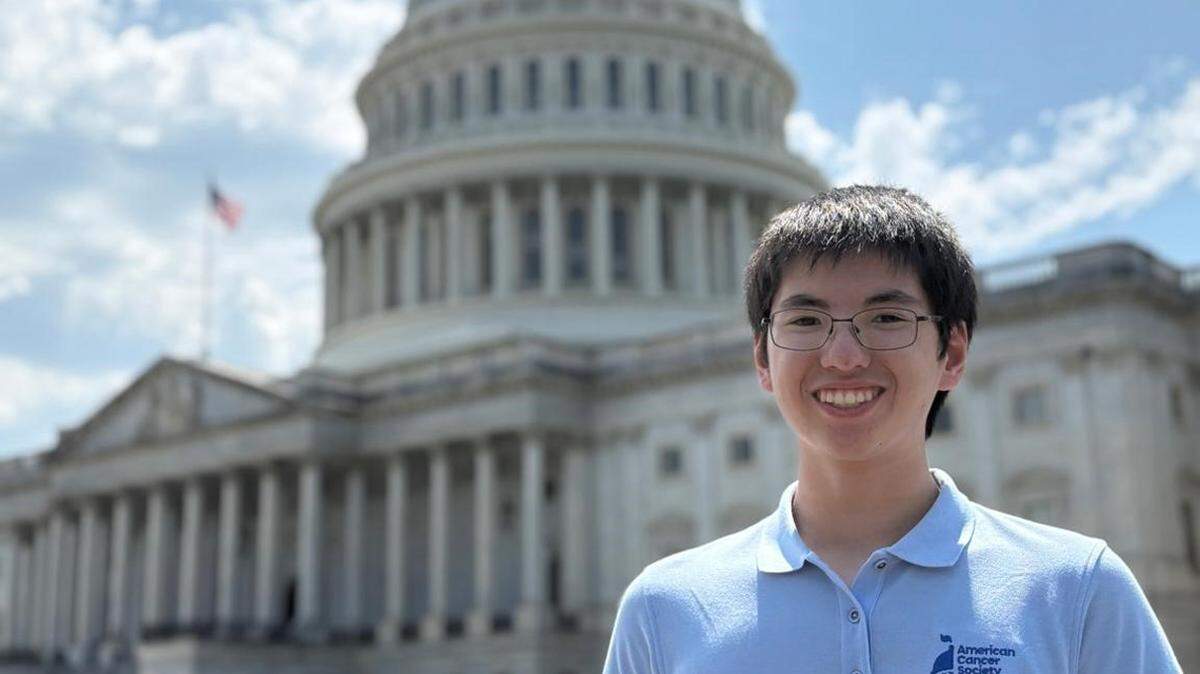
Future cancer cures are in jeopardy because of dramatic and unprecedented proposed reductions in research funding, staff eliminations and policy shifts at the National Institutes of Health and National Cancer Institute. That’s why I traveled to Washington, D.C., last week to speak in support of strong cancer research funding, and to personally tell Sen. Jerry Moran that cuts have consequences.
I didn’t go to D.C. as a lobbyist but as a high school student, a Kansan and a young person already conducting cancer research who is deeply concerned about the future of biomedical research funding in our country.
During my trip, I attended a U.S. Senate hearing featuring the NIH director, focused on the president’s proposed budget for fiscal year 2026. The president’s proposal includes devastating cuts to the NIH, and in particular to the NCI. These cuts are not just numbers in a budget — they have real consequences for real people.
According to the American Cancer Society, an estimated 618,000 Americans are expected to die from cancer in 2025 alone. In Kansas, more than 5,600 families will experience a cancer-related death. We can’t afford to stop funding the very cancer research that these families are depending on to provide future cures.
After the hearing, I had the opportunity to meet with Sen. Moran, who sits on the Senate Appropriations Committee. Moran has always been a strong supporter of the NCI and cancer research in our state, and he will be a powerful voice and vote as the president’s budget moves through Congress. The senator was extremely approachable. He told me that he’s optimistic that final funding levels will be closer to what they are now. This gives me hope but not certainty.
Later in the day, I sat down with Moran’s staff and shared with them just how much of an impact cuts to NIH and NCI funding would have, not only on the health of Kansans but our economy as well. This funding supports more than 1,700 jobs throughout our state and contributes $395 million in economic activity. Cutting this funding doesn’t just harm science — it harms Kansans’ livelihoods.
As a high schooler who is already conducting cancer research through the University of Kansas Cancer Center, I’ve seen firsthand the promise of biomedical innovation. I dream of becoming an oncologist one day, so that I can contribute to medical breakthroughs and save lives. When I see budget proposals like this, however, I worry that those dreams may be harder to achieve — not just for me, but for an entire generation.
The president’s proposed budget also includes major cuts to funding for the Centers for Disease Control and Prevention. The CDC funds the Kansas Cancer Registry, which provides accurate cancer statistics. It is this data that has helped scientists realize that cancer rates are rising in younger people, and that certain environmental factors may be contributing to higher cancer rates in certain areas. The CDC also funds the effort to create the Kansas Cancer Plan, which sets goals to continue to increase screening and prevention efforts and decrease mortality rates. Significant budget cuts to the CDC may mean that Kansas will no longer have accurate cancer statistics and fewer people would have access to cancer screening. These cuts have consequences.
The United States has long been the global leader in biomedical research. That’s not an accident. It’s because of smart and sustained federal investments in science. If we step back now, other countries are more than ready to fill the void. We risk losing our leadership, our top researchers and years of progress. And most important, there will be slower medical breakthroughs, which mean more patients will suffer and die from this devastating disease.
Cancer doesn’t wait and neither can we. That’s why Congress must protect National Institutes of Health, National Cancer Institute and Centers for Disease Control and Prevention funding to save American lives, strengthen our economy and maintain our country’s global leadership in science.