
Especially this year, Kansas City Pride is a celebration of joy | Opinion
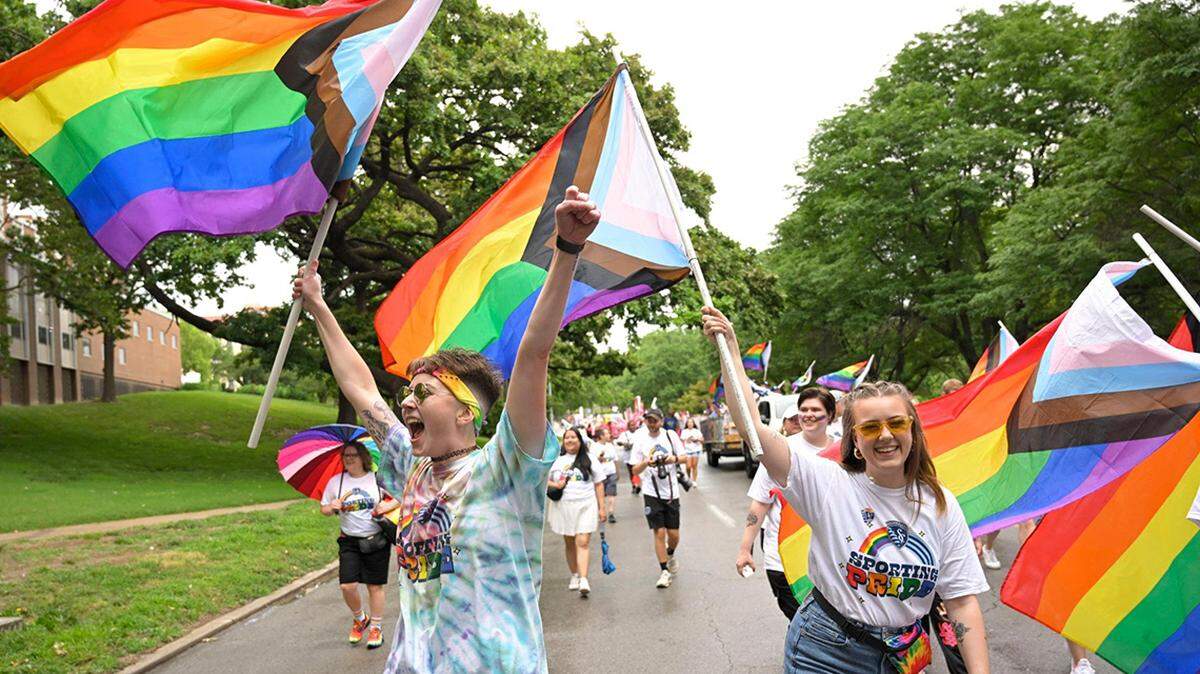
Each Pride season, I find myself reflecting on what it means to be queer: not just in terms of identity, but in terms of politics, community and joy. In previous years, my reflections have often taken the shape of critique. This year, inspired by the work of sociologist Laurel Westbrook and recent pro-democracy activism in Budapest that reclaims queer joy in the face of rising backlash, I want to shift my focus. I want to speak about the beauty of queer life — not just to celebrate it, but to show what’s at risk if we lose it — and to communicate to those what this existence looks like.
Sociologists and journalists alike are often skilled at pointing out issues in society, but bad about highlighting our achievements — in art, culture, pleasure and protest. In his journal article “The Normalization of Queer Theory,” David Halperin reminds us that the early days of LGBTQ+ activism were not just about rights or policy: They were about joy. That joy was rooted in celebration, creativity and a shared struggle, and was inspired by the Black civil rights movement’s insistence on dignity and celebration.
Pride is a party, but it’s also a political act. The joy of queerness lies in knowing that community doesn’t just happen. It’s made — an idea reflected by the late Stephen O. Murray in his book “American Gay.” That’s something I witnessed firsthand during the three years I volunteered with Kansas City Pride from 2015 to 2017. There’s a deep intentionality in how queer people build space for one another. During my field work with Kansas City’s LGBTQ+ communities, I saw how people created vibrant, supportive environments from scratch.
This year, I’m working with Stuart Hinds at the University of Missouri-Kansas City as part of a collaboration with MU, UMKC and Michigan State University special archives to document that resilience.
What I call “the tragedy of straightness” isn’t about who someone loves — it’s about never having to question the path you’re told to follow. To be straight is to accept that the assumptions about love, sex and family are the default. For queer people, none of it is assumed. We build many of our relationships from the ground up. Friendships and support systems (the family) don’t just happen. We create them. We don’t assume we’ll be loved unconditionally. We learn to love one another fiercely and deliberately.
There is a certain magic that reveals itself only when you’re part of that building process. You see how each person contributes to a collective spirit. You witness the ways we hold space for one another, whether in a basement drag show or a queer reading group. These aren’t just social spaces — they’re lifeboats. And yet, many straight people — and increasingly, many gay people raised in more accepting environments — never experience this. For others, these created families are chosen, protected and fiercely loved.
The cost to this refusal means carrying the weight of surveillance and, for many, fear. We are asked to monitor our mannerisms, police our desires and to “tone it down” — even in many progressive spaces, such as colleges and universities, places of work and in many other aspects of public social life. It is why coming out remains part of our experience.
This Pride, especially in a time of renewed attacks on LGBTQ+ rights, choosing celebration is a form of resistance. It reminds us that society wasn’t designed with us in mind — and yet we made space for ourselves anyway. The joy of queerness is protest. Pleasure, in this context, is political. It is not something to overcome. It’s an honest commitment to not take love, connection or identity for granted.
To live openly and queerly is to live with intention, with courage and — above all — with joy.