
Poisonous online rhetoric leads to horrors like murder of Sarah Milgrim | Opinion
We are raising a generation of thoughtful, passionate young people. They use their social media platforms to speak out against injustice — from the war in Ukraine to the oppression in parts of Africa and China. But far above all other causes in online attention is Israel’s war against Hamas — which began when the group invaded Israel on Oct. 7, 2023, murdering 1,200 civilians and taking more than 250 hostages.
But what starts as seemingly good intentions can lead to dangerous outcomes.
The Old Testament emphasizes the power of action and the guidance of intellect over emotion in shaping a moral life. The Torah teaches us to “do and then understand” — that right action can shape a just mindset. But today, in a world dominated by emotional online responses, we are witnessing the opposite: feelings replacing facts, outrage replacing understanding — and too often, hate replacing humanity.
Why is this war treated differently from all others? Why are calls of “genocide” and “colonialism” directed only at the world’s only Jewish state? Why does Israel — a democracy the size of New Jersey, with 20% of its citizens being Arab Muslims and Christians — get singled out with flagrant terms not used for any other conflict?
On TikTok, pro-Israel videos are greatly outnumbered by pro-Hamas or pro-Palestinian content. While criticism of any government, including Israel’s, is fair and often warranted, the disproportionate rage and double standard — especially when based on misinformation — is dangerous. And that danger is no longer theoretical.
Just over a week ago, it became deadly.
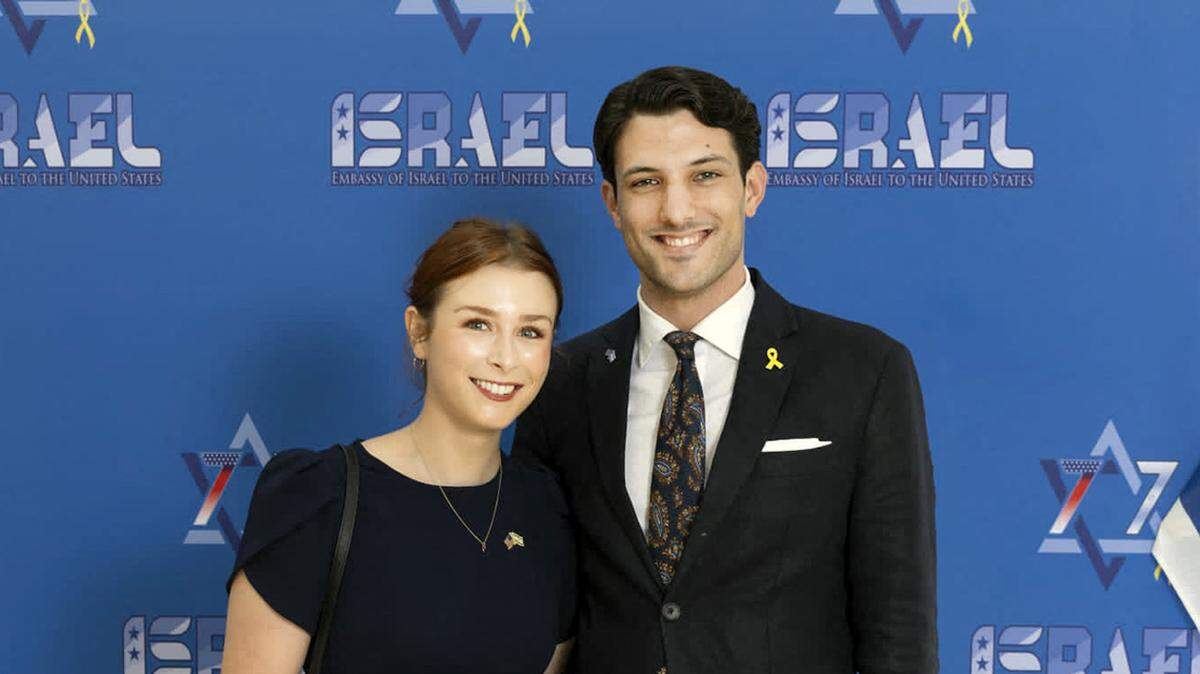
Sarah Milgrim, a member of the Jewish community and a Kansas City native, was murdered in Washington, D.C., alongside her partner, Yaron Lischinsky, just steps from the Capital Jewish Museum. The shooter allegedly screamed, “Free Palestine!” The irony is heartbreaking: Sarah, an active member in American Jewish Committee’s young professional ACCESS group, was attending an event focused on humanitarian collaboration — including aid for civilians in Gaza. She was also involved in Tech2Peace, an organization providing entrepreneurial training alongside conflict dialogue to young Palestinians and Israelis. She was a peacebuilder.
But that didn’t matter. The shooter was looking for Jews. Their murder was an act of hate. It was antisemitism — not abstract or academic, but real, violent and fatal.
Today’s antisemitism often hides behind anti-Zionism. But let’s be clear: Anti-Zionism is antisemitism when it denies Jews the same right of self-determination afforded to all other people. The vast majority of Jews identify as Zionist, which simply means supporting the Jewish people’s right to live in peace and security in their ancestral homeland. To deny this is to deny Jewish peoplehood. This poisonous rhetoric doesn’t just stay online — it fuels real-world violence and emboldens fanatics, such as the one accused of killing Sarah and Yaron.
We must reverse the current course. Let our actions lead to better thinking. Let conversation replace condemnation. Let learning replace reposting. Allies must speak out. It takes a whole of society approach — Jews and non-Jews alike. Silence helps the oppressor, never the victim.
Start by reaching out. Talk to someone you disagree with. Check in on your Jewish friends. Read more deeply — and from diverse, credible sources. Be cautious about what you watch and post online. It matters.
In Sarah’s memory, let’s not just mourn — let’s act. She believed in coexistence and peace between Israelis and Palestinians. We must continue that work, together.
Let’s reverse the paradigm with our intellect first over our emotional responses. Let our actions of learning from others and education lead to words of love and acceptance and allow these to shape our thoughts for a better future — one filled with peace and humanity.