
Kansas City, use drones to crack down on ATVs, dirt bikes downtown | Opinion
Every night in downtown Kansas City, the streets are hijacked by lawless groups on street-illegal all-terrain vehicles and dirt bikes. These aren’t harmless weekend riders. They’re masked gangs who weaponize speed and recklessness, taunting law enforcement, blocking intersections and putting lives at risk. They’ve already injured pedestrians and sent a police officer to the hospital. And still, night after night, they return — because nothing is stopping them.
I live downtown. I’ve nearly been hit crossing the street. I’ve watched these riders tear through Main Street and the Crossroads without the slightest concern for the law, or for anyone’s safety. I study law during the day and watch it break down at night.
And these aren’t all hobbyists just riding around for fun. The Kansas City Police Department reports a suspect in an ATV pointed a gun at officers over this past weekend. Police made multiple arrests, issued citations and summons, and seized drugs.
It’s time to stop pretending this is a manageable nuisance. It’s not. It’s an escalating public safety crisis. And if Kansas City is serious about taking back control of its streets, it needs to embrace a modern solution: drone surveillance.
High-speed chases dangerous
The Kansas City Police Department has few viable tools to fight this threat. High-speed chases in dense urban areas only make things worse — escalating the risk to innocent bystanders, not to mention the riders themselves. But when the police don’t act, it sends a dangerous message: These gangs run the city, and law enforcement can’t or won’t stop them.
This isn’t a hypothetical. These groups are growing more organized, more aggressive and more confident every week. The risk of fatal collisions is rising. We need a better way.
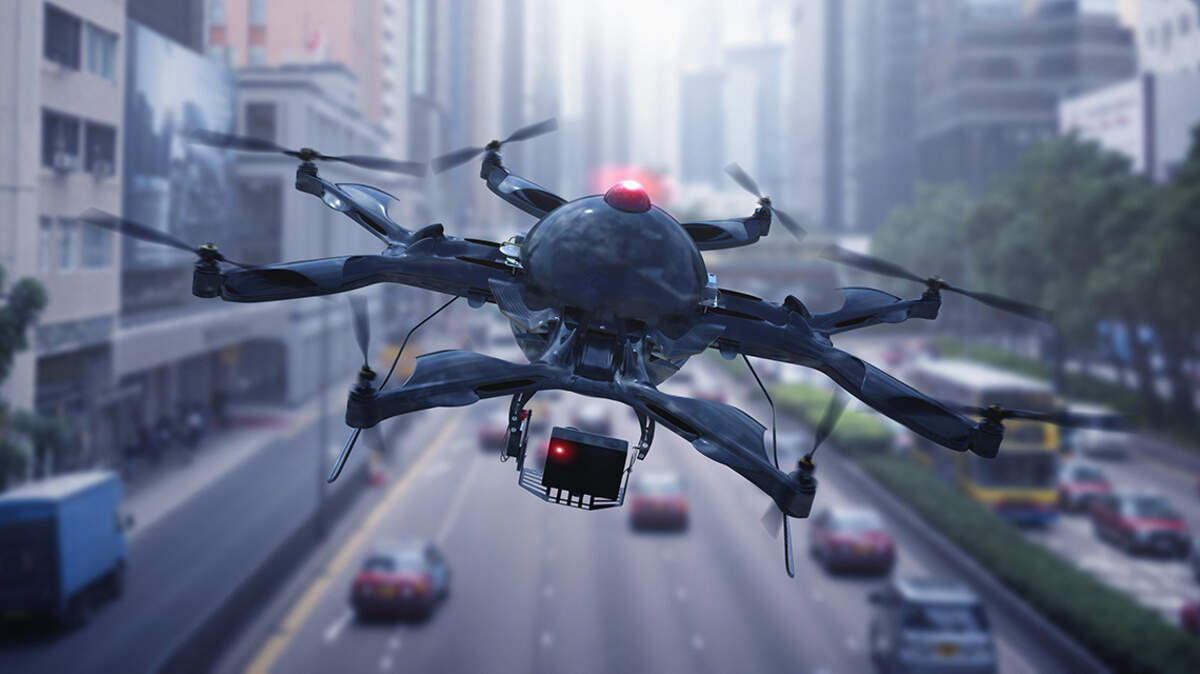
A drone surveillance program would give law enforcement exactly what it needs: a way to track illegal activity from a distance, without pursuit, and to gather video evidence to support targeted arrests and prosecution. It could allow police to determine whether officers need to be sent to a scene, and whether public safety is at immediate risk.
Cities such as Baltimore, Atlanta and New York are already using drones to monitor exactly these kinds of street-level threats. Kansas City should do the same.
Opponents of drone surveillance often raise Fourth Amendment concerns. But the Supreme Court has repeatedly held that individuals do not have a reasonable expectation of privacy in public streets. In California v. Ciraolo and Florida v. Riley, the high court affirmed that law enforcement may conduct aerial surveillance of activity visible from public airspace without a warrant. Drone monitoring of dangerous, public criminal behavior — such as illegal ATV street takeovers — is clearly within that legal framework.
Of course, drone use must be bounded. Courts have scrutinized persistent, long-term surveillance of individuals, especially when it tracks movement over time or aggregates private data. But that’s not what’s needed here. A targeted program focused on group crimes occurring in plain view does not violate the Constitution.
The Federal Aviation Administration regulates drone operations, but it does not prohibit law enforcement use. Police departments can obtain an FAA Certificate of Authorization or operate under the agency’s existing small unmanned aircraft rules — and many already do. Proper training, safety protocols and airspace coordination are required, but these are all manageable. What’s lacking in Kansas City is not legal authority — it’s willpower.
Transparency is key
This program must be transparent, limited and accountable. That means:
- No facial recognition or biometric tracking.
- No surveillance of peaceful protests or unrelated civilian activity.
- Strict limits on when and where drones are deployed.
- Clear rules on data retention and public reporting.
This isn’t a blank check for surveillance. It’s a focused public safety tool aimed at a clearly defined and highly visible threat.
The cost of inaction is rising by the day. Kansas Citians should not have to fear walking across the street at night. They should not have to dodge stunt riders in front of Union Station or hear illegal engines roaring down their blocks after midnight. And they should not have to accept the idea that law enforcement is powerless against this crisis.
Drones won’t solve every problem. But they are a legally sound, technologically proven and urgently needed tool to break the stalemate and begin restoring order to the streets. Other cities have shown it can be done — and done right.
It’s time for Kansas City to do the same. Because if we wait for someone to die, we’ve already failed.