
If Missouri’s Josh Hawley wants a pro-worker GOP, his work is cut out | Opinion
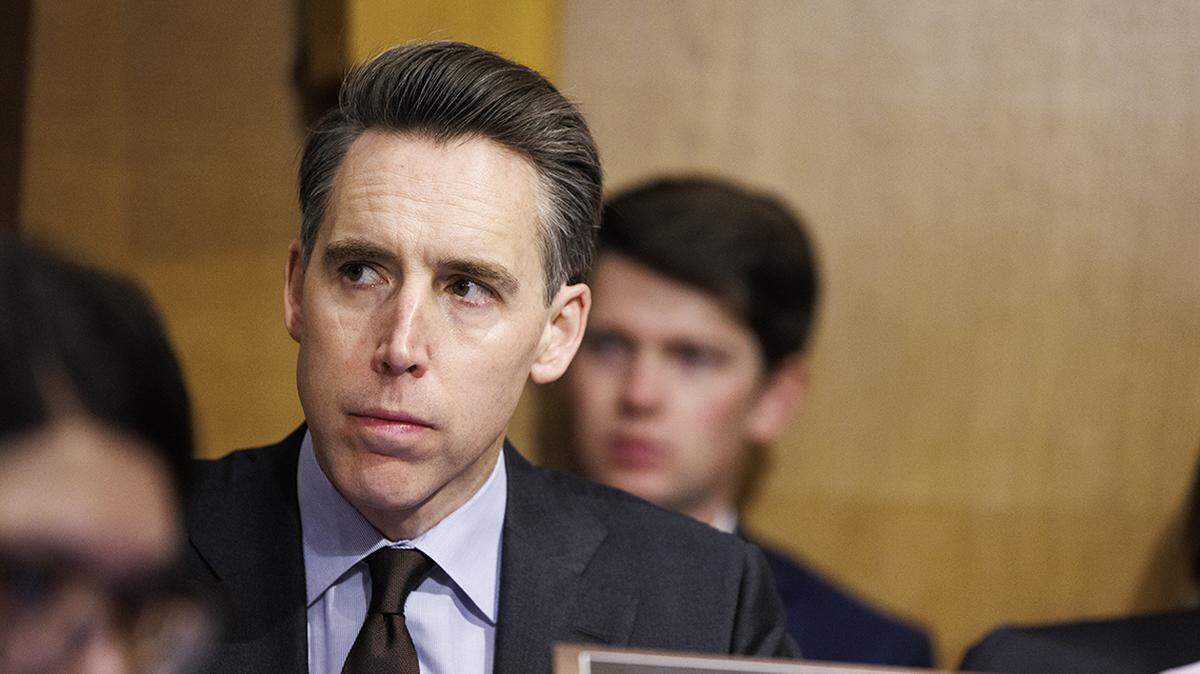
Josh Hawley is making a big bet on the future of the Republican Party.
The Missouri senator is staking his career (and maybe a White House bid) on the notion that GOP should mean what it says about becoming a “workers’ party” under Donald Trump, that it should focus on policies that help working class families instead of almost always selling out to the highest-bidding billionaires and big businesses.
Indeed, Hawley believes a worker-friendly approach is the only way for the Republican Party to survive after Trump inevitably leaves the scene.
That means less talk about tax breaks for the rich, more about tax credits for working families. It also means abandoning efforts to cut Medicaid, and instead putting muscle into efforts to shore up a program that millions of Americans rely on for their health care.
It’s an approach that increasingly pits him against the long-dominant corporate wing of the GOP.
But Hawley — in a series of major mainstream media op-eds and profiles over the last few weeks — appears to be ready for that fight.
“Will Republicans be a majority party of working people,” he asked Monday in a New York Times op-ed, “or a permanent minority speaking only for the C suite?”
The title of that op-ed? “Don’t Cut Medicaid.”
Which raises two big questions: Is he for real? And can he succeed?
Breaking the GOP’s corporate power?
It’s not just The New York Times, and it’s not just Medicaid. Since the beginning of the year, Hawley has appeared far and wide in media outlets outside his usual, frequent Fox News hits.
Last month, for example, he placed a different op-ed in The Washington Post, arguing that the GOP should “give working-class Americans a historic tax cut.”
His proposal: “Make the largest income tax credits — the home mortgage deduction, the child tax credit and the charitable deduction — available to all Americans who pay the payroll tax.” Those deductions are now usually received by high-income earners.
Last week, Semafor profiled Hawley’s ambition to “make Republicans working-class friendly.” The same day, NBC News featured him advocating for tax hikes on the rich, though he acknowledged only “one or two” people in his party felt the same way. And a few days The New York Times — separately from the op-ed — did a reported piece on Hawley’s “war” with the GOP, noting that the senator often allies with Sen. Bernie Sanders, the self-described democratic socialist, on worker issues.
Hawley’s goal is to “break the alliance the social conservatives have had with the corporate world since the Reagan era,” a former Sanders aide told The Times.
He isn’t the only Kansas-Missouri Republican brushing up his working-class bona fides. Sen. Roger Marshall of Kansas is leading an effort to eliminate taxes on overtime income. And Hawley’s Missouri colleague, Eric Schmitt made a Senate speech on the “forgotten Americans” that attracted notice from the Claremont Institute, an influential right-wing think tank.
But those two aren’t blitzing the mainstream media. Hawley is.
A possible reason for that: Hawley, The Times noted, “is thought to harbor presidential ambitions.”
Wolf in sheep’s clothing?
There is a long tradition in the GOP — famously documented in 2004 in Thomas Frank’s “What’s the Matter With Kansas?” — of talking working-class talk while walking a business-friendly walk. For decades, Fox News, Rush Limbaugh and their digital-era successors have proven masterful at inflaming culture war grievances that provided the votes for corporate tax cuts.
Is Hawley just more of the same?
He’s certainly vulnerable to criticism. When Hawley walked a picket line last year, retired Teamsters member Jim Kabell pointed out the senator has a history of anti-union stances. “Beware of wolves in sheep’s clothing,” Kabell warned.
For what it’s worth, though, the wolves seem genuinely alarmed by Hawley’s recent stances.
After he released a “pro-worker framework” in January that would make union organizing easier, a writer for the conservative Federalist Society sniffed that Hawley’s policy “reads in part like a union wish list” and declared it “anti-constitutional.” A few months before that, Hawley attracted the ire of a coalition of business organizations that decried his abandonment of anti-union “right to work” laws.
Maybe most notably, The Wall Street Journal editorial board — that paragon of Reagan-era corporate conservatism — this month weighed in against Hawley’s “Medicaid switcheroo.” It noted that the senator “once sought to repeal ObamaCare, including the law’s Medicaid expansion to lower-income, able-bodied adults.”
Things have changed, Hawley said in the Times op-ed.
Missouri “is one of 40 Medicaid expansion states,” he wrote, “because our voters wanted it that way.”
Social conservatism and the pro-worker agenda
I don’t mention all this to root for Hawley. He’s still the Jan. 6 fist-bump guy. He still goes on Fox News regularly to make outrageous statements about Democrats. And if he has made a “switcheroo” on Medicaid expansion “because our voters wanted it that way,” he is happy to ignore that Missourians also voted for abortion access last year — and instead, he is working hard to ban mifepristone, the abortion pill.
But I have long suspected (and maybe dreaded) that social conservatism wedded to a genuine pro-worker agenda might be intimidatingly effective at the polls.
Or maybe not. The Wall Street Journals of the world are determined to keep Hawley from getting traction.
Even if Hawley is right, though, it’s not clear how much that helps his ambitions. Vice President JD Vance, after all, has taken a similar approach to the same issues — and he has the advantage with Republicans of having shared a ticket with Trump.
Sticking with the Republican Party’s business-friendly traditions, Hawley wrote, “is both morally wrong and politically suicidal.” It will be interesting to watch if Hawley can make that bet pay off.
This story was originally published May 13, 2025 at 5:08 AM.