
Building a 15-minute city can create community with convenience | Opinion
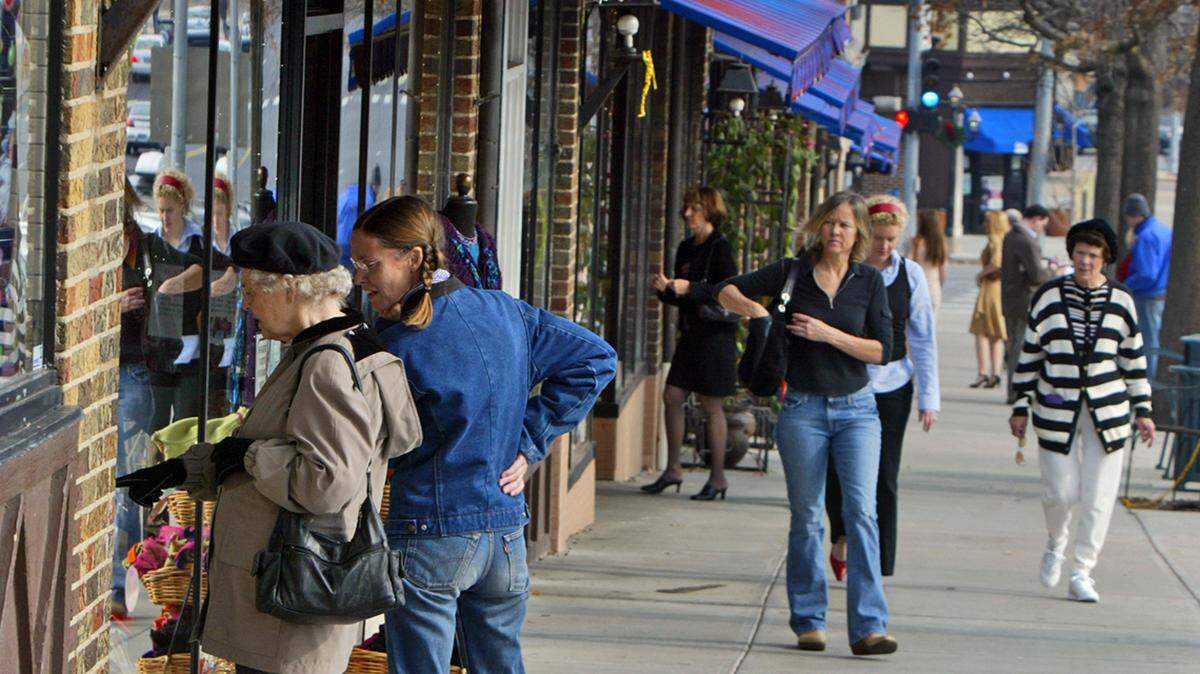
Living in Waldo, I’m spoiled by the rare combination of suburban charm and urban convenience. My own street features single-family homes beneath a leafy canopy, yet I’m within a few minutes’ walk of bars and restaurants, pharmacies, hardware and grocery stores, several schools and my church. When my daughters had friends over, they’d walk a few short blocks for ice cream in the evening or cocoa and pastries in the morning — luxuries unheard of to their Overland Park friends. Waldo is very much a 15-minute city.
A few years ago, there was a panic on the political right about 15-minute cities — neighborhoods with essential services and amenities within a short distance. The most fevered critics imagined jackbooted city planners forcing Americans into high-density ghettos where travel was restricted and private property discouraged.
It sounds fantastically paranoid, but it came at a moment when the World Economic Forum was predicting that in the future, “You’ll own nothing. And you’ll be happy,” and local, state and federal COVID-19 policies had pushed many Americans to their limit. People were primed to be suspicious of anything that sounded like enforced central planning.
That suspicion isn’t unfounded: Urban planning in America has an ugly record. Policymakers, under the euphemism of “urban renewal,” tore up blocks of homes and businesses — often owned by minorities — to carve asphalt and concrete scars through the heart of American cities. Eminent domain displaced families to build shopping centers. Economic development subsidies still engage in reverse Robin Hoodism, taking from the poor to give to the rich. Given that legacy, any new urban planning idea deserves scrutiny.
But 15-minute cities aren’t new at all. Nor are they the result of top-down technocrats reshaping society. They’re what naturally occurs when people are free to build in ways that serve their community. Neighborhoods like Waldo weren’t constrained by planners — they emerged organically before the era of rigid zoning codes and development mandates.
You can see the evidence in a 2023 interactive heat map created by geographer Nat Henry at close.city The bluer the area, the more walkable it is. Unsurprisingly, Kansas City’s older neighborhoods show up in deep blue. The outlying areas, where most people now live, are grayed out — car-dependent by design, often inaccessible to pedestrians and deeply inhospitable to bikes.
These are neighborhoods sliced by four- and six-lane roads, separated by parking lots, and stripped of any recognizable human scale. I don’t blame every civic ill on the automobile, but it’s hard to ignore how thoroughly these communities were shaped by it. Worse, state and local regulations now lock in those choices, preventing the kind of change that would allow them to grow in more people-friendly ways.
The real top-down control isn’t coming from city planners pushing walkable neighborhoods — it’s from the decades of zoning laws and development rules that effectively ban them.
The good news is, we can change this. Researchers at the American Enterprise Institute created their own walkability map at www.aei.org/wod highlighting neighborhoods that already have the ingredients for human-scale living: proximity to grocery stores, bars, drugstores, hardware stores and coffee shops. Instead of engineering a new utopia, cities can start by relaxing the restrictions in those areas and letting property owners build to meet their neighbors’ needs.
When understood correctly, 15-minute cities aren’t statist experiments. They’re the logical result of free people responding to market demand — where families want corner cafés, small apartments and the ability to walk to school or the store.
Plenty of people prefer the asphalt prairies of suburban sprawl, and there’s no shortage of places like that. But for those of us who want to live in human-scale neighborhoods filled with kids on bikes and conversations on the sidewalk, let us build them.
We don’t need to be engineered into better communities. We just need the freedom to build them.
This story was originally published May 13, 2025 at 5:06 AM.