
Democrats to pump cash into red states: a revival strategy | Opinion
You miss 100% of the shots you don’t take.
The national Democratic Party hasn’t taken too many shots in Kansas and Missouri in recent years, preferring to put its cash and staffing resources into seemingly winnable races in winnable states. That isn’t the only reason both states swing to the right — there has long been a streak of conservatism in these parts, you might have noticed — but the party’s decision to write off red states surely hasn’t helped.
Turns out, though, that preemptive surrender is a lousy way to win power.
So on Wednesday morning, the Democratic National Committee announced a new strategy designed to bump up organizing efforts in places like Kansas and Missouri, a so-called “Organize Everywhere, Win Anywhere” effort. Red state parties will get $22,500 a month to hire staff, open new field offices and reach out beyond the urban areas where Democrats tend to congregate. (Blue states will get a smaller disbursement from the national party.)
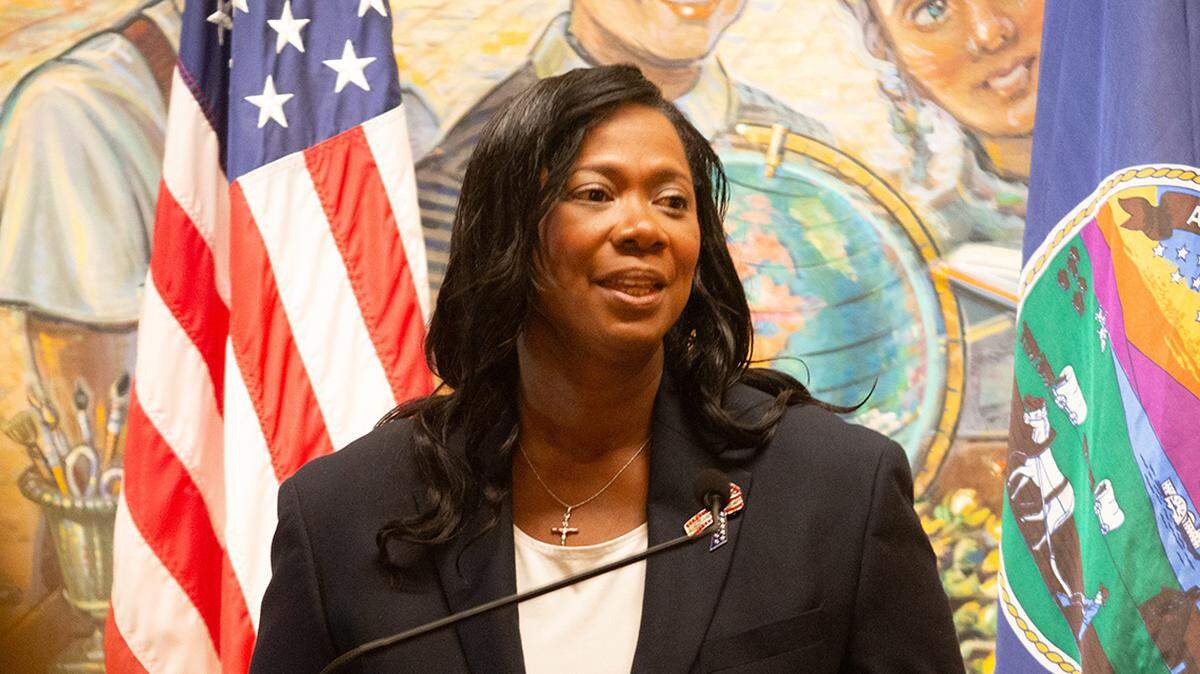
Jeanna Repass, chair of the Kansas Democratic Party, said the help is sorely needed.
“We’ve been crying out for our national party to hear us,” she told me. “This is a big step towards saying, ‘We hear you. We’re going to invest where we know the people are.’”
Kansas Democrats haven’t always been able to afford to do that.
“I’m going to say just as transparent as I can, I wish it were more” money, Repass said, “because we do have to reach an entire audience that is outside of our urban core.”
Rural Kansas swings heavily to the GOP, but results from the 2022 abortion vote sure seem to suggest the Sunflower State isn’t monolithically red. So do two consecutive gubernatorial wins by Laura Kelly. There are Democrats living in small towns and farm communities, even if they don’t always advertise themselves as such. Donald Trump’s tariff policy, which might be ruinous for farm country, could create an opening for those numbers to grow.
“There are voters there,” Repass said. “There are disenfranchised voters there that we can reach. But all of that takes resources.”
Return of the ‘50 State Strategy’
The DNC’s new program hearkens back to the “50 State Strategy” Democrats adopted under Howard Dean, the national party’s chairman from 2005 to 2008. Instead of writing off red states as unwinnable — leaving some state and local races uncontested, allowing Republicans to win unimpeded — the idea was simply to show up everywhere.
“We put money into the states,” Dean told Salon in 2014. “And lo and behold, the difference between not taking the House and taking the House in 2006 was 17 candidates that people like (then-Kansas Gov.) Kathleen Sebelius found in Kansas.”
That was the year that challenger Nancy Boyda beat Jim Ryun in their congressional race, while Dennis Moore hung onto his seat. For a brief moment, Democrats held two of Kansas’ four seats in the U.S. House of Representatives.
But after Dean left the chairmanship, the party drifted away from his strategy.
Repass said that can’t happen again. (I also reached out to Missouri Democrats, but didn’t immediately hear back.)
“One of the reasons I think the DNC has learned is when Howard Dean originally rolled this out and then it lapsed — trying to rebuild it was problematic,” she said. “So I do believe that the DNC understands that the road back — so that we avoid the catastrophe of 2024 in the future — is to make sure that we not only have this investment, but that we stay the course with it.”
Kansan on board
It probably isn’t a coincidence that the return to Dean’s strategy comes under new DNC chair Ken Martin, former chair of the Minnesota Democratic-Farmer-Labor Party. He is also an alum of the University of Kansas School of Law.
“Ken understands the fight that state chairs have, how difficult it is, specifically in red states, to raise money into state parties,” Repass said. And, she said, “he does have a particular soft spot for Kansas, so that never hurts.”
The money from the national party won’t arrive until October, Repass said. After that, Kansas Democrats will have a year to prepare for 2026 midterm elections, when they’ll try to end the GOP’s supermajority in the Kansas Legislature and find a fresh face to win the governor’s race in place of Kelly, who is term-limited.
“Organizing and making sure that we are able to do person-to-person contact is how you reach people,” Repass said, “and, quite frankly, how you sway people and change hearts and minds.”
Joel Mathis is a regular Kansas City Star and Wichita Eagle Opinion correspondent. Formerly a writer and editor at Kansas newspapers, he served nine years as a syndicated columnist.