
Mike Kehoe’s reforms for Missouri schools are politics, not sound policy | Opinion
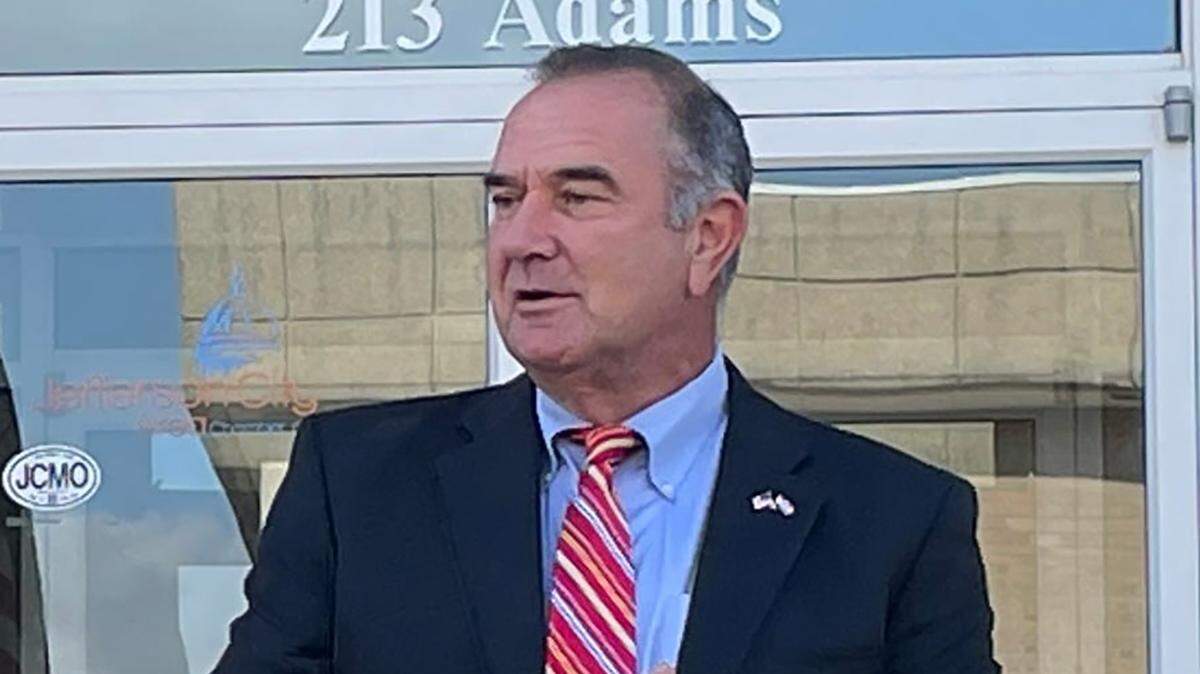
This past week, Gov. Mike Kehoe has been hard at work at putting his plan for Missouri’s education system into motion, appointing new leadership to the State Board of Education. Kehoe discussed his big plans for students during his campaign, and Missourians are seeing the changes they voted for in action. The appointments, upon state Senate approval, will include Jon Otto, a corporate finance attorney and charter school advocate; Brooks Miller, a health care CEO and Michael Matousek, director of the American Trucking Associations’ Government Freight Conference and former legislative director for Republican U.S. Rep. Sam Graves. Eye surgeon Tom Prater will retain his seat on the board.
These new members’ stances on curriculum standards, accountability practices, school funding, teacher pay and unions are difficult to find. This low level of opacity should make it hard for Missouri voters and lawmakers to trust these individuals to align with the interests of the communities they serve, rather than the pro-privatization tendencies of the Kehoe administration.
While most people might place a corporate attorney, a health care CEO, a D.C. lobbyist and an eye doctor at the beginning of a bad joke, Missouri has long been willing to entertain nontraditional voices in leadership. However, these new voices, selected specifically to reinforce Kehoe’s political agenda, are not what our public schools need — especially not now, when Missouri continues to rank in the middle of the pack for educational performance nationwide, according to World Population Review.
Education policy has become a battleground for one dangerous misconception: the belief that everyone is an “expert” simply because they went to school. Teachers and administrators face intense public scrutiny, not because they’re ineffective, but because we presume to know their jobs. This misplaced confidence bleeds into policymaking, where empirical best practices get tossed aside in favor of populist demands. Kehoe wants to bring education “back to basics” — focusing on math, science and reading — while promoting workforce readiness, strict discipline and parental control over curriculum. On the surface, these goals might sound reasonable. Many parents feel unheard in decisions about controversial topics and want clearer academic outcomes. But when these priorities come at the cost of research-backed strategies such as social-emotional learning and differentiated instruction, the damage is real.
Rejecting proven educational techniques
First, Kehoe’s entire pitch is built on a rejection of what experts in education and psychology have spent decades trying to prove. He leans into this culture of “We’ve all been to school, so we must know how it should be run,” and some Missourians are buying it. This argument relies on the same logic that anybody who rides in an ambulance is competent enough to work in the emergency room. We shouldn’t ask folks with absolutely no teaching or academic research experience to dictate education policy. Strategies such as trauma-informed teaching, inclusive discipline models and relational learning have been proven to increase achievement and engagement. Yet they are being sacrificed in favor of rigid discipline and test-focused instruction.
Second, the kind of school reform Kehoe is promoting doesn’t just harmlessly miss the mark, but actively deepens the divide between Missouri’s haves and have-nots. By splitting public funds and incentivizing families to jump ship to charter or private schools, he’s purposefully creating a society consisting of a wealthy ruling class and an underprivileged working class. When charter schools are propped up as the future, public schools are left underfunded, with less diverse student populations and fewer resources to meet increasingly complex needs.
This isn’t just about education policy — it’s about social engineering. Kehoe and his board are pushing our state further down the path of inequality, whether knowingly or unknowingly. The result? An education system where the rich get options and the rest get leftovers.
In his 2025 inaugural address, Kehoe stated he would find people who aligned with his view for American schools, and that appears to be the current step for this administration. The people who are aligned with these views? A charter school activist, a trucking lobbyist and a health care CEO.