
This small-scale Midwestern farm offers the solution to skyrocketing egg prices | Opinion
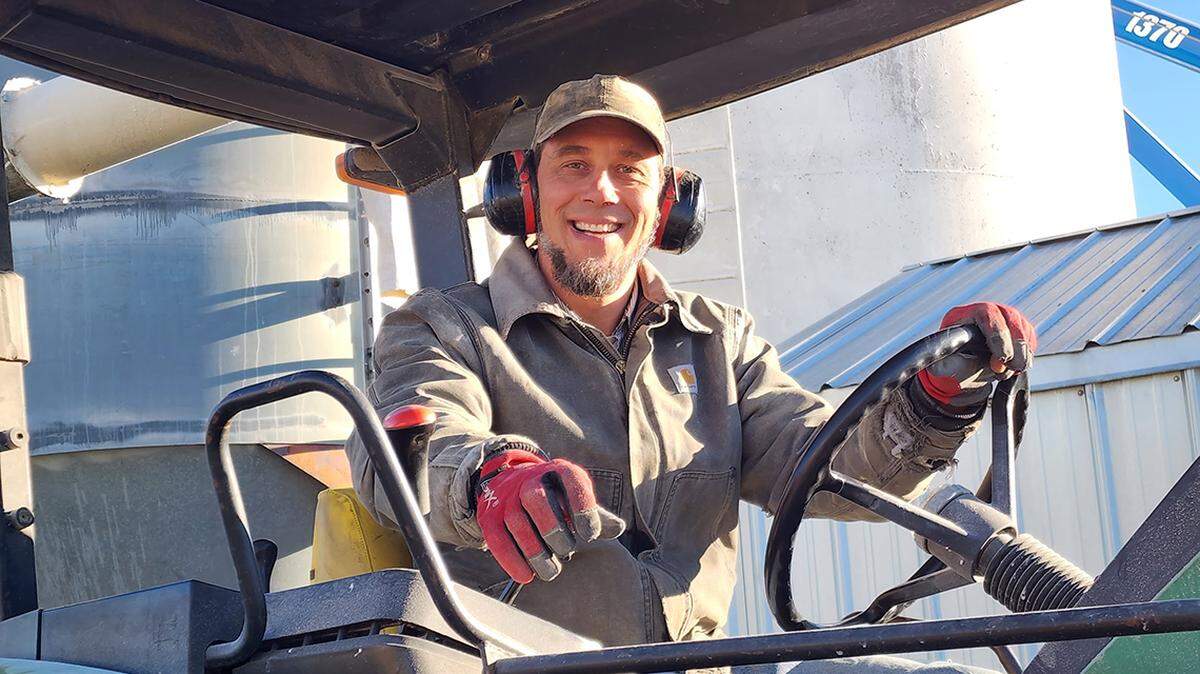
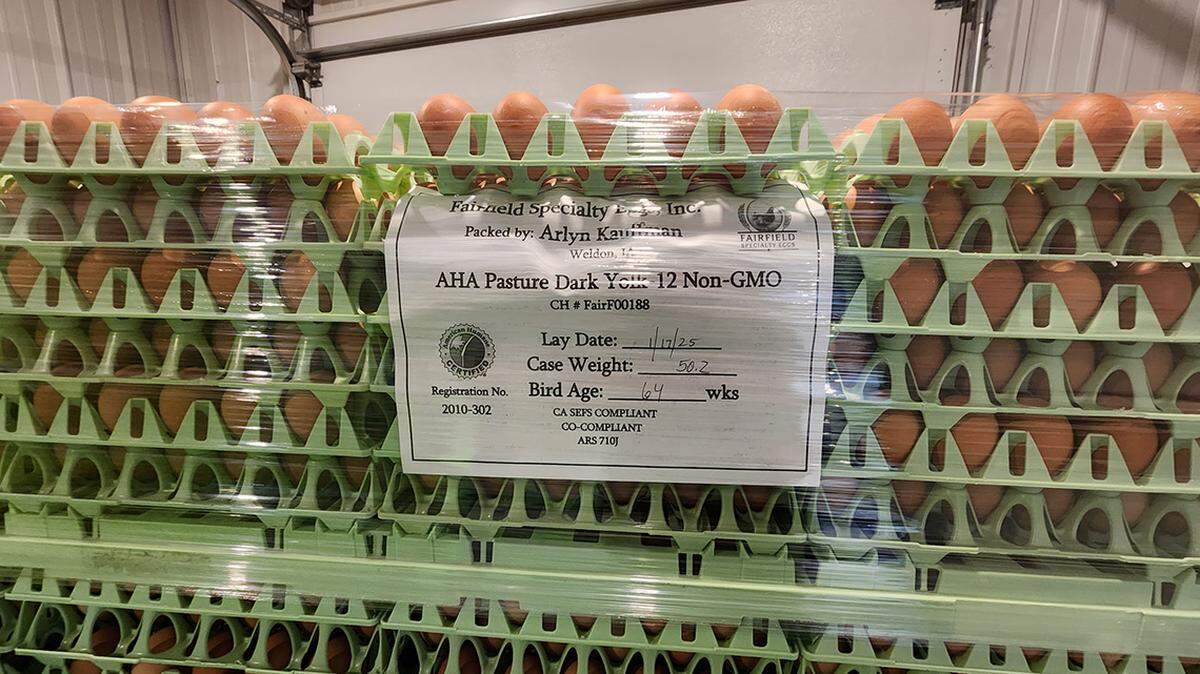
Arlyn Kauffman was grinding feed for 20,000 layer hens when we pulled up to his farm south of Osceola, Iowa.
“I didn’t realize it would be so big,” said Bob, a coauthor of this column, about the 500-foot-long building, nearly the length of two football fields. He’d shown up with a set of assumptions that Arlyn’s production system was going to look more like the idyllic family farm with a red barn and livestock roaming free. We shadowed Arlyn as he finished up grinding the feed and shut down the tractor. It became clear we were going to blow up a lot of assumptions.
We were there to learn from Arlyn about how his family farm provides a barnyard full of solutions for stabilizing the price of eggs and empowering consumers to purchase them with multiple benefits for “planet, people and profit,” as Arlyn put it. And perhaps save us from the threat of a bird flu pandemic.
The price of eggs is creating an opportunity to challenge many assumptions about the industry. Conventional wisdom is that eggs will be too expensive if we don’t have supersize operations and concentrated ownership. The Trump administration under the leadership of Secretary of Agriculture Brooke Rollins appears to agree and has made it clear the U.S. Department of Agriculture will not be including diverse farming systems to make more equitably priced eggs accessible to the American consumer.
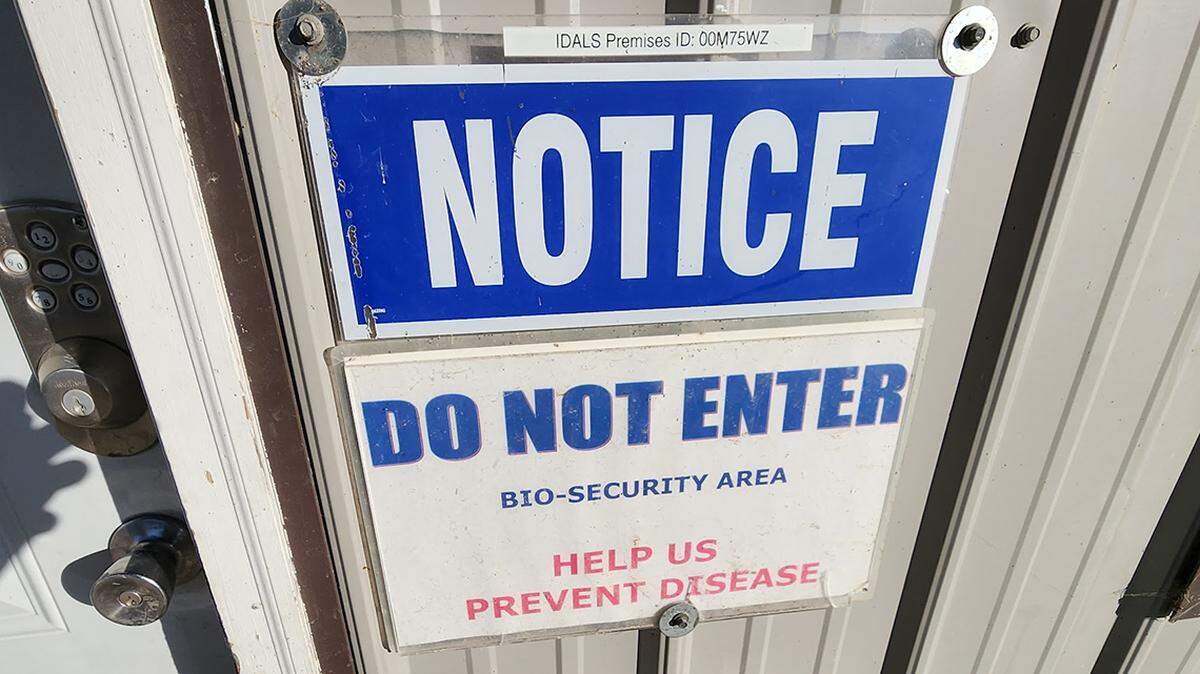
Highly pathogenic avian influenza H5N1, or bird flu, has destabilized our food supply and hurt our pocketbooks. Bird flu has now been transmitted to humans as well as dairy cattle — and has killed a lot of barn cats. It’s costing all of us as the USDA depopulates (or euthanizes) millions of laying hens in response, driving up the cost of eggs.
Secretary Rollins announced in February a five-point plan of action to address the price of eggs and mitigate the spread of bird flu. The five points are: Expand biosecurity; increase relief to farmers and accelerate repopulation; remove regulations; explore vaccines and therapeutics; and consider increasing egg imports. We are now importing eggs from Turkey.
President Donald Trump campaigned on the price of eggs, which was $3.65 a dozen in November. Last month as Secretary Rollins’ efforts moved forward, the average price of eggs was $6.23. In shopping online at the Gladstone Hy-Vee, the price of a dozen large eggs on April 15 was $5.49.
Trump administration blaming Biden
The Trump administration is trying to get ahead of the situation with mostly rhetorical attempts to claim action. Of the five points, none of them appears to change the fundamentals — but instead, they add money to existing programs and allude to some changes such as backyard chicken flocks.
We’re not aware of the USDA regulating backyard personal flocks in Iowa. Local jurisdictions do provide zoning guidance, but it’s unclear what the federal agency would do to change those ordinances. Also, it’s unclear what changes would be undertaken to provide more imports, as there doesn’t appear to be an import ban on eggs other than regulations for health and safety.
The Trump team appears to be shooting from the hip, focused more on political messaging than on real solutions. Note that while Trump’s economic adviser Kevin Hassett claimed on Feb. 16 that the USDA wasn’t going to kill all the chickens like former President Joe Biden had done, that strategy was completely absent from Secretary Rollins’ release the following week. What was the same was to increase spending through the same programs used by the USDA for years — and to continue to blame Biden.
Poultry growers are paid indemnifications (government payments) for the loss of birds. Costs are covered or reimbursed for the depopulation with our tax dollars. These costs aren’t seen in the price of eggs at the grocery store but in our tax bill, where it isn’t itemized. The retail price of eggs from these large farms isn’t their true cost.
This repeating reduction since 2015 has upset the balance of supply and demand, sending the price of eggs to ever-new highs with each outbreak. There are lots of moving parts to a more than doubling of prices Americans were paying for eggs in the past two years — including California consumers demanding cage-free eggs. However, the consistent variable in regularly skyrocketing egg prices since 2015 is bird flu in concert with our extremely concentrated, and therefore risky, production processes. Bird flu would be much less of a threat and make egg prices more stable if we spread those chickens out across the country on farms with tens of thousands of birds, rather than fewer farms with millions of birds.
According to the USDA, between the start of the outbreak in 2022 and the end of February 2025, Iowa has depopulated at least 13 commercial flocks of laying hens because of bird flu. To date, that’s 28,438,400 million laying hens. We’d need about 1,400 outbreaks on sites of Arlyn’s size to reach the same number of birds either killed or needing to be euthanized. Since 2022, there have been more than 65 recorded outbreaks of bird flu in Iowa among all poultry flocks.
As the Trump administration tries to message its way to solutions, American farmers actually have an answer to provide a better egg.
Just 1 case of bird flu at cage-free operation
Arlyn says there have been two confirmed cases over the same time frame among his grower group of about 700 farms. He shared that another grower group of 424 similar-size cage-free operations has had just one case of bird flu in this current outbreak. Given the much smaller sizes of flocks in these operations, the impact on egg prices after these flocks are depopulated is infinitesimal.
Trump continues to blame Biden for killing chickens, but the reality of bird flu is that when a flock gets it, the death loss is around 90%. Depopulating is the more humane way to deal with the situation. It’s also safer to deal with the infection and dying birds quickly and systematically. However, when depopulating the sites with millions of birds, the health risk is amplified for the workers needed to euthanize and dispose of that many animals.
You can see that the numbers prove that spreading out the birds rather than concentrating them would greatly reduce the risk of being in a situation where consumers are experiencing wild swings in egg prices. We also have situations like now where the supply is so short that companies such as Cal-Maine Foods, the largest egg producer in the country, are also making record profits.
Arlyn walked us through his operation and there was a lot to talk about, and his barnyard is the size for an easy walkabout.
His feed rations draw on the same research the largest companies use, but he’s mixing feed to meet his birds’ specific needs, and can change as needed to maximize their health. This is micromanagement by the farmer-owner. You have to get good at it.
It’s possible for Americans to buy eggs raised on family farms where the farmer is managing all the complexities of the production system daily. We can buy eggs that are integrated into the entire farm that provides more if not all of the household income. It’s economically viable to raise hens that aren’t sharing the building with hundreds of thousands of other chickens, and sometimes at locations with more than 1 million layers. It’s possible for those birds to be cage-free.
Competitive price ‘within pennies’
When you factor in all the costs, including the recurring costs of bird flu, these eggs are competitive in price with those from the larger operations. Arlyn tells us production costs for cage-free eggs from his farm and others like his are only a few pennies more per dozen than the large commercial cage-free operations. There are additional costs for added levels of specialty labels, but as basic cage-free production, “we are within pennies — not more than 12 cents a dozen of eggs,” he said.
Arlyn is realizing his goal of planet, people and profit with his egg production, integrated with a diversified family farm. On farms like his, owners work on the farm and supplemental labor beyond family members comes from neighbors, community members and local businesses.
Concentrated laying hens create great volatility, risk and, in the face of bird flu, higher prices. In comparison, smaller flocks reduce these risks and include other advantages. Dispersed operations spread out the nutrients. The chicken manure can go back onto the farm where much of the grain fed to the hens is grown, and the farmer can reduce dependence on synthetic fertilizers. Arlyn’s operation is not organic, but he continues to reduce the industrial nitrogen applied to his land, and is hopeful he is approaching the day he won’t need any.
Diversifying his feed creates opportunities for additional crops to be grown on his farm. Arlyn adds small grains to his rations, which displaces some of the corn he feeds and gives him a way for his chickens to consume the oats, wheat or cereal rye he grows, which has a big benefit to his soil health and our nation’s water quality.
As we battle an ongoing wave of bird flu, farms like Arlyn’s provide a more resilient system. To be fair, they too are vulnerable to all the same forces of nature facing the multimillion-hen operations, but the impacts are much less. There is no solid evidence that smaller flocks are being infected at a higher rate. But when a large operation gets hit, you wipe out millions of birds at a time.
While we don’t endorse anything about Robert Kennedy Jr.’s confirmation as secretary of Health and Human Services, his appointment revealed a great deal of diversity among American consumers interested in more transparency about our food and agriculture systems. Bird flu and the price of eggs create an opportunity to explore what options we have for public policy, agriculture systems, consumer choice and multiple values baked into the food at American grocery stores.
Congress must pass new farm bill
Congress must pass a new farm bill. The Trump administration has to deal with the evolving global challenge of bird flu. Consumers demand relief from the high price of eggs. American farmers and ranchers must navigate all of these challenges.
Arlyn’s vision of planet, people and profit he implements on his farm provides a blueprint for a path forward to navigate all of these dynamics for not only the egg industry but all of American agriculture.
If we want to improve outcomes from commercial farming operations, we need to take another look at family-scale agriculture micromanaging production units while also using technology to generate efficiencies of scale. This combination is being successfully implemented on Arlyn’s farm, and needs to be multiplied. The focus needs to be on farmers charged with overcoming all of the challenges — and then paying them for delivering on their success.
When we look at the true costs that we’re all paying, the price of eggs from mid-size, cage-free farms provides tremendous value. When figuring out the true cost of those eggs compared to that of large operations, we need to include the indemnities for depopulating hens from large commercial table egg operations since the first bird flu outbreak began in 2015 and the incredible risks and costs associated with a new pandemic.
Eggs from a 20,000-head laying hen building on an Iowa family farm can be far more competitive than the egg industry wants consumers to know. And that’s not even adding in the additional value of sustainability for land and community baked into spreading the same number of hens across Iowa. This model also opens up opportunities for other states such as Missouri for their farmers to produce more eggs closer to consumers.
Arlyn’s operation is scaled to community, to labor needs, to conservation, and in the face of ongoing bird flu, scaled for resiliency and value for the Americans putting eggs in their grocery cart.