
Andrew Bailey’s age-based anti-porn plan isn’t just wrongheaded - it’s fiction | Opinion
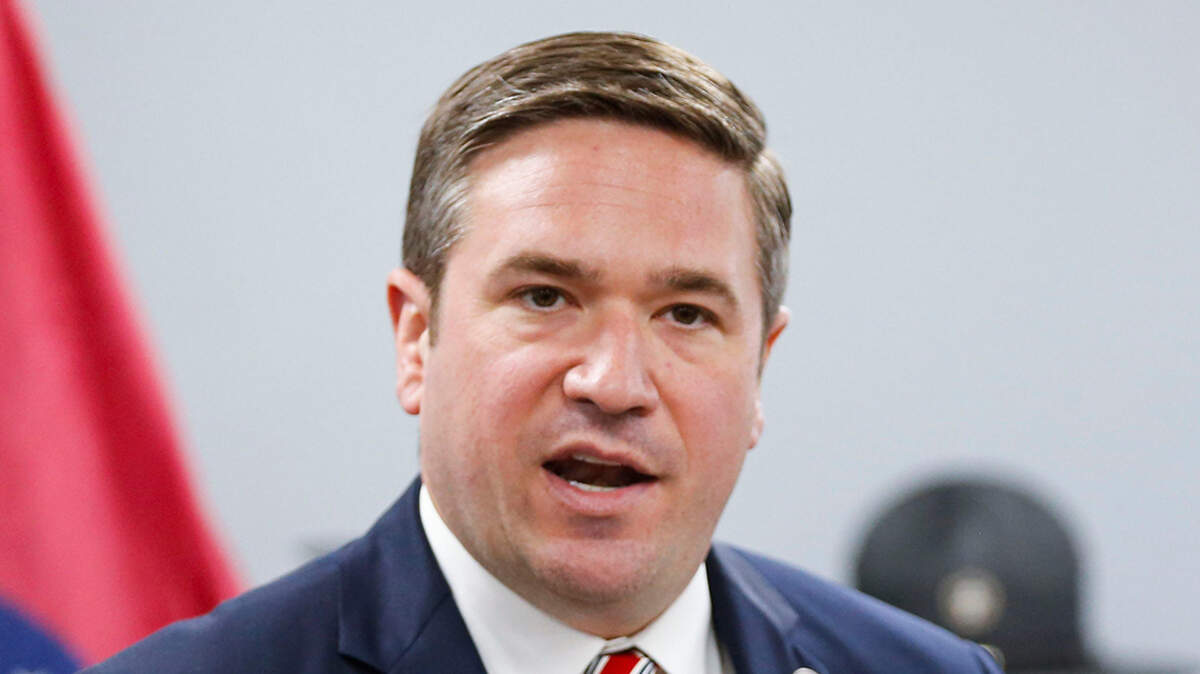
Last week, Missouri Attorney General Andrew Bailey proposed a rule requiring “dual-level” age verification for pornography websites that operate in our state’s digital spaces. Though very few news outlets in the state picked it up at the time, Bailey’s actions in pushing this regulation came at the same time as an age verification bill in the state legislature stalled out (House Bill 236).
Now we know why. Citing the Missouri Merchandising Practices Act, the attorney general decided to circumvent the state legislature and promulgate a regulation that he says would protect minors. But the truth is that Bailey has issued a proposed regulation that is nothing more than a pipe dream.
Coded as 15 CSR 60-17.010, Bailey intends to require websites such as Pornhub or XVideos to conduct a “dual-level” age check, conducted both on websites and the devices used to view them. In a press announcement from his office, Bailey characterizes this approach as a “first-in-the-nation rule.” Dual-level age verification technology doesn’t exist, though. Don’t believe me? Privacy Daily, a news outlet covering the data protection industry, inquired to a trade group representing age verification companies, including Yoti and Incode. The group is called the Age Verification Providers Association and is led by a Brit named Iain Corby. Corby — a man whom I have tangoed with in my business reporting on the adult entertainment industry — told the outlet’s associate editor that the dual-level approach Bailey describes in the regulation, though novel, “is not a technology that currently exists.” Corby shared his interest in collaborating with Bailey’s office, but that is beside the point.
Barring the glaring error here, much of the rule cites information that isn’t regarded as settled science or credible. For example, Bailey’s proposed rule describes pornography as being similarly addictive as illicit drugs. This is impossible, because you can’t mainline a video clip. There is no scientific and medical consensus accepting “pornography addiction” is a diagnosable mental disorder that can be treated through an addiction treatment model.
The American Psychological Association doesn’t recognize such a condition, and there is also no mention of such a diagnosis in the Diagnostic Statistical Manual of Mental Disorders, Fifth Edition, published by the American Psychiatric Association. Additionally, the American Association of Sexuality Educators, Counselors and Therapists noted that it “does not find sufficient empirical evidence to support the classification of sex addiction or porn addiction as a mental health disorder.”
Bailey’s rule also cites information from the American College of Pediatricians. Not only does the information that the ACP published about pornography have a clear ideological and religious slant — the group itself is regarded as an anti-LGBTQ hate group by the Southern Poverty Law Center and GLAAD. The group falsely links homosexuality to pedophilia, holds extreme anti-abortion rights positions, and promotes bigoted, discredited ideas.
I do recognize that there is such a thing as problematic pornography use, as the National Institutes of Health have noted. But the vast majority of these cases are regarded as compulsive behavioral dysregulation, as characterized by the International Classification of Diseases 11th Revision. Many experts also view these porn compulsion diagnoses as fundamentally different from drug addiction.
Don’t get me wrong: I don’t wish minors to view age-restricted content, period. However, it is my position that age verification approaches endorsed by social conservatives and the far right, like Bailey, are simply ploys to implement Project 2025’s vision of an American society where pornography is criminalized. There are far better solutions, such as supporting public funding to inform parents of internet filtering software that is already available. Unfortunately for all of us, Attorney General Bailey continues to fall on his petard.
Bailey is twisting our state’s consumer protection law into a digital purity test, built on a worldview that he and his cronies hold. Under the supposed interest of “protecting kids,” he is unilaterally denying lawmakers and the people they elected to represent them to hear from all those Missourians who would be impacted by such a policy.