
Semitrucks run roughshod on Kansas and Missouri bridges. Don’t let them get heavier | Opinion
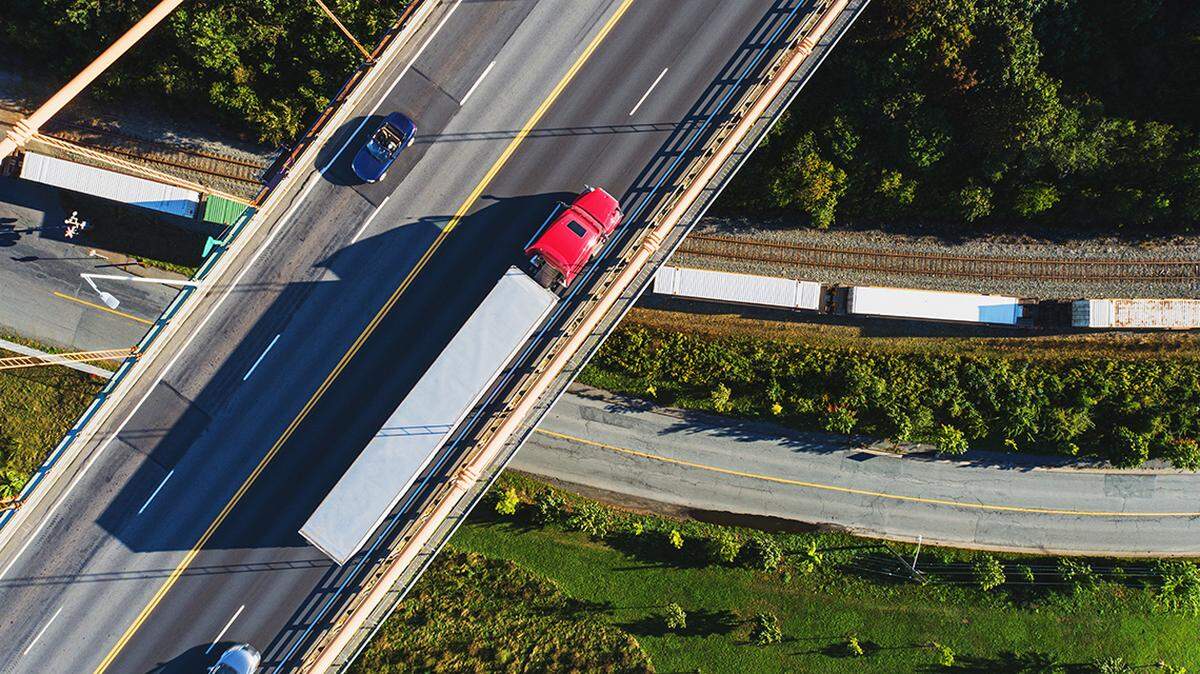
Renewed efforts in Congress to allow bigger and heavier tractor trailers on roadways across the country would likely cause major damage to as many as 10,962 bridges in Kansas and Missouri, costing taxpayers upward of $5.9 billion, according to a new analysis.
The report by the national 501(c)(4) nonprofit Coalition Against Bigger Trucks examined three scenarios in which Congress increases the current federal truck weight limit beyond today’s 80,000 pounds. One examines the impact on bridges of allowing trucks up to 88,000 pounds, another up to 91,000 pounds, and another at 97,000 pounds.
Proponents introduced these proposals in previous sessions of Congress, but the bills did not advance. However, lawmakers are already reintroducing them in the current session, when they could gain traction thanks to business interests. The weight limit is under constant attack from big business, whose leaders believe that greater weight limits would lower their shipping costs and increase profits.
While corporate coffers might grow with larger and heavier trucks on our roads, it would come at the expense of local governments including states, cities and counties — because heavier trucks impact the structural integrity and lifespan of bridges. These extra costs ultimately fall on local taxpayers, creating an unfunded federal mandate compromise public safety.
Under the first scenario of 88,000-pound trucks, 5,861 bridges in Kansas would be at risk with a replacement cost of $2.8 billion. At 91,000 pounds, trucks would put 5,814 bridges at risk with a replacement cost of $2.9 billion. (At this higher weight, trucks would impact fewer bridges overall than at 88,000 pounds because of the axle configuration and shorter length of certain bridges in the state.) Increasing truck limits to 97,000 pounds would put 6,661 bridges at risk with a replacement cost of $3.5 billion.
It’s a similar costly story for Missouri. Increasing the federal weight to 88,000 pounds would put 3,879 bridges at risk and cost taxpayers $2 billion to replace. Increasing the limit to 91,000 pounds would put 3,886 bridges at risk with $2.1 billion in replacement costs. Lastly, if Congress were to allow 97,000-pound trucks, that would result in 4,301 bridges at risk and $2.4 billion in replacement costs.
Compared to the rest of the country, Kansas has the most bridges that are at risk for any of the weight limits. Missouri has the third most bridges at risk for 88,000-pound and 91,000-pound configurations, and the fourth most for 97,000-pound configurations.
The National Association of Counties and National Association of County Engineers, the group that I lead, said in the foreword to the report that the study “heightens our concerns and reaffirms what our officials already know — local bridges are put at risk by heavier trucks and the cost to repair and replace these bridges continues to rise.”
They added: “As Congress begins its work to reauthorize the surface transportation bill, this research should be viewed as an important source for policymakers to utilize when considering legislation to increase truck weights.”
Some lawmakers regularly go to bat for businesses that push bigger trucks. Past proposals included a 91,000-pound pilot project that would allow states to authorize operation of these dangerous heavier trucks on roadways for up to 10 years — turning interstates and local roads into test tracks and motorists into guinea pigs. Another bill would give governors sweeping new powers to relax truck weight limits.
County engineers across the nation work daily to ensure safe roads and bridges for residents. As part of that mission, they raise the alarm when threats emerge to public safety. This is one such time.
The congressional delegations in Kansas and Missouri must take note as they consider these ill-advised proposals. As the two states work to keep bridges safe for motorists, we need to tell lawmakers: Don’t make the problems worse.