
Eric Schmitt: Missouri’s 442nd Fighter Wing should be repurposed, not eliminated | Opinion
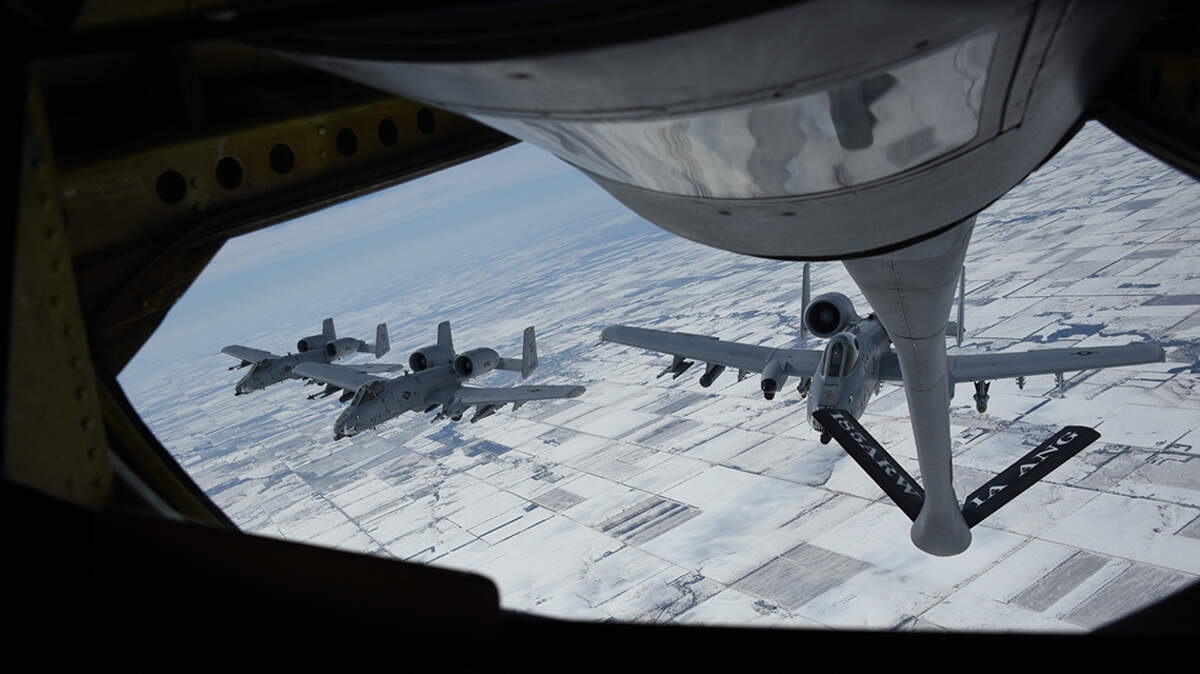
For more than 50 years, the 442nd Fighter Wing, based at Whiteman Air Force Base about 60 miles southeast of Kansas City, has played a pivotal role in American history. However, the A-10 Thunderbolt II is set to retire in 2027, and the critical Reserve Fighter Wing based at Whiteman faces an uncertain future. So far, the Air Force has not identified a follow-on mission for this unit, leaving the experienced maintainers, pilots and others associated with the 442nd in limbo.
This decision would be a strategic blunder as it would weaken the already stretched reserve fighter force and sacrifice one of the more highly decorated, most-combat deployed and experienced units for the pilots who maintain these aircraft. Not to mention, allowing the 442nd Fighter Wing to be phased out entirely would be a disastrous mistake — a decision that would entail losing some of America’s most skilled fighter pilots and slashing reserve fighter capacity, while undercutting our national security in the process.
Let’s start with the pilots. The 303rd Fighter Squadron within the 442nd fields around 40 reservist pilots, many of whom have more than 1,500 flight hours — far exceeding the active duty average of 1,000 flight hours. In fact, one pilot who recently retired from the 442nd had logged 7,000 flight hours on the A-10, the most hours logged in the aircraft’s history. It’s not just the pilots but the ground support and maintenance crew whose teamwork and expertise have made the 442nd Fighter Wing one of the most valuable reserves.
But therein lies the problem with disbanding the 442nd Fighter Wing entirely. You simply cannot replace this level of experience and teamwork. This expertise would be lost forever because unlike the active-duty airmen who are accustomed to relocating every few years, these pilots are anchored to Whiteman by civilian careers and families. Not to mention, when you lose a Reserve unit in the region, you’re also more likely to lose immeasurably important relationships between the military and the civilian population.
Further, losing the 442nd Fighter Wing would be more impactful, considering the rapid decline of our reserve fighter units in the last few decades alone. In 1987, the Air Force Reserve and Air National Guard had 1,386 fighters in over 50 squadrons. Today, the Reserve Force has just three fighter wings and around 70 jets total: the 442nd Fighter Wing at Whiteman, the 301st Fighter Wing at Carswell with 28 F-35s and the 482nd at Homestead with 21 F-16s. That represents an over 95% decrease in our reserve fighter jets since the end of the Cold War. Meanwhile, China, America’s greatest geopolitical adversary in the 21st century, boasts more than 1,500 fighter jets and is showing no signs of slowing down.
Not to mention, these reserve units have a proven track record when it comes to punching above their weight, as American history has shown time and again. In Operation Desert Storm, these reservists flew 14,000 sorties. During Iraqi Freedom, they were called to arms and dropped more than 1 million pounds of ordnance. Today, the Air Force’s active duty fleet of 1,432 fighters is spread across 31 squadrons. The reserve’s 608 fighters — 458 combat-ready — can help offset some of these active duty shortfalls, but again, therein lies the problem. It takes the two reserve squadrons to field one deployable unit, and if the 442nd Fighter Wing were to be phased out entirely, that would stretch already precious resources even thinner.
Entirely new squadron can’t do it alone
It doesn’t have to be this way. A feasible alternative exists: transitioning the 442nd to the F-15E Strike Eagle, an available and proven multi-role aircraft. The Air Force already has 2,018 F-15EXs, and thanks to the FY2025 NDAA, their retirement is off the table completely. The F-15EX was critical in defeating Iranian drone and ballistic missile threats at Israel and other Gulf countries in the last few years.
It would also be a cost-effective transition, and the F-15EX also boasts a much larger range and payload than the A-10, showcasing the F-15 EX’s versatility and adaptability on the battlefield. Not to mention, the 442nd’s pilots would be able to transition in under a year, using already existing F-15EX training pipelines at nearby bases like Seymour Johnson.
Some skeptics might argue that fifth-generation fighters should take priority entirely. Their math doesn’t add up. The 2023 Air Force budget of $185 billion cannot fully modernize while maintaining its operational capacity without the reserve fighter support. To put it one way, starting an entirely new squadron would cost over $100 million and take years of training. Not to mention, the active-duty F-35 fleet only has 186 jets, which is far below the 1,763-jet target, which is where the 442nd can help fill this critical gap via its adaptability and resilience on the battlefield.
Dismantling the 442nd Fighter Wing does not just retire a series of A-10s. The much greater loss is the elimination of a battle-ready unit, weakening our shrinking reserve and discarding irreplaceable pilot expertise. The 442nd Fighter Wing must be sustained. Anything less is a military gamble our country and Missouri cannot afford.